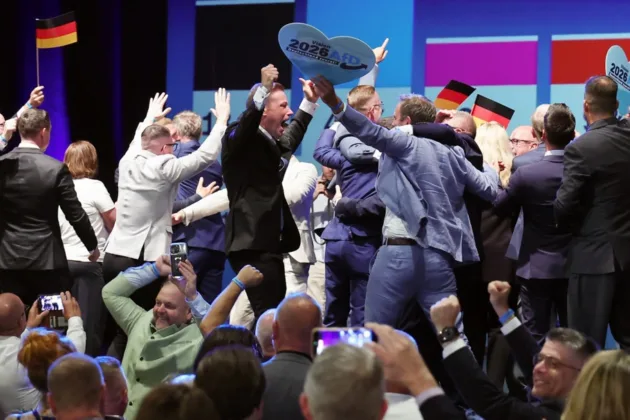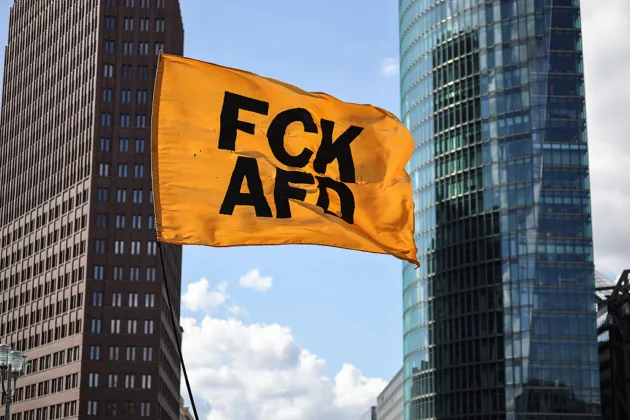






The Alternative for Germany (AfD)’s upcoming party conference on July 4-5 will come as the national populist organisation leads in both national and state polls in the former East Germany. Its political momentum is leading many, especially on the Left, to renew calls to ban the party as unconstitutional. Such a move would likely damage German democracy to no effect; it would irrevocably damage relations with the United States.
The AfD scares the traditional centrist parties for many reasons. The Left is frightened by its anti-migration stance and staunch defence of traditional German culture. The Right is scared by its anti-NATO and anti-European Union stances. Both sides are scared by the party’s flirtation with Nazi slogans and symbols, a continual provocation that raises questions about the motivation of some in the party as well as about whether the party is serious about governing modern Germany.
These concerns have long caused AfD opponents to seek to outlaw it. The German Constitution sought to prevent any possible recurrence of the Nazi horror that had destroyed the nation. Article 21 (2) of the Basic Law establishes that parties which seek to undermine or abolish the country’s democracy. The party’s virulent foes argue that its platform, provocative behaviours, and close relations with Russia’s government satisfy that standard.
It is difficult to see how such an act can succeed. As historian Katja Hoyer has pointed out, the Weimar Republic did ban and repress the Nazi Party following its failed 1923 putsch. The party nonetheless persisted and quickly found ways around the ban, including the party’s legalisation within the state of Thuringia – which is today an AfD stronghold. Short of imprisoning everyone associated with the Nazi leadership, which even Weimar was unwilling to do and which no one who seeks to ban AfD proposes, simply making certain slogans, party names, and organisations illegal will do nothing to stop the people.
Belgium offers a clear example of a ban’s futility. In 2004, Belgian courts ruled that a Flemish nationalist party, Vlaams Blok, had violated an anti-racism law and moved to ban it. The party pre-empted that move by reorganising itself into a new party, Vlaams Belang. That party has remained intact since and leads in the most recent national polls.
The AfD would surely take similar steps to recast itself should a ban appear impending. AfD’s voters would surely gravitate toward that new entity, and some Germans might even join it out of sympathy for having been persecuted by the traditional parties. If the German establishment thinks an AfD winning 29 per cent in recent polls is threatening, imagine their reactions to a recast party polling at 35 percent.
A ban would also very likely permanently damage German-American relations. President Donald Trump and his administration have already made it clear that they believe European leaders need to tackle the immigration and cultural questions much as the AfD and fellow conservative populist parties want. Vice President JD Vance has already praised AfD and argued that German parties should not exclude it automatically from government, the practice known in Germany as the Brandmauer (firewall). Banning the party would surely intensify their sentiments toward Germany and the EU establishment generally.
A ban would also dramatically reduce support for NATO within the Republican Party. The party’s dominant conservative populist wing already has negative feelings toward the alliance, according to the most recent in-depth Pew Research survey. Banning a party that they perceive advocates for policies similar to their own would surely intensify those sentiments and make bipartisan support for NATO very difficult to maintain.
Trump would also likely retaliate by removing as many troops from Germany as is feasible. He has long spoken about doing this and occasionally has taken minor or abortive steps to do so. Trump views himself as the victim of a decade of lawfare to prevent him and his supporters from winning power. He surely would see banning AfD through that lens and decide that a country that would do that is not one worth defending.
Europeans typically do not understand how deeply Americans of all parties care about free elections and democracy. The nation celebrates its independence on July 4 because that is when the Declaration of Independence was signed, not because that is the day the Revolutionary War was won. That Declaration is a soaring document which exalts individual rights and the right of a people to govern itself.
Take that unifying sentiment away from America and it ceases to be a nation. Take the sentiment away from one’s own nation by denying a third of its citizens the right to freely participate in elections and Americans, especially populist Republicans, will decide that your country fundamentally rejects American values.
The way to defeat AfD is to remove the reasons why people support it. Solve the immigration crisis, stop hobbling the economy with Green New Deal mandates, stop the replacement of traditional national ideals with a vague progressive internationalism. Nations that have moved in that direction, such as Denmark on immigration, have seen support for populism stagnate or fall.
Using anti-democratic means to stop democratic sentiment will be as futile as King Canute trying to command the tide to stop, and lead to an already dependent Europe being cast on its own resources by America. Rational Germans should resist that temptation and instead get to work doing what democracies ae meant to do, solve public problems consistent with what the mores and reason of their citizens demand.