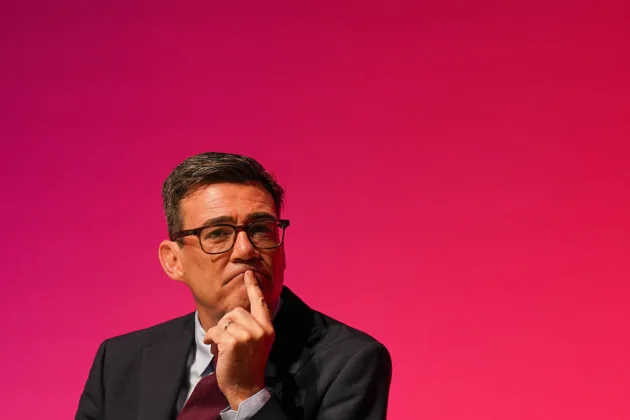






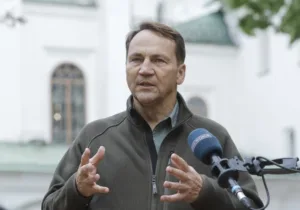

Yesterday, the United Kingdom held a by-election in Makersfield, an area in northwest England. It previously was represented by a Labour party member and, as the results revealed, will be represented by a Labour party member again: Andy Burnham, the mayor of Great Manchester. As it was a single election, only sending one parliamentarian to London, it did not de jure change the balance of power. Labour still has an overwhelming parliamentary majority.
But de facto, it may have irrevocably changed British politics. Because Labour may soon find itself with new energy – and the British Right may find itself on its back foot.
British Prime Minister Keir Starmer is currently one of the least popular democratically-elected leaders on the entire planet. Depending on the polling, he is dead last or close to it (being saved by the even more unpopular German Chancellor Friedrich Merz and French President Emmanuel Macron). In 2024, he ushered Labour into power with a massive parliamentary majority – while getting almost the same percent of the vote that the party received in 2019 (the difference was the Conservatives crashing by almost 20 points, a big shift in a first-past-the-post system like Britain’s). Which is to say that, while he had a large majority in parliament, his victory was less of a vote of confidence in his leadership than it was a vote of no confidence in the Conservatives.
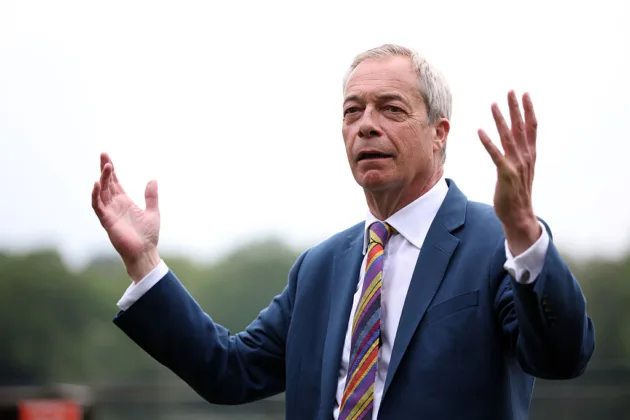
He proceeded to waste his chance, starting his premiership by raising winter energy costs and getting bogged down in euthanasia debates – hardly the sort of thing British voters were yearning for after 14 years of Tory domination. At the same time, he proved utterly unable to stem the constant tide of illegal migrants, leading to Nigel Farage’s Reform Party’s domination at the polls and their recent victories in local elections across the UK.
Back to Burnham. While parliamentary elections are not set until 2029, Starmer has been so unpopular for so long that Labour MPs, many of whom won razor-close margins in 2024, began to panic that he might lead them to a catastrophic defeat, and that the party needed new leadership. So a parliamentarian resigned his seat to make way for Andy Burnham to run and enter parliament so that he could challenge Starmer.
Burnham is mayor in an area of England which has broadly trended toward Reform. Unlike Starmer, who worked as a lawyer for the government and was born in London, Burnham was born in a northern town with a population of roughly 7,000 people. He is by no means a conservative or even necessarily a moderate, but as mayor he has been competent and remained popular – making him an attractive choice to a party desperate for a shift in the political winds.
Now he has won, increasing Labour’s majority in the constituency to over 50 per cent. And while he may not challenge Starmer for leadership of the Labour Party the moment he gets to London, he will almost certainly do so quickly, meaning the United Kingdom will likely have a new prime minister in relatively short order.
Burnham would have two options at this point. He could continue with Labour’s still-immense majority until 2029 and actually try to do things people like, in order to turn the numbers around. But that is risky: If he fails to do so quickly, the conventional wisdom may set in that he is too cowardly to call a race.
This leads to the other option: He might call early elections.
Which, in turn, could be an issue for the Right.
The election results in Makersfield, combined with the local elections earlier this year, clearly show that Farage’s Reform is now the mainstream default conservative party. The Conservatives dropped over eight points, garnering just over two percent of the vote. Reform, meanwhile, won 34.5 per cent. They are also solidly in first place across the country.
Concerning, however, is Restore Britain, which has positioned itself to the right of Reform as a breakoff sect. Led by former Reform parliamentarian Rupert Lowe, the party has taken a significantly harsher tone on migrants than Reform and called for bringing back the death penalty.
This was not enough to win Makersfield; In fact, it was far from it (the party only just managed to get over six per cent). But a solid nationwide majority is frequently made with marginal seats and barely-there victories. If Restore is able continually to steal five per cent of the vote from Reform, it could make the difference between a clear Reform majority and a coalition with the Tories, which will likely stop them from being able to achieve their biggest goals.
Relations between the two sides are absolutely toxic, with Farage and Lowe regularly lambasting one another. In Makersfield, things got dirty, with unknown activists parading around in a “Muslims for Reform” van which had nothing to do with the Reform Party and was just an attempt to Farage’s party look friendly to Muslims.
For the Right, the risk of Burnham calling an early election is too great to allow this division to continue. If Burnham is able to cobble together a majority in an election called and won this year, he will likely be in power until the early 2030s – a painfully long period, seeing as the time is politically ripe for a populist-right British government.
If Farage wants to win, he should do all he can to find a way to bring Restore back inside the tent – or at least to work out some sort of agreement similar to the one he made with the Tories in 2019, when he agreed not to contest seats in areas which went for Brexit (at the time, he was running the Brexit Party). Farage agreeing to pull back avoided splitting the vote and allowed Boris Johnson to win a solid majority that December and, in January 2020, finally to leave the European Union.
A similar deal must be made now. Both men need to put their pride aside. Lowe should be made to understand that the alternative to Reform is the sort of desperate and dangerous establishmentarianism rearing its head in Austria and Germany. But Farage should also understand that this may be his only moment. After decades of playing a major role in British politics, he is now on the cusp of playing the starring one.
Or, he can fail to make nice, and the part of “Prime Minister” may stay with Andy Burnham.