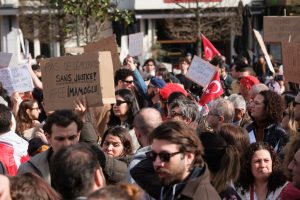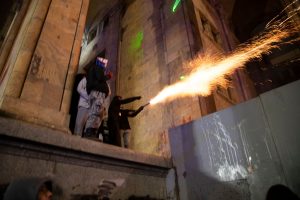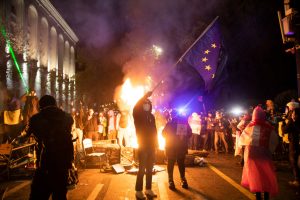

Riot police have fired tear gas and water cannon at thousands of demonstrators in Geneva, Switzerland, hours before the leaders of the Group of Seven (G7) gathered for a summit across Lake Geneva in France.
The clashes broke out on June 14 as protesters marched against the meeting of the world’s wealthy nations. An estimated 20,000 people took part, including about 600 so-called “Black Bloc” militants, according to figures from Geneva police.
A car was set ablaze and a bank’s windows smashed during a violent standoff that ran into the evening. Protesters also attacked the Geneva offices of professional services firm PricewaterhouseCoopers, ripping off metal shutters and battering the glass.
Near the headquarters of the United Nations, demonstrators threw stones, bottles, pieces of cement and firecrackers at officers, who responded with tear gas and water cannon.
The Geneva cantonal police said they had made “several arrests” and that no injuries had been reported by Sunday evening.
The march had been called by the “No-G7” coalition, an umbrella group whose banners ranged from support for Palestinians to climate action and anti-capitalism.
One demonstrator, a 69-year-old Swiss retiree named Michel, told the AFP news agency he objected to leaders “meeting here to make decisions that affect all of us”.
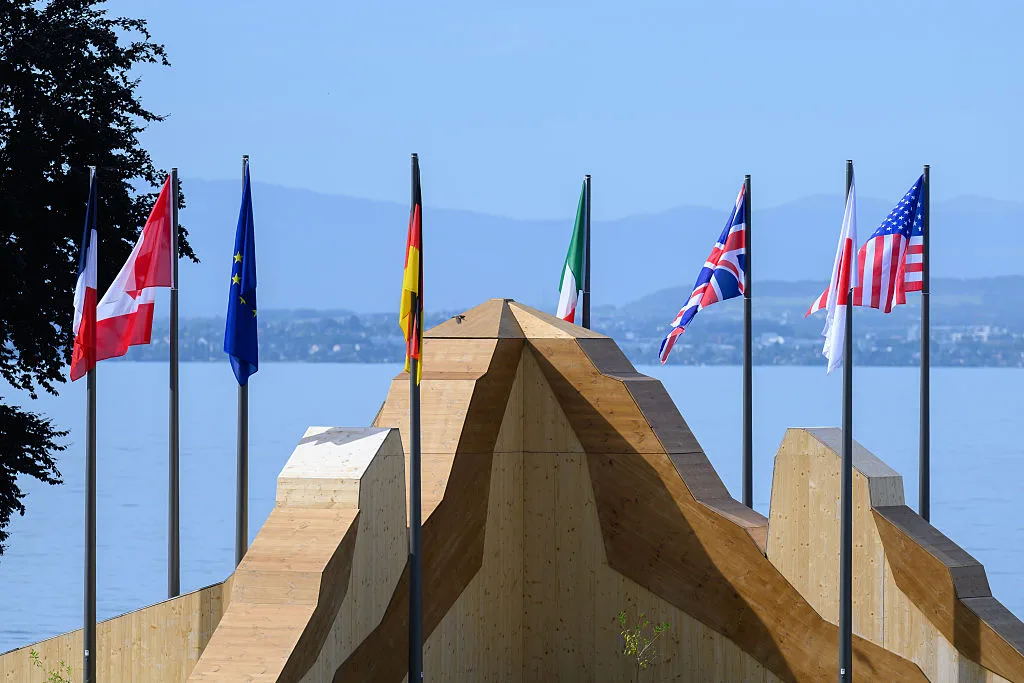
The three-day summit, which would open on June 15 in the French spa town of Evian-les-Bains, has drawn heavy security on both sides of the border. France said it would deploy more than 13,000 police and gendarmerie officers, with some 800 border control staff in place, up from about 60 normally.
French President Emmanuel Macron, this year’s summit host, is due to welcome the leaders of Britain, Canada, Germany, Italy, Japan and the United States, along with invited guests including Brazil and India.
Macron would also host US President Donald Trump for dinner at the Palace of Versailles once the talks concluded.
The leaders would discuss the wars in Ukraine and the Middle East, tensions with Iran, and economic questions such as global inequality and access to critical minerals.
For the European Union, three of whose member states sit at the G7 table, the agenda touches directly on its own priorities, with the Ukraine war and Middle East instability high on the list.
Geneva last saw such scenes in 2003, when a G8 summit in Evian sparked days of unrest that left a trail of damage across the Swiss city.