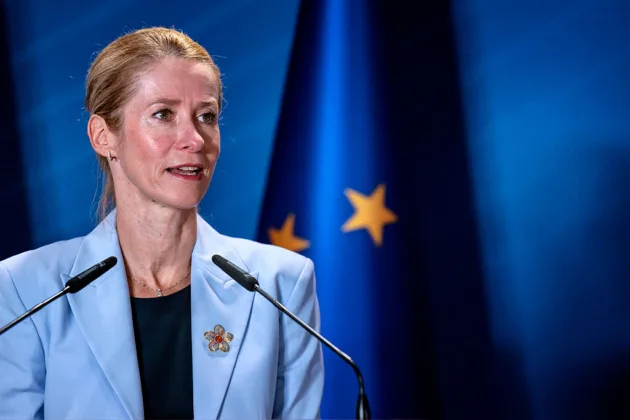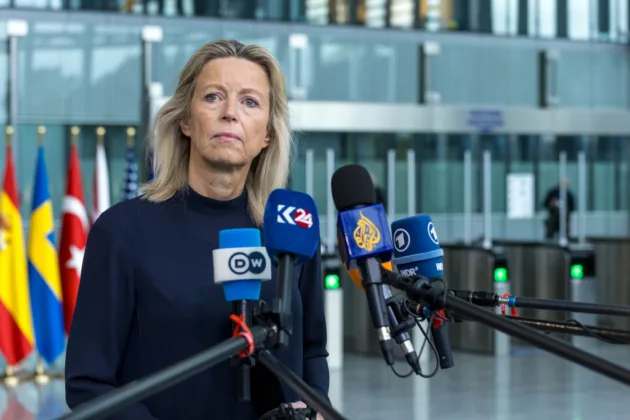



A push by European Union capitals to overhaul the bloc’s diplomatic service has laid bare a deepening rivalry between European Commission President Ursula von der Leyen and the EU’s foreign policy chief, Kaja Kallas.
France, backed by Germany and other member states, has circulated a discussion paper setting out three ways to reform the European External Action Service (EEAS), the body Kallas runs as High Representative for Foreign Affairs and Security Policy.
Two of the options would strip powers from the High Representative. The third would widen her remit.
The Financial Times first reported that France, Germany and other governments were weighing a sweeping reorganisation, citing five senior officials and mounting frustration with a service many capitals regard as slow and ineffective.
One official told the paper the EEAS was “dysfunctional” and that its structure needed rebuilding.
The service, which runs more than 140 delegations worldwide and costs around €1 billion a year, has long drawn complaints about overlapping roles and weak coordination between Brussels and national foreign ministries.
Officials have also questioned its ability to deliver a credible response to major crises, including the wars in Ukraine and Iran.
THREE OPTIONS ON THE TABLE
The first scenario would dilute the High Representative’s role and transfer key foreign policy powers to the Commission, a clear win for von der Leyen.
The second would hand operational control to national governments acting through the Council of the European Union, giving member states a far bigger say in running external relations rather than merely setting its direction.
That option is the likeliest to appeal to sovereigntist and right-wing governments, as it would return foreign policy levers to capitals and curb Brussels-led initiatives.
The third, favoured by Kallas’s supporters, would instead expand her authority, granting her oversight of portfolios held by European commissioners in areas with geopolitical weight, such as trade, and possibly elevating her to a “first executive vice-president” role.
A GEOPOLITICAL COMMISSION
A former German defence minister, von der Leyen has steadily pushed into external affairs under what she has branded a “geopolitical Commission”, taking the lead on everything from Russia’s invasion of Ukraine to trade disputes and security.
She has also appointed the EU’s first dedicated defence commissioner, further extending the Commission’s reach into territory once left to the diplomatic service.
That expansion has repeatedly overshadowed Kallas. Last November the Financial Times reported that von der Leyen had moved to set up a Commission intelligence unit duplicating one already housed in the EEAS, a plan the High Representative opposed.
Kallas has faced criticism of her own. Diplomats quoted by Le Monde have pointed to her management style and her difficulty in building support across a politically diverse membership.
Some governments fault her for concentrating on a firm line against Russia while doing little to raise the bloc’s profile on other fronts, such as the Middle East.
The Commission has rallied to her defence. Asked whether von der Leyen wanted to abolish the service, her chief spokesperson, Paula Pinho, said it was part of the institutions that deliver EU policy and enjoyed the President’s full backing.
In an internal email to staff, Kallas insisted the roles of the EU institutions were “clearly defined in the treaties” and that the framework remained unchanged.
NO QUICK CHANGE
The EEAS was created by a Council decision in 2010 and launched the following year under the Lisbon Treaty. Supporters of reform argue its structure can be reshaped by revising that decision, without reopening the treaties.
Any change would nonetheless require the unanimous backing of all 27 member states, handing each a potential veto. One EU official cautioned that a major institutional reform would need treaty change, which was not currently under serious consideration.
Pinho also restated von der Leyen’s wish to scrap national vetoes in some areas of foreign policy, a move sovereigntists oppose on the grounds that it would erode member states’ control.
Diplomats said the debate had gained pace after the EEAS opened its top post of secretary general, creating an institutional vacuum at a sensitive moment. The service is now drawing up its own reform paper.
Any restructuring would be bound up with negotiations on the bloc’s next seven-year budget, where several governments are demanding savings in Brussels.
A first ministerial discussion is due at an informal Foreign Affairs Council in Ireland on September 2. Ireland takes over the rotating EU Council presidency on July 1, though diplomats said no significant change was likely before the next legislative term.