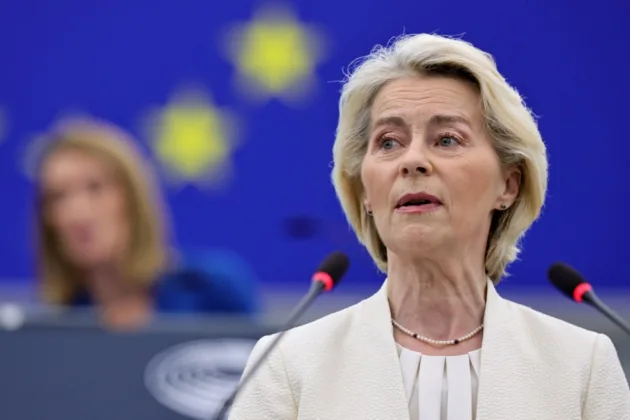





The European Union has spent €1.4 billion on the New European Bauhaus, a flagship cultural project of European Commission President Ursula von der Leyen that critics say has yet to deliver the grassroots movement it promised.
The question of what that money has bought has come into sharp focus today, as the third New European Bauhaus Festival has opened in Brussels.
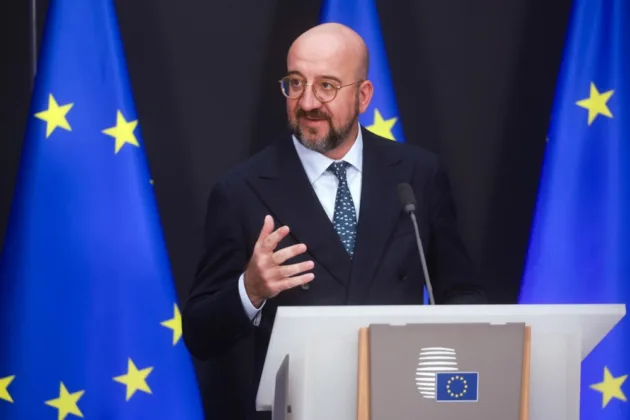
Von der Leyen and European Council President António Costa are due to deliver the opening speeches. Running until June 13 at the Parc du Cinquantenaire, the event has gathered architects, designers and officials under the theme “Life. Spaces. Buildings”.
This year’s programme has placed affordable housing and what the Commission calls democratic engagement at its centre.
ORIGINS
Von der Leyen first floated the idea in her 2020 State of the Union address, before the Commission formally adopted it the following year.
It was pitched as a bottom-up drive to give the European Green Deal a “look and feel”, uniting architects, artists, designers and engineers around sustainable design. The name nods to the original Bauhaus school founded in Weimar, Germany, after the First World War.
The case for it rested in part on the built environment’s climate impact. Buildings account for about 40 per cent of the bloc’s carbon-dioxide emissions, according to the Commission, making their renovation central to its net-zero target for 2050.
Five years on, the scheme has bankrolled more than 700 projects and drawn in close to 2,000 organisations, the Commission has said. Although it has spread through dozens of EU programmes, it has struggled to register much beyond Brussels and the niche world of EU-funded architecture.
THE MONEY
Under the bloc’s 2021-2027 Multiannual Financial Framework (MFF), €1.4 billion has been devoted to the initiative, according to the Commission.
The bulk has come from cohesion policy, at more than €840 million, with a further €530 million from the Horizon Europe research programme. Other funds, including the LIFE programme, have made up the rest.
Detractors argue the money has produced a sprawling subsidy scheme rather than the cultural awakening von der Leyen described.
An investigation by the Dutch outlet Follow the Money concluded the initiative had become “a classic EU subsidy programme”, with hopes and expectations left unfulfilled. Of the €85 million earmarked in its first two years, the outlet reported, only a fraction reached the Bauhaus prizes, with most spent through the usual channels of EU bureaucracy.
The same investigation reported that one EU diplomat regarded the project as too vague, while a senior figure in Europe’s art world doubted it would catch on in Paris, where modernism is traced to the late 19th century rather than to Germany.
Some in the construction sector were said to view the sums as too modest to shift an industry in which large developers can treat a €5 million grant for a city project as trivial.
A SECOND TERM
Member states have shown a similar wariness. In 2024 they rejected a Commission plan to turn the Bauhaus into a dedicated Horizon Europe “mission”, a novel and unproven type of research funding, according to EU diplomats cited by Science|Business.
Despite the doubts, von der Leyen confirmed on her reappointment in 2024 that she would expand the Bauhaus during her second term.
In December 2025 the Commission set out the project’s next phase, leaning on a dedicated New European Bauhaus Facility running from 2025 to 2027 and anchored in Horizon Europe.
The facility, billed as the first multi-annual funding tool created specifically for the initiative, is to channel an indicative €120 million a year into research, with a roll-out arm expected to match that sum from other EU programmes. A first call worth €118.4 million closed in November 2025.
HOUSING AND BEYOND
Supporters maintain the Bauhaus has built a durable network spanning EU member states, the Western Balkans and Ukraine, and that it offers a tangible route to greener, more affordable neighbourhoods.
The Commission has pointed to plans for a New European Bauhaus Academy, with future hubs envisaged in Ukraine, Japan and Brazil, as evidence the project is maturing rather than stalling.
It has also tied the scheme ever more closely to its housing and climate agenda, presenting it as a way to align emissions targets with investment in homes and public spaces. Von der Leyen has linked the work to a planned European housing plan, after singling out a housing prize at the 2025 Bauhaus awards.
That connection is on show at this week’s festival, where affordable housing has been placed at the heart of the programme.
For now, though, von der Leyen’s bid to mint a signature European aesthetic remains, in the eyes of many, an idea still searching for a legacy.