




Jane-Michelle Arc, a 48-year-old software engineer from California who sought asylum in the Netherlands in April 2025 citing fears for her safety as a transgender woman under the new US administration, has returned to her native country after a long stay in a notorious asylum centre that ended without her being granted protection.
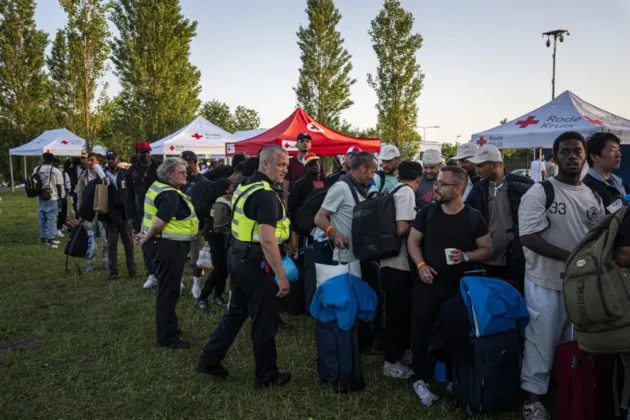
The transgender American was housed at the Ter Apel reception centre, the country’s main asylum registration facility in the province of Groningen**, northeast Netherlands**.
Arc later told media outlets that conditions at the camp were far more dangerous than anything she had experienced in the US.
She reported anti-trans hostility from other residents, many from Syria, Eritrea, Somalia, Turkey, Algeria and Morocco, and said she feared being hurt or killed.
In interviews, including with Dutch broadcaster PowNed’s programme PowNews and The Guardian, she described the environment as “dire” and said it had become too unsafe even to walk to a nearby grocery store.
“This is the dumbest thing I’ve ever done,” Arc told The Guardian, while acknowledging she had left because she was afraid for her life.
“I hear a lot of people saying: ‘You are an idiot. You came here from America.’ People will tell me: ‘Did you think about moving to California?’ And then I say: ‘Well, I lived in San Francisco’ and then they go: ‘Oh, that’s a heaven for gay people,'” Arc admitted.
“But it’s different for trans people, particularly for trans women, to the extent that my experience in San Francisco, robot taxis aside, was indistinguishable from [that of] the people that I knew from Libya and Iran and Morocco and Algeria,” she added.
She left the Netherlands without a residence permit. The Dutch authorities have listed the United States as a safe country of origin since 2015, which means American claims are dealt with in an accelerated procedure and are presumed to be unfounded unless the applicant can rebut that presumption.
Figures from the Immigration and Naturalisation Service (IND), reported by Dutch daily Algemeen Dagblad, show that 76 Americans claimed asylum in the Netherlands in 2025, up from nine in 2024 and 18 in 2023.
Of the 60 decisions the IND took on American cases that year, not one led to a residence permit. Forty were refused and 20 ended without a substantive ruling, in some cases because the applicant withdrew the claim.
The Guardian estimated that between 35 and 50 other transgender asylum seekers from the US were in the Netherlands, though the Dutch Government does not keep statistics on transgender applicants.
Marlou Schrover, professor of economic and social history at Leiden University, told the newspaper that such claims would stand only if the US began imprisoning people solely because of their gender identity.
The Dutch asylum ministry said about 20 failed American applicants were sent back to the US in 2025. The Government did tighten its travel advice for LGBT citizens visiting the US in the spring of that year.
Her return was picked up by US and British media, which quoted posts on her Threads account.
“America is really, really loud and overwhelming. And everything is so expensive,” Arc wrote in a post shortly after returning to the US.
“The Dutch complain about groceries being expensive, but good grief, San Francisco is a whole different experience.”
Ter Apel has long faced criticism over overcrowding, violence and crime. The site houses about 2,000 people in a town of some 10,000 residents.
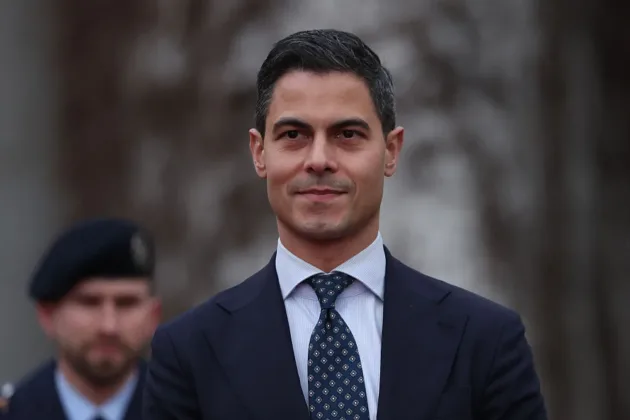
On July 10, Dutch asylum minister Bart van den Brink, of the Christian Democratic Appeal (CDA), was forced to cancel a planned surprise visit to the centre after authorities judged the situation on the ground too unsafe.
Officials cited a series of violent incidents, stabbings and a rise in local shoplifting, almost all of which were linked to the facility.
In the first four months of 2026, 141 of the 144 shoplifting cases recorded in Ter Apel were connected to the reception centre. Fifty-three people were arrested, 50 of them in the town itself.
Maximum police and security resources were already deployed, making it impossible to guarantee the minister’s safety.
Red Cross volunteers and the Dutch Council for Refugees have also suspended work around the site at times, saying conditions there had become too dangerous for their staff.
Van den Brink’s ministry has not said whether the visit will be rescheduled, citing security reasons.