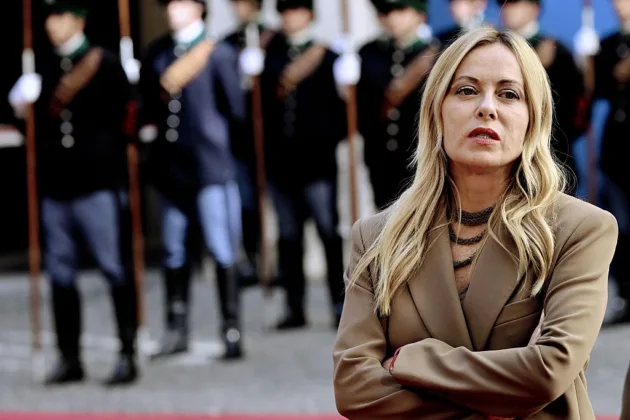




European coverage of the Ceuta crisis has settled on a question about Giorgia Meloni’s motives rather than on the state of the frontier she says she is defending.
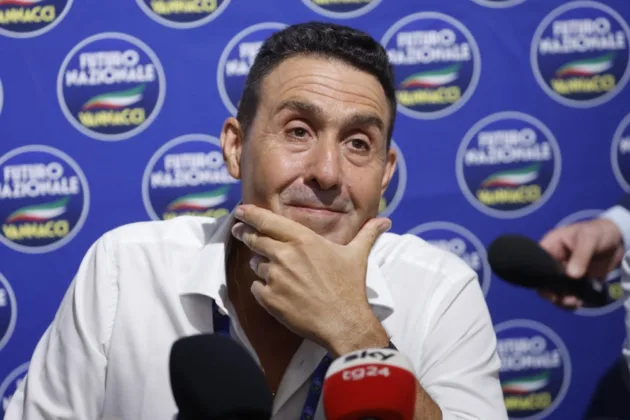
The account runs as follows. The Italian Prime Minister faces competition on her right from Futuro Nazionale (National Future), the party founded in February 2026 by MEP Roberto Vannacci. She is therefore hardening her positions, and the row with Spain is the vehicle. Politico has presented Meloni as tacking rightwards under domestic pressure and using the confrontation with Pedro Sánchez to demonstrate it.
Sandro Gozi, a French Renew MEP, wrote that Meloni was suspending Schengen because of Vannacci rather than Sánchez, calling the checks “dictated by the polls favouring Vannacci in Rome”. Democratic Party deputy Piero De Luca called the decision a “demagogic proposal”. Davide Colombi, of the Centre for European Policy Studies, told Al Jazeera the Italian move was political rather than practical.
The account carries an assumption: that the disagreement between Rome and Madrid is staged.
Italian Foreign Minister Antonio Tajani raised suspension first, and tied it to Spain’s regularisation programme rather than to Italian polling. He called the Spanish decree profoundly wrong and said it encouraged trafficking. The April decree drew 1,174,978 applications before closing on June 30, according to the ministry of inclusion, social security and migration.
Madrid disputes the link, pointing instead to a Supreme Court judgment of June 29, published on July 8, which narrowed the summary return regime by holding that a maritime boundary is not a containment element. That is a substantive disagreement about cause, and both governments have staked policy on their answer.
Rome has borne costs for its position. The checks fall in peak season, and Madrid’s reply was a 48-hour ultimatum. Meloni’s Government refused it, saying Italy accepts no ultimatums on national security, and extended the measures to August 15. Spain then ordered controls on all arrivals from Italy from August 8 to September 7, a broader measure than the Italian one, aimed at a country that has received nobody from Ceuta.
Nor was Rome isolated in a way that would suggest a purely Italian calculation. On August 1 the leaders of 22 member states signed a letter warning against uncontrolled mass crossings and the instrumentalisation of migration. It was drafted on the initiative of Italy and Denmark, whose social democratic Government has since joined Meloni in blaming uncontrolled immigration for rising crime and pressing for deportations.
Sweden told Spain to regain control of the enclave. Finnish ministers backed suspending the passport-free area. The Dutch Government demanded protection of the external border. Czech Prime Minister Andrej Babiš called for Spain’s removal from Schengen. France deployed rapid border intervention units to the Pyrenees. Poland has asked the EU to deny residence rights to those entering illegally.
The second question is what the coverage displaced.
An estimated 72,000 people crossed from Morocco into Ceuta from July 30, according to figures Spanish interior minister Fernando Grande-Marlaska gave on August 4. The city’s government declared a humanitarian and social emergency. Dozens died attempting the crossing. Ceuta president Juan Jesús Vivas told Telecinco that between 3,000 and 5,000 remained in the enclave once the majority had returned.
That is the largest single breach of an EU external border on record. It produced days of European commentary about airport signage, passport wars and whether the Italian Prime Minister means what she says.
Home affairs commissioner Magnus Brunner has said the EU passed the Ceuta test, crediting cooperation between Madrid, Rabat and the institutions and noting that no migrant from Ceuta entered the Schengen area. Interior ministers meeting informally on August 4 under the Irish presidency of the Council of the European Union backed Madrid and rejected suspending Spain from the free-travel zone.
MEPs have asked the European Commission to establish whether Italy met the legal conditions for reintroducing internal controls and, if not, to act as guardian of the treaties. No comparable request has been made regarding the fence at El Tarajal.
The Guardia Civil has cancelled leave in Ceuta and Melilla ahead of August 15, the date circulating on social media for a second attempt. Whether Meloni is sincere will not determine what happens there.