





France and Germany have pledged to work out a joint position on the European Union’s automotive package and the European content rules attached to it, handing the bloc’s two largest economies decisive weight over the future of its car industry.
The commitment appeared in the conclusions of the 26th Franco-German Ministerial Council, held in Germany on July 17, 2026. Both governments said they would seek a joint approach on the package and on the automotive provisions of the Industrial Accelerator Act by the end of summer.
The two capitals described the European Commission’s review proposal as an important basis for technology-neutral and flexible carbon dioxide rules alongside EU content requirements. They also said they wanted to secure a strong European manufacturing base and accelerate the uptake of zero and low emission vehicles.
Brussels abandoned the 2035 zero-emissions requirement for new cars in December 2025, replacing it with a 90 per cent cut in tailpipe emissions. Manufacturers would offset the remaining 10 per cent using low-carbon steel made in the EU or sustainable fuels such as e-fuels and biofuels.
The Industrial Accelerator Act, published on March 4, 2026, would require an electric car to source at least 70 per cent of its parts cost inside the bloc to qualify for public procurement and support schemes.
France has argued that the definition is too loose because it extends European origin to dozens of countries holding trade agreements with the EU. Germany, long hostile to buy-European rules, has shifted position as its car industry has shed jobs.
Renault, Stellantis and Volkswagen, which together account for about 60 per cent of EU vehicle output, want a 70 per cent threshold covering the member states plus Norway, Iceland and Liechtenstein. Suppliers including Valeo, Bosch, Forvia, Schaeffler and ZF wrote to both governments before the council, pressing for a tougher act.
Carmakers have resisted counting European content component by component. “A vehicle is far more than the sum of its parts,” the European Automobile Manufacturers’ Association said in a position paper published on July 1, 2026.
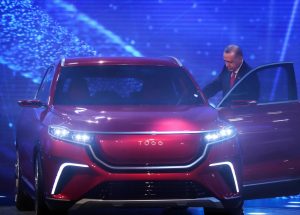
Turkey has been lobbying Brussels to have its plants counted as European, and Japanese and British producers have raised similar demands.
The sector supports about 13 million jobs across the bloc. German carmakers and suppliers cut 48,000 posts in 2025, according to analysis by Ernst & Young.