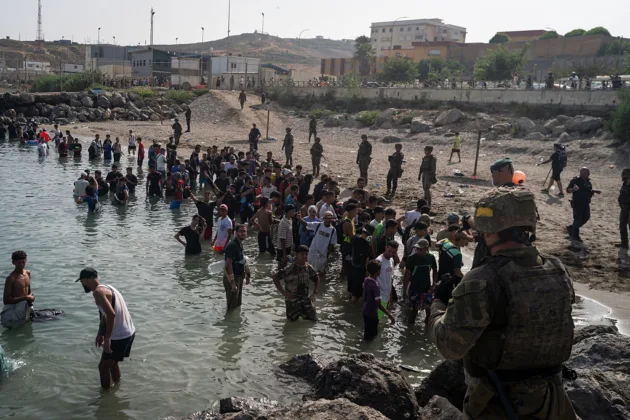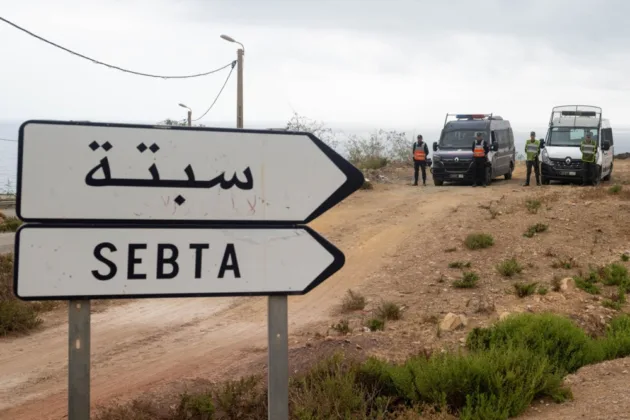





Spanish army intelligence has identified 72 Moroccan military personnel still inside Ceuta, the Spanish enclave on the north African coast, two months after the mass border crossing of July 30-31, according to at least three classified army reports and a senior officer.
Of that number, 22 are described as belonging to Rabat’s intelligence services and 50 as infiltrated soldiers. The 22 acted as the planners of the operation and that the 50 carried out instructions through criminal networks.
A further seven Moroccan reservists later presented themselves to the National Police.
The officer said that the foreigners never left Spanish territory and that the true figure may be higher.
The reports, according to summaries in the Spanish press, call the men “centres of gravity” for the financing and control of the groups that remain in the city. The files include about 50 photographs of soldiers and officers.
Some are said to watch Spanish patrols. They stay in private homes, train in groups and receive money from across the border.
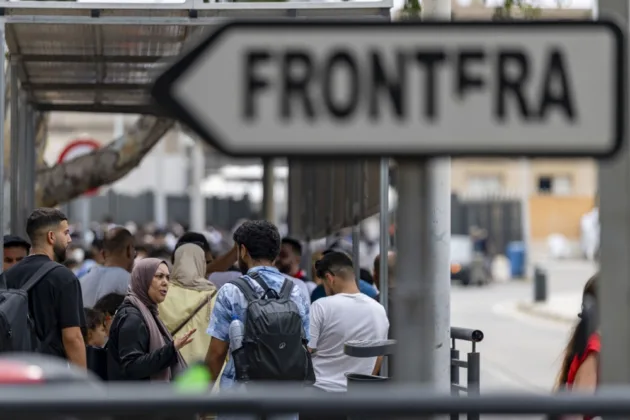
The July 30-31 crossing, coinciding with Morocco’s Throne Day, brought tens of thousands of people into the Spanish enclave. El Español put the number at about 80,000, while a National Police intelligence report sent to the courts referred to some 72,000 entries over the two days, about 90 per cent of them reversed within hours.
The National Centre for Immigration and Borders (CENIF), the intelligence unit of the National Police’s General Commissariat for Foreigners and Borders, has already told investigating judge María Tardón of the Audiencia Nacional, Spain’s central criminal court, that Moroccan gendarmes and plain-clothes agents guided the flow and that a migratory purpose was only the formal cover. The court is examining possible offences against the integrity of the State.
Army electronic-warfare intercepts before the event had rated a mass entry “very likely”. The intercepts were made on July 27 by the Army’s Regiment 32 of Electronic Warfare, three days before the crossing, and the supporting material, including the intercepted conversations, did not appear in the dossier the Spanish Government later declassified.
Spanish territorial policy minister Ángel Víctor Torres said on September 24 that voluntary daily returns to Morocco were running at 150 to 200, and that 7,099 people had gone back since August 10.
The Unified Police Union (SUP), using border cameras, puts the number nearer 60. It also disputes the overall total and estimates that more than 14,000 of those who crossed are still in the city, among them about 2,400 minors in protection centres.
Gabriel Rufián of the Republican Left of Catalonia (ERC) has called what happened in Ceuta “an aggression by a state”. He asked on September 27 whether 80,000 people wandering the streets did not amount to destabilisation.