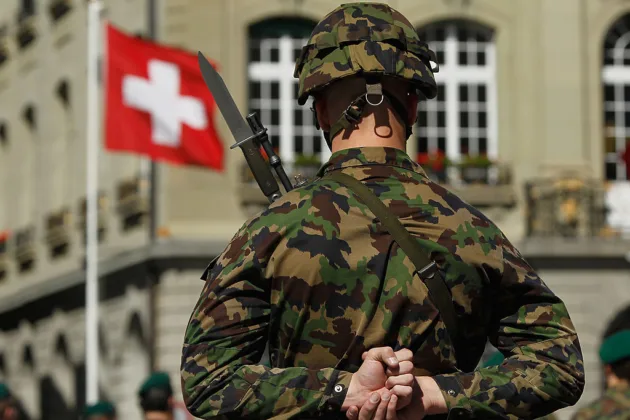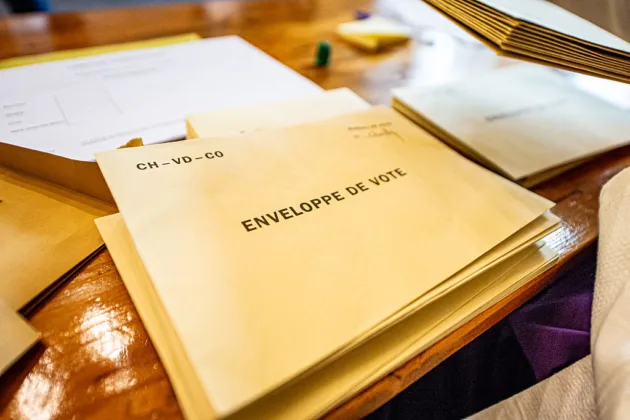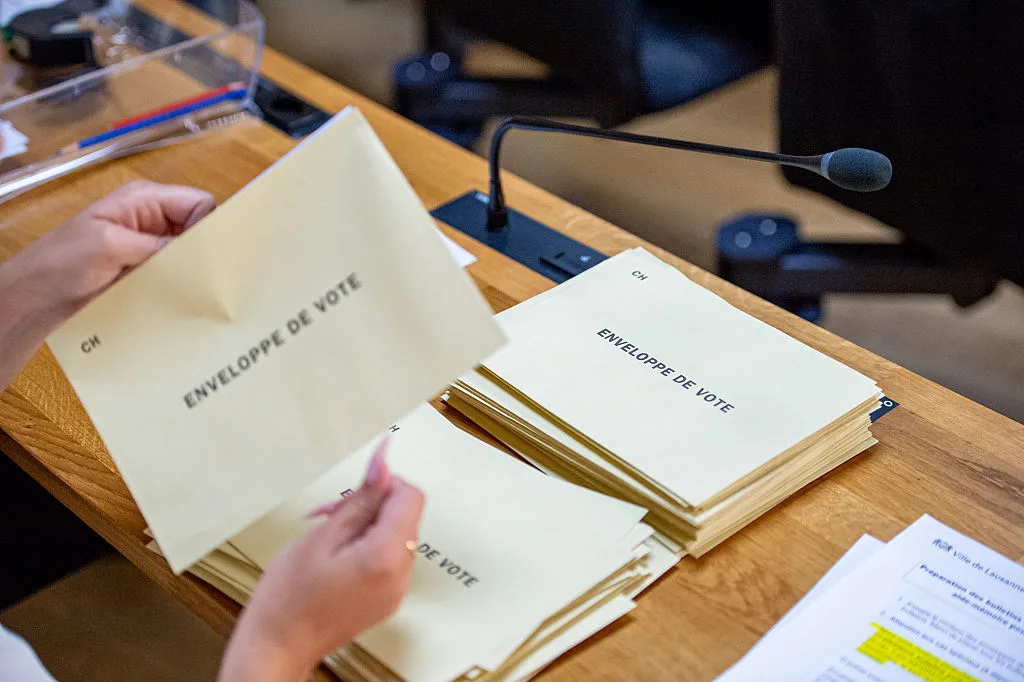






Swiss voters have rejected a proposal to enshrine a stricter definition of neutrality in the constitution, which would have opened the way for Switzerland to withdraw from sanctions against Russia and made closer cooperation with the European Union more difficult.
The initiative was defeated in the federal referendum held on September 27, with 70.15 per cent voting against and 29.85 per cent in favour. Turnout stood at 47.06 per cent, with 1,854,767 voters rejecting the proposal and 789,130 backing it.
The measure was rejected in all 26 cantons, failing both the popular and cantonal majorities required for a constitutional amendment. A second initiative on the same ballot, which demanded 70 per cent national food self-sufficiency, was also defeated, by 72.5 per cent.
Had the initiative been approved, it would have introduced constitutional provisions aimed at steering Swiss foreign policy towards a stricter interpretation of neutrality, while restricting Bern’s ability to impose economic sanctions on belligerent states unless they had been mandated by the UN Security Council. This would have opened the way for Switzerland to withdraw from its sanctions regime against Russia, as the measures currently in place are not mandated by the UN.
Its rejection means that Bern will keep its current policy towards Moscow, including the sanctions adopted in line with the EU after Russia’s full-scale invasion of Ukraine in 2022. The vote also leaves Switzerland free to continue deepening its institutional cooperation with the bloc, without the additional constitutional constraints proposed by the initiative.
The initiative, formally called “Safeguard Swiss Neutrality”, was backed by Pro Schweiz (Pro Switzerland), a political movement campaigning for the preservation and strengthening of Swiss neutrality, and by figures associated with the conservative Swiss People’s Party (SVP), the only party to endorse it. The campaign was financed largely by industrialist and former federal councillor Christoph Blocher, who put millions from his own fortune into it.
It sought to introduce a much stricter definition of neutrality into the Swiss Constitution, including the requirement that Swiss neutrality be “perpetual and armed”. Both chambers of parliament had already recommended rejection, the National Council by 124 votes to 65 and the Council of States by 29 to 10.
Neutrality is a fundamental element of Switzerland’s national identity and foreign policy, but its practical application has traditionally left the government considerable room for interpretation. This has allowed successive governments to adapt the country’s approach to changing international circumstances while remaining within the framework of international law.
The supporters of the initiative wanted to narrow that room for manoeuvre. The proposal would have restricted Switzerland from joining or cooperating with military or defence alliances, except in the event of an attack or imminent attack on Switzerland. Joint training with foreign partners and participation in peacekeeping operations would have remained possible.
It would also have barred Bern from imposing sanctions on belligerent states, apart from measures adopted by the UN Security Council and measures intended to prevent sanctions circumvention.
A stricter constitutional definition would therefore also have constrained Switzerland’s ability to prepare and conduct security cooperation with European partners, since cooperation that is possible under the current interpretation of neutrality could have come into conflict with the new constitutional rules. The Federal Council explicitly warned that this would considerably restrict Swiss security policy cooperation.
These demands stood in clear contrast to the direction taken by the Swiss Government in recent years, which has sought to strengthen cooperation with the European Union while preserving Switzerland’s formal neutrality. Bern has pursued closer institutional ties with Brussels and greater cooperation with European partners on sanctions, security and other policy areas.
That effort includes the package of treaties signed with the EU on March 2, 2026, covering electricity, food safety, health and free movement of persons, which the Federal Council sent to parliament the same month and which is expected to face a referendum of its own.
According to the government, the result should not be interpreted as a rejection of Swiss neutrality itself. Foreign minister Ignazio Cassis said after the vote: “This result is not a vote against neutrality,” adding that Switzerland had been neutral yesterday, was neutral today and would remain so in future.
During the campaign, which he opened on August 11, Cassis had warned that a rigid constitutional rule would force Bern to drop its sanctions on Russia and could lead European partners to stop buying from Swiss defence firms.
Public opinion reflects this distinction. The “Security 2026” study, published in May 2026 by ETH Zurich’s Military Academy and Center for Security Studies, found that 85 per cent of voters continued to support maintaining Swiss neutrality, down from 97 per cent in 2022.
At the same time, 59 per cent said that neutrality could no longer be credibly protected militarily. The survey, based on 2,089 interviews carried out in January, also found that 43 per cent believed membership in a European defence alliance would provide greater security than maintaining neutrality, the highest level recorded in the series, while 56 per cent favoured closer ties with NATO.
The referendum result points to an important distinction: Maintaining neutrality is still supported by a clear majority, but this does not necessarily mean that voters see neutrality as incompatible with cooperation with the EU or with greater engagement with European partners. Rather, the vote suggests that many Swiss voters support preserving neutrality while allowing the government sufficient flexibility to interpret and apply it in a changing security environment.