

Plans to let public authorities favour European suppliers in state contracts have reopened a dispute among European Union member states over how far the bloc should shield its industry from foreign competition.
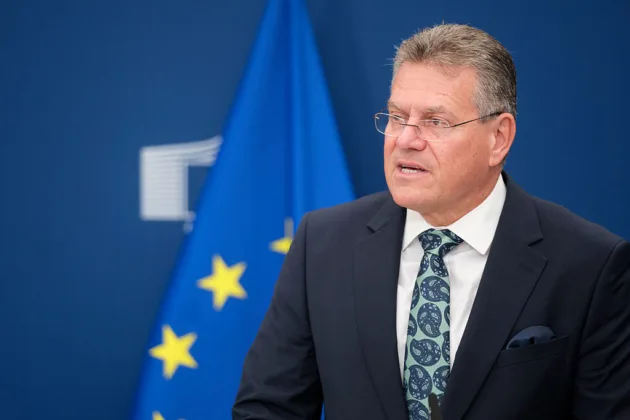
The European Commission’s Public Procurement Act, scheduled for presentation on September 9 by Stéphane Séjourné, Executive Vice-President of the European Commission for Prosperity and Industrial Strategy, would replace the three directives that have governed public purchasing since 2014.
As a regulation rather than a directive, the text would apply directly in every member state without national transposition, narrowing the discretion governments now enjoy over their tenders.
Under a draft leaked in July, buyers could limit tenders to European operators, demand a minimum share of European content or award extra points to European bids. For large or strategic contracts they could reject offers in which European content accounted for less than half the value.
The same draft would set floors for quality, requiring that at least 30 per cent of the award score, and 50 per cent for labour-intensive contracts, rest on criteria other than price.
The preference would reach beyond the bloc. Suppliers from countries covered by the World Trade Organisation (WTO) Agreement on Government Procurement (GPA), and from partners whose trade deals with the EU contain a procurement chapter, would qualify. The Commission could strip that status by delegated act from states that keep European firms out of their own tenders.
The Commission has put the annual value of public purchasing in the EU at about €2 trillion, close to 14 per cent of the bloc’s economic output.
Capitals have been split over the plan since it was first floated. France has driven the push for a hard “Made in Europe” standard, while Germany has favoured a looser “Made with Europe” formula open to trusted partners.
In December 2025 the Czech Republic, Estonia, Finland, Ireland, Latvia, Malta, Portugal, Slovakia and Sweden set out their objections in a joint paper reported by Reuters, urging the highest possible caution and warning of higher prices, weaker competition and disrupted supply chains.
Swedish Prime Minister Ulf Kristersson set out the free-trading case in February. “We do not want to protect European businesses that are basically not competitive,” he told the Financial Times.
British officials have argued that the two economies are too closely bound for such a turn, while Washington has objected to European preference being written into defence purchasing.
Behind the argument over tenders sits an older complaint about the way the bloc regulates. The EU writes binding rules for its own producers — carbon pricing, emissions reporting, chemicals restrictions, animal welfare, due diligence along supply chains — and then admits goods made where none of those rules apply.
Farming organisations and industrial federations have made the point for a decade. The cost of compliance falls on the European producer, they argue, while the imported competitor reaches the same shelf carrying none of the same bill. On that reading the bloc is the only trading power that legislates chiefly against the firms inside it.
The EU-Mercosur agreement, applied provisionally since May 1, 2026, is the case they cite most often. It liberalises the bulk of trade between the two blocs while leaving out the “mirror clauses” that would have required imported food to be produced to the sanitary, environmental and labour standards the EU imposes at home.
What member states obtained instead was a safeguard, approved by the European Parliament on February 10, 2026 by 483 votes to 102 with 67 abstentions. It lets the Commission suspend tariff preferences when imports of sensitive goods such as beef, poultry, eggs, citrus and sugar climb by 5 per cent on a three-year average. The trigger is volume, not method of production.
The one instrument that prices the gap directly, the carbon border adjustment mechanism (CBAM), entered its definitive phase in January and reaches a short list of sectors: cement, iron and steel, aluminium, fertilisers, electricity and hydrogen. Everything else crosses the border on its price alone.
Read against that record, the procurement act does not lighten a single obligation on European suppliers. It changes who is allowed to sell to the public authorities that European taxpayers fund, which is why its critics inside the bloc call it protection bought at the wrong end of the chain.
Séjourné has made no secret of the industrial logic. Public money spent in Europe, he wrote in February, should serve European production and employment, and he has pointed to Washington and Beijing as economies that already reserve strategic contracts for their own.
The proposal is not law. It must clear the European Parliament and the Council of the European Union under the ordinary legislative procedure, and its transition period means it would not apply for years.
Adoption had been pencilled in for the second quarter of this year before slipping to September. The Industrial Accelerator Act, which carried an earlier version of the “Made in Europe” requirement, was itself put back to March 4 after lobbying from opposed capitals and from the United States and Britain.
Whatever survives that process, it will govern only the tender. The rules that decide what European producers must spend before they bid are written elsewhere, and the act does not reopen them.