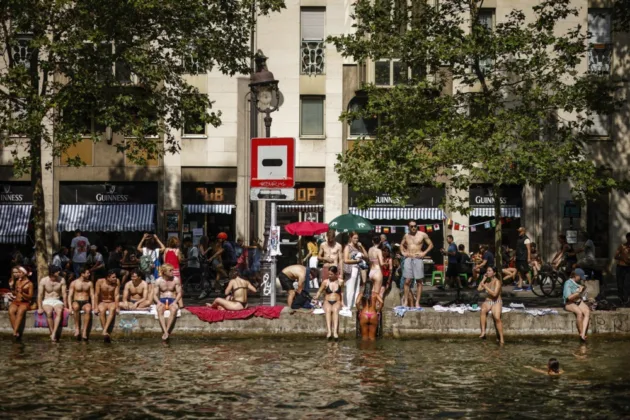






More than 90 people have drowned in France since June 19, the country’s sports and youth minister has said, as an early summer heatwave continued to push people towards rivers, lakes and canals in search of relief.
Marina Ferrari admited the figure was worrying and said many of those who died in the first days had been young people taking risks to escape the heat. She added that there was no single profile among the dead.
The latest toll marks a rise from an earlier official count of 74 drowning deaths.
Ferrari said small children were clearly vulnerable when left unsupervised, while some young people had behaved dangerously by jumping from bridges or swimming in canals without any supervision.
She said the government was working to overhaul lifeguard certification across the country, and pointed to particular weaknesses at swimming pools in rural areas. Facilities there were closing because of the cost of renovation, she said.
The government had proposed redirecting money from the National Sports Agency to prioritise those pools, Ferrari said, and was trying to make the lifeguard profession more attractive.
The deaths have come during a heatwave that has also hit Spain, Italy and the United Kingdom, with France among the worst affected. The national weather service placed about half the country under a red heat alert at the height of the episode.
Prime Minister Sébastien Lecornu earlier described the drowning deaths as a tragic consequence of the crisis, saying the victims were mainly young people.
France recorded 409 fatal drownings over the summer of 2025, a 16 per cent increase on the previous year, according to figures from the public health agency Santé publique France. Among the dead were 57 children and adolescents.
The rise in fatal drownings last year fell mainly on teenagers, the agency said. Some 21 young people aged 13 to 17 died, more than double the 10 recorded in 2024.
Nearly six in 10 of the minors who drowned had been swimming in a river, lake or other stretch of open water, according to the agency. Two in 10 had been in a private family pool.
The agency has said the heatwaves of 2025 contributed to the rise, and has brought forward the start of its drowning surveillance period to May this year. It said prevention campaigns for the coming summer would focus on older people and on the risks linked to alcohol.