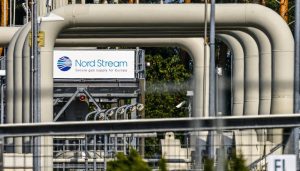






Russian gas company Gazprom has accused Ukraine of striking infrastructure serving the Blue Stream pipeline, which carries Russian natural gas to Turkey, while NATO leaders met in Ankara.
The company said in a statement posted on social media that unmanned aerial vehicles hit the Krasnodarskaya compressor station in Russia’s Krasnodar region on the evening of July 7. It said the strike had been aimed at disrupting deliveries to Turkey.
Gazprom said repair work was under way and that prompt action had prevented any interruption to supplies. It gave no detail on the extent of the damage and did not say how many drones were involved.
Ukrainian authorities have not commented publicly on the incident. Kyiv has said its long-range strikes target military and energy assets that finance Russia’s war effort.
Blue Stream runs from Russia’s Stavropol region, crosses the Black Sea and comes ashore near Samsun on Turkey’s northern coast before continuing inland to Ankara. It entered service in 2003 and has a design capacity of 16 billion cubic metres a year.
Kremlin spokesman Dmitry Peskov said Moscow had repeatedly drawn Ankara’s attention to what he described as persistent Ukrainian attempts to attack infrastructure linked to both Blue Stream and the TurkStream pipeline. He said Russia expected Turkey and other countries to use their influence to deter such attacks, according to the Russian news agency TASS.
Sergey Altukhov, a member of the State Duma for the Krasnodar region, said the strike amounted to energy terrorism directed at Turkey as well as Russia.
The reported attack was the latest in a series against compressor stations that feed the two Black Sea pipelines. Gazprom said in March that drones had targeted the Russkaya, Beregovaya and Kazachya stations repeatedly over the preceding fortnight, and it reported further attempts on March 12, March 19 and April 2. It said on each occasion that the strikes had been repelled and no damage caused.
The pipelines carry commercial weight beyond Turkey. TurkStream is the only remaining route for Russian pipeline gas to reach European Union customers after other export corridors closed following Moscow’s invasion of Ukraine in 2022.
The incident coincided with the NATO summit in the Turkish capital on July 7-8, attended by leaders of the alliance’s 32 member states.
Turkish President Recep Tayyip Erdogan used the opening of the summit to warn that efforts to exclude non-EU allies from European defence projects risked creating an artificial split on the continent.