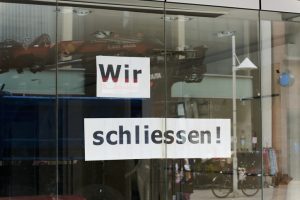





The number of corporate insolvencies in Germany surged in the second quarter of 2026 to levels not seen in more than 20 years, according to new data from the Leibniz Institute for Economic Research Halle (IWH).
In the April-to-June period, there were 4,996 insolvencies of partnerships and corporations.
This represents a 9 per cent increase on the first quarter and the highest figure since the second quarter of 2005.
June alone saw 1,702 corporate bankruptcies, 12 per cent more than in May and 20 per cent higher than June 2025.
The rise has affected nearly all major sectors, including construction, real estate, retail, hospitality, and services.
One of the few exceptions was the manufacturing sector, though overall numbers remain elevated.
Regionally, new post-2020 highs were recorded in most federal states.
The IWH-Insolvenztrend, which analyses court announcements and company balance sheets, also highlighted the human cost: Around 45,500 jobs were affected in the second quarter, with more than 14,000 linked to the largest 10 per cent of cases in June alone.
Steffen Müller, head of IWH insolvency research, said the figures showed the insolvency wave continuing at an exceptionally high level and hitting the economy across the board. He warned that elevated numbers should be expected in the third quarter as well.
The figures come amid ongoing economic headwinds for German industry, including high energy costs, weak domestic demand, and global uncertainty.
Separate analysis by restructuring consultants has also noted a declining success rate for salvaging larger firms once insolvency proceedings begin.
With bankruptcies now running at roughly double pre-pandemic averages in many months, the data adds to concerns about the resilience of Germany’s Mittelstand (SME’s) and broader industrial base.
The high number of insolvencies haven’t been seen since 2005, when Germany went through a painful period of economic restructuring in the early 2000s, often called the “lost decade” after reunification.
To combat this, Berlin enacted the Hartz reforms under Chancellor Gerhard Schröder. These were designed to make the economy more competitive but caused short-term pain, with higher unemployment and pressure on businesses.
Today’s numbers, worse than during the Covid pandemic, are the results of high energy costs, deindustrialisation pressures and weak domestic demand.
Small companies that form the backbone of the German economy are struggling with the shift to carbon-neutral production, which adds extra costs when they are already battling high power prices and a broader slowdown.https://t.co/iyaUaW7J9w
— Brussels Signal (@brusselssignal) July 2, 2026