










The White House has identified a laboratory leak in Wuhan as the origin of Covid-19, resting its case on two claims about the virus itself.
The first is that SARS-CoV-2 carries a biological characteristic not found in nature, the furin cleavage site that helps it enter cells. No sarbecovirus, the subgenus to which the virus belongs, is known to have one.
In March 2018 the EcoHealth Alliance and the Wuhan Institute of Virology asked the Defense Advanced Research Projects Agency to fund work inserting human-specific cleavage sites, furin sites among them, into SARS-related coronaviruses. The agency refused, concerned the research met the definition of gain-of-function.
The second claim is that every case descends from a single jump into humans. The most cited study on the question, published in Science in 2022, found two separate introductions and read that as evidence of an animal origin.
Neither an infected intermediate animal nor a laboratory progenitor virus has ever been identified, and no independent researcher has entered the Wuhan institute.
The rest of the page concerns conduct, and rests on the December 2024 final report of the House of Representatives Select Subcommittee on the Coronavirus Pandemic. That inquiry found the EcoHealth Alliance breached the terms of its National Institutes of Health grant, failed to report gain-of-function experiments carried out in Wuhan and filed a required report two years late.
The health department debarred the organisation and its president, Peter Daszak, for five years on January 17, 2025, 11 days after EcoHealth dismissed him. The report also disclosed that the justice department had subpoenaed EcoHealth’s correspondence with the Wuhan virologist Shi Zhengli, including her private email account.
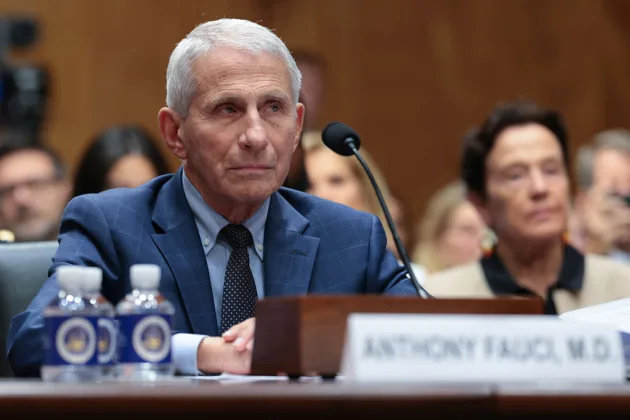
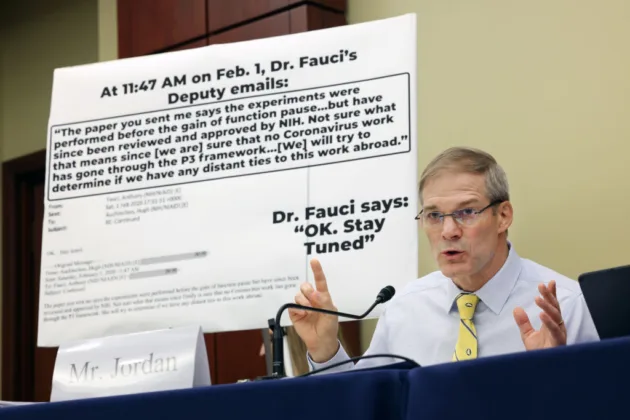
David Morens, a senior adviser to Fauci, wrote in 2022 that he had “deleted everything with [EcoHealth] people from my entire outlook”. The subcommittee found that amounted to destroying federal records, a federal crime, and that Fauci prompted the March 2020 paper that dismissed a laboratory origin as implausible.
Fauci declined more than 100 times to answer senators on July 29, invoking his right against self-incrimination. Committee chairman Rand Paul said he would seek a contempt vote and questioned whether that protection extends to a man already pardoned.
Brussels has stayed out of the argument. Research Commissioner Ekaterina Zaharieva told German MEP Christine Anderson in 2025 that no national or European authority had passed the Commission intelligence indicating a laboratory origin, in a reply that also confirmed EU money had reached the Wuhan institute before the pandemic.
Germany’s foreign intelligence service had concluded in 2020 that an accidental leak was highly probable, according to Süddeutsche Zeitung, Die Zeit and the Neue Zürcher Zeitung. That assessment was never made public.