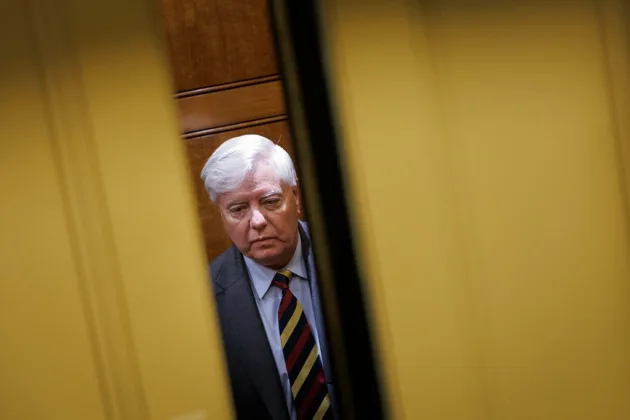









US Senator Lindsey Graham, one of President Donald Trump’s most loyal allies and among Washington’s most prominent foreign-policy hawks, has died at the age of 71.
The South Carolina Republican died on the night of July 11, 2026 following a “brief and sudden illness”, according to a statement from his office. Emergency crews had responded to a call reporting cardiac arrest at his Washington home.
Preliminary findings from the District of Columbia medical examiner attributed the death to an aortic dissection linked to cardiovascular disease.
Graham, a senator since 2003 and chairman of the Senate Budget Committee, had secured his party’s nomination in June for a fifth term. He last voted in the chamber on June 24.
His death leaves a vacancy in a Senate where the Republican Party holds only a slim majority. Under South Carolina law, Governor Henry McMaster would appoint a temporary successor, with a fresh primary expected before the November election.
A war hawk in the mould of his late friend Senator John McCain, Graham was a driving force behind US backing for Ukraine. He had visited Kyiv on July 10, meeting President Volodymyr Zelensky, and had pressed both the Trump and Biden administrations to arm the country against Russia.
Alongside McCain and the late Democrat-turned-independent Joe Lieberman, Graham had formed a hawkish trio nicknamed the “Three Amigos”, travelling the world together to champion an assertive US role abroad.
He had also attended the recent NATO summit in Turkey, where he lobbied colleagues on a strategy to end the war. Graham was equally among the loudest US voices for military action against Iran and a steadfast supporter of Israel.
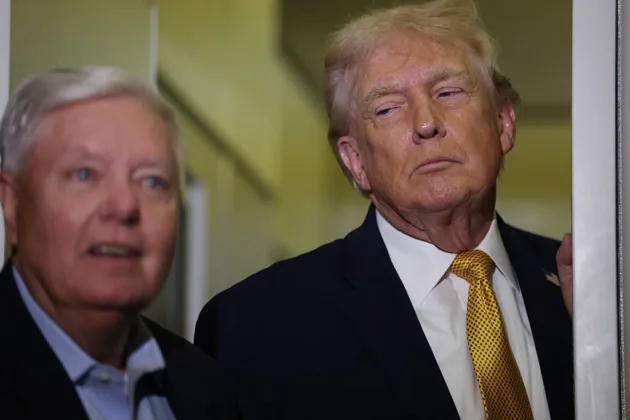
Trump led the tributes, calling Graham “a true American Patriot” and ordering US flags lowered to half-mast. Israeli Prime Minister Benjamin Netanyahu said his country had “lost one of its greatest friends”, while President Isaac Herzog described the senator as a “beacon of moral clarity”.
First elected to the Senate in 2002, Graham had at first been a fierce critic of Trump during his own short-lived 2016 presidential bid, only to become one of his most devoted defenders.
His death removes one of the Republican Party’s most influential transatlantic figures at a moment of deepening uncertainty over continued US support for Kyiv.