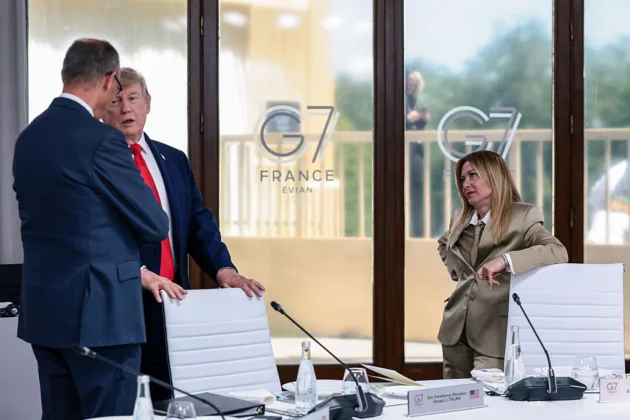
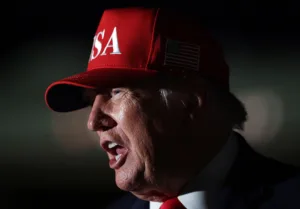

The dramatic, heavily publicised theatre lasted barely a week. Following the public fallout between Rome and Washington over US President Donald Trump’s characteristic diplomatic attacks, the European establishment rushed to stage an elaborate display of solidarity around Italian Prime Minister Giorgia Meloni. The trigger was Trump’s claim, in a June 19 interview on the Italian broadcaster La7, that Meloni had “begged” him for a photograph at the G7 summit in Evian-les-Bains, France. In a grand gesture of defiance, Italian foreign minister Antonio Tajani cancelled his official trip to Washington, while Meloni sought public-relations refuge in a series of orchestrated photos alongside French President Emmanuel Macron and a defeated Keir Starmer.
The message transmitted from Rome was crystal clear: Project absolute sovereign strength, present Meloni as Europe’s indispensable conservative power broker and signal a unified continental front. But international politics possesses a brutal habit of exposing manufactured theatre. The reality unfolding behind the scenes completely shatters the illusion of Italian centrality. Far from joining an institutional boycott of the American administration, senior conservative leaders from across Europe have quietly executed the precise opposite strategy.
While Rome remains trapped in a confrontation of its own making, key conservative figures from Poland, Croatia, Belgium, Romania and France have bypassed Meloni’s drama and have travelled directly to Washington to deepen strategic ties, solidify communication and mutual understanding with Team Trump, and build partnerships with Republican congressional leaders. The strategic message to the White House is devastatingly clear: Europe’s broader conservative movement is not turning away from the United States. It is actively running towards it**, and** it no longer requires Rome’s permission or mediation to do so.
This sudden marginalisation strikes at the very core of Meloni’s political identity. For years, her primary international currency was her carefully cultivated status as the ideological and political bridge between European conservatism and the American populist Right. She positioned herself as the transatlantic gatekeeper, posing as a figure with the institutional power and personal relationships capable of creating liaisons across continents.
This entire myth has now evaporated. Meloni’s European allies have made a cold, calculated assessment of their own national interests. They recognise that a stable, pragmatic relationship with Washington is indispensable for European trade, technological cooperation, energy security and the continent’s defence architecture. They remain deeply sceptical about the oppressive Brussels bureaucracy, instinctively aligning with Republican arguments regarding national sovereignty and deregulated economic growth. And they have absolutely no intention of sacrificing these structural priorities on the altar of a localised, personal feud.
Meloni clearly overplayed her hand. She tried to force her colleagues to choose between their alliance with the world’s biggest superpower and personal loyalty. As a result, she merely exposed her own weakness. In mid-June, she was presented by mainstream commentators as the undisputed queen of European conservatism. Today, she stands as the negative example of a leader whose international leverage proved to be more volatile than she could have imagined.
As the United States celebrates the 250th anniversary of its independence, the vital bond between Western nations must transcend temporary political gamesmanship. Especially for front-line European nations, America’s economic and military robustness has long acted as an irreplaceable anchor for stability. European conservatives grasp this reality perfectly well. They are celebrating in Washington over the July 4 weekend, focused entirely on the future of the transatlantic alliance. As for Meloni? Her own colleagues have already quietly moved on.