

A row has broken out between the Polish opposition its allied President Karol Nawrocki and the Tusk administration over claims that Poland this year transferred its Patriot air interception missiles to Ukraine despite the government repeatedly warning that Poland may be facing a direct military threat from Russia within months.
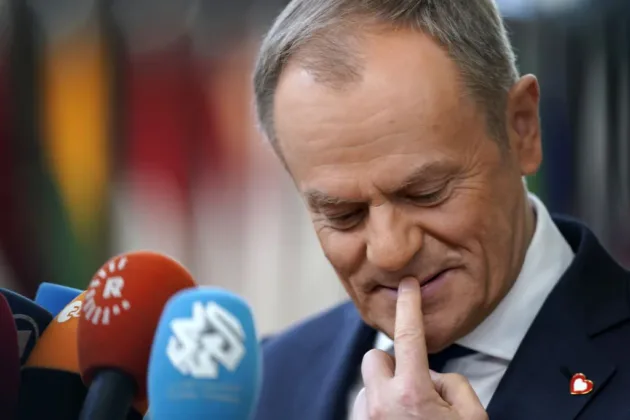
Polish PM Donald Tusk had said on July 3 that his government would be careful about further financial commitments to Ukraine, saying Poland had to prioritize protecting the European Union’s eastern border. He also said that his previous warnings about Russia considering launching direct attacks on Poland had become verified by its US allies.
But on July 4 one of the leaders of the right wing opposition Confederation Party took to Platform X to claim that Poland had transferred PAC-3 interceptor missiles for Patriot air defence systems to Ukraine.
“In March, without informing Parliament the government secretly handed Ukraine expensive and difficult-to-replace Patriot interceptor missiles.They had been purchased by Poland from the United States to build the country’s layered air defence system, which you have been hearing about for years but which has still not been completed,” Bosak wrote.
The claim was first made by retired Colonel Piotr Lewandowski during an appearance on the youtube Kanał Otwarty channel.
“Poland has transferred missiles for Patriot systems to Ukraine. The Poles also handed over some of these Patriot missiles, which are extremely valuable to us and certainly not inexpensive,” the retired officer said, explaining that the missiles in question were Poland’s one and only air defence against Russian Iskander rockets which are stationed in the Kaliningrad exclave near Poland’s border.
Back in April the Ukrainian minister of defence Mykhailo Fedorov had thanked Poland for handing over Patriot missiles but did not specify the amounts or the terms on which this was executed.
PAC-3 missiles are among the most advanced and sought-after interceptors used by Patriot systems and are designed to counter ballistic missiles and other high-end aerial threats.
Global demand for these interceptor missiles was already high before the US went to war with Iran in late February, a conflict that placed further strain on Western missile stocks as US forces and Gulf allies used the interceptors extensively against Iranian missile and drone attacks.
Lockheed Martin agreed earlier this year to expand annual PAC-3 production from 650 to 2,000 by 2033 under a $4.7 billion deal with the Pentagon, an acknowledgment of just how stretched global supply has become.
Kyiv has repeatedly pressed its allies for more of the missiles. The shortage has made it harder for Ukraine to defend against intensified Russian strikes involving ballistic and hypersonic missiles, which are among the most difficult weapons to intercept.
Mariusz Błaszczak, the former defence minister in the last Conservative (PiS) government who currently leads that party’s parliamentary caucus said the decision about the transfer of the missiles had been kept from Parliament and was a strange way of responding to reports that Poland may soon be facing Russian military action.
In his view, transferring weapons “of such fundamental importance to Poland’s national security” while the government itself warns of a growing threat from Russia “would be a scandalous decision constituting action completely at odds with the basic duty of the authorities: ensuring the safety of their own citizens.”
The reports were also addressed by Zbigniew Bogucki, the opposition aligned Polish President Karol Nawrocki’s chief of staff, who told broadcaster Polsat News that it reminded him of the government’s recent attempt to transfer MIG fighter jets which had become surplus to Poland’s requirements in exchange for the transfer of Ukrainian drone defence technology.
Nawrocki claimed to have been kept in the dark about the idea and the transfer of the MIGs is still to take place as the Ukrainians have complained about the allegedly poor condition the planes are in.
The Polish government’s defence minister Władysław Kosiniak-Kamysz has responded to opposition claims and demands for an explanation about the transfer of the Patriot missiles by promising to declassify the full record of its military donations to Ukraine since Russia’s 2022 invasion.
Kosiniak-Kamysz said all military donations to Ukraine since 2022 would now be made public, adding that the transfers had begun under the previous PiS government. He also insisted that President Karol Nawrocki, and, before him, Andrzej Duda were informed of every donation made. He later confirmed that Patriot missiles from Poland had been transferred to Ukraine as part of a wider effort by several European states.
He said that the biggest transfers of weaponry and ammunition had taken place in 2022-2023 during the period of the previous PiS government.
Speaking to reporters at a Polish defence plant on July 6 PM Tusk said that “it is in the interests of Poland to help Ukraine to win the war against Russia as that helps to defend Poland.”
“I thought we had a consensus between the present and the last government on that. It would not be good to end it for partisan reasons”, added Tusk warning the opposition not to “play with fire”.
PiS responded by making the point that the transfers during 2022-2023 were justified as Ukraine was fighting for its survival, whereas now it is clear that the Ukrainian state will survive and there are concerns that Russia could test the eastwern flank of NATO by attacking the Baltic states and Poland.
Kosiniak-Kamysz also informed that he had instructed Poland’s Military Counterintelligence Service to investigate who had sought to disclose state secrets.
“We are operating in the conditions of war near our border, and every action against Poland’s national interest puts the security of Polish citizens at risk,” Kosiniak-Kamysz wrote on X.
President Nawrocki’s press spokesman Rafał Leśkiewicz reacted to Kosiniak-Kamysz’s promise to declassify materials about the donation of arms to Ukraine by saying “its not a very good decision”.
According to the President’s aide “this data is confidential, it should not be in the public domain” and accused the government of attempting to portray the previous government as having been over-generous with provision of military aid in the first two years of war.
Poland has been one of Ukraine’s strongest military and political backers since Russia launched its full-scale invasion in 2022, though the scope and timing of some weapons transfers have remained classified for security reasons.
The claims of a secret Patriot missile transfer come at a time when Kyiv and Warsaw are locked in a diplomatic dispute. In May, Ukrainian President Volodymyr Zelenskyy named a military unit after the Ukrainian Insurgent Army (UPA), a World War II nationalist force.
In Poland, the UPA is held to account for the 1943 massacres of tens of thousands of Polish civilians, which Warsaw recognizes as genocide. In Ukraine, many see the UPA as part of the country’s struggle for independence and resistance to Soviet rule.
Nawrocki last month stripped Zelensky of Poland’s highest order of state in retaliation at the honouring of UPA after which Zelensky and other Ukrainian politicians physically sent back their Polish gongs in disgust.
Last week Ukraine adopted a law on creating a Pantheon of Ukrainian heroes in Kyiv which Poland fears will include UPA leaders such as Stepan Bandera.
On July 3 the Polish parliament in turn debated Nawrocki’s legislative proposal to make Ukrainian nationalist ideology of Stepan Bandera illegal in Poland, has said that emerging Nazi ideology in Ukraine is a “mortal danger” for Poland.
The ruling Tusk majority in parliament rejected the proposal but not before PiS’a prime ministerial candidate Przemysław Czarnek went on the record calling the ideology of the Ukrainian nationalists as equivalent to German Nazism.
“This is Nazism in its purest form, Ukrainian Nazism. This is not about the past. We, Poles responsible for Poland’s present and future, cannot tolerate the renewed emergence of Nazi ideology in Ukraine today, because it is a mortal danger to us now and to future generations,”Czarnek said.
Russia has consistently said that denazification of Ukraine was one of the key objectives of its invasion in 2022, pointing to the way Ukraine was glorifying leaders who had collaborated with Nazi Germany.
PiS has shifted its position on Ukraine and Zelensky markedly over the past four years.
In 2022 the then PiS government and President Andrzej Duda were in the forefront of the efforts to help Ukraine providing shelter to two million Ukrainian refugees, d tanks and MIG fighter planes for the Ukrainian military and acting as a hub for military and humanitarian assistance to that country.
The PiS government also led in diplomatic efforts within Europe to ensure support for Ukraine and at home it granted Ukrainian refugees generous access to Poland’s health, education and welfare services.
It had hoped Ukraine would reciprocate in accepting Poland’s interpretation of Volhynia as genocide and by toning down nationalist thetoric and honouring of UPA fighters.
But the Ukrainians insisted on continuing to use the UPA history as an example of the fight for a free Ukraine and argued that Poles in the past had exploited Ukraine and had themselves committed crimes against the Ukrainian population.
Disagreements about the history as well as economic matters such as access for Ukrainian agricultural produce and road haulage industry to the Polish market, as well as what Poland perceived to have been Ukrainian attempts to make Poland join in the war with Russia led to a gradual deterioration in relations.
Polish public opinion has also turned against the Ukrainians with complaints about them having privileged access to public services, the fact that many Ukrainian young men are residing in Poland rather than fighting for their country and the inevitable fact that the increased number of Ukrainians has meant an increase in the number of crimes committed by foreign subjects.
This change of mood was picked up quickly by parties to the right of PiS, the Confederation party and the break-away Confederation of the Polish Crown led by the maverick MEP Grzegorz Braun.
In 2022 and 2023 PiS had been in the vanguard of supporting Ukraine’s bid to join both NATO and the EU. That has now changed with the party recognising that neither may be in the interests of Poland.
Ukraine’s huge agricultural sector is a threat to Poland’s, Ukraine is a competitor for EU funds and should Ukraine join NATO Poland would be obliged to defend it.
Direct involvement of Polish soldiers in Ukraine is something neither PiS nor the Tusk government is prepared to contemplate, arguing that this would cause tensions in western Ukraine, territory that had belonged to Poland before the second world war, and that Poland has to protect its own and NATO’s eastern border running along the Kaliningrad Russian exclave and the Russia aligned Belarus.
The increasing tensions with Ukraine has led all Polish political parties to advocate the cooling of relations. Even the present Tusk government, still highly supportive of Ukraine in its rhetoric, has trimmed the rights of Ukrainian refugees to use Poland’s health service and access welfare benefits.
While recognising that Ukrainians are culturally far more compatible with Poles than migrants from Asia, Africa or the Middle East Poles feel that the scale of the migration over the past decade has now produced dangers of conflict between the home and migrant population.
Grzegorz Braun is the politician who openly argues for reducing the number of Ukrainians in Poland and for the “stopping of the Ukrainization of Poland”. He has on several occasions taken down Ukrainian flags from public buildings in order to make his point.
PiS may not want to go that far, but since it is competing for votes with Braun in the part of the electorate that backs Polish sovereignty and traditional Catholic values it cannot ignore the fact its own voters are increasingly wary of helping Ukraine and its citizens.