




A Russian cruise missile entered Polish airspace in the night of 29-30 July and crashed in a field without causing any casualties but causing maximum controversy due to the fact that it was not shot down and that the civilian population on the ground failed to receive any warning of imminent danger.
A crater approximately 10 metres wide and 5 metres deep in a field was left by an air bomber launched Russian Kh-101 cruise missile in the village of Tarnawa-Kolonia in eastern Poland, 95 kilometres from the country’s border with Ukraine.
The missile is used by Russia in strikes against critical Ukrainian infrastructure incorporates design features intended to reduce its visibility to radar detection systems.
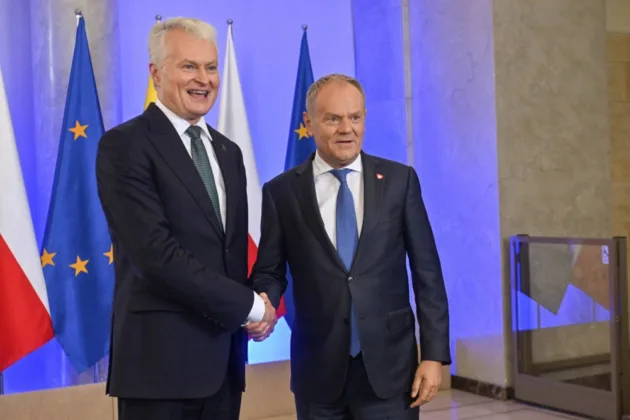
Poland had received warning from Ukraine of a massive Russian attack on the evening of July 30 when Polish Prime Minister Donald Tusk met Ukrainian President Volodymyr Zelensky in the city of Lublin in eastern Poland.
The Poles had their aircraft off the ground in anticipation for incursions into the country’s airspace in anticipation of the coming assault on Ukraine, having been tracking Russian bombers movements in the days preceding the strike.
Both the Ukrainians and later the Polish authorities informed that they believed that the rocket had been taking part in the massive Russian strike against Ukraine rather than being an intentional Russian test of Polish air defences.
Poland’s Operational Command said an unidentified object was detected in Polish airspace at about 3:40 a.m. local time, moving westward.
“To identify and intercept it, a standby F-16 fighter jet was dispatched to the area,” the command said.
However, the object later disappeared from the radar, prompting the military to dispatch a helicopter to its last known location.
“The helicopter crew identified what is believed to be the object’s impact site in an uninhabited area near Tarnawa-Kolonia” it added.
“There is no reason to believe that Poland was the target,” the Polish Prime Minister told reporters after visiting the impact site near the eastern village of Tarnawa-Kolonia.
He said two airborne objects had crossed into Polish airspace during Russia’s overnight barrage against western Ukraine.
One was confirmed to have entered Poland and left a crater at the crash site, while the second generated only a brief radar signal near the border and caused no consequences.
Tusk said the crater suggested the object had exploded on impact. There were no casualties or damage because it landed in an uninhabited area, reporters were told.
The PM claimed that the Polish military had been prepared to shoot down the missile had it posed a direct threat to populated areas and that the public had been warned about the incursion through sirens.
“Based on the reports I have received, particularly from the military, everything worked as it should have,” Tusk told reporters but added that “Poland’s security depends directly on the effectiveness of Ukrainian forces, including in the air.”
In fact warning sirens only went off in the city of Lublin which is over 50 kilometres away from the site of the explosion and these sirens were not heard in the immediate proximity of the incident. Nor were there any emergency alert text messages sent or TV and radio broadcasts warnings.
Since the launch of Russia’s full-scale invasion against Ukraine on February 24, 2022, Poland’s airspace has been breached several times.
Last September, around 20 Russian drones entered Polish airspace in what was considered one of the most serious violations of a NATO member’s airspace in decades.
In November 2022, a missile fell on the village of Przewodów in the eastern Lubelskie province, close to the border with Ukraine, resulting in two deaths. Polish experts later concluded it was a Ukrainian air defence missile fired while responding to a Russian attack that had gone off course.
In December of that year, a Russian Kh-55 rocket also fell into a forest near Bydgoszcz, in northern Poland. The information about the remains of the rocket being found was released only in April 2023.
There were also several instances where an object would cross into Polish air space close to the border with Ukraine for a period of several seconds only to then leave.
Poland spends almost 5 percent of its GDP on defence, the highest proportion of any NATO member and is reported to have the largest land army in the European Union but it was Ukraine which did most to protect Polish airspace last week rather than Poland
Last week’s incident has led to questions as regards the effectiveness of Poland’s air defences.
The missile could be seen and could be shot down, but nothing happened within the six minute window between the object entering Polish airspace and exploding on the ground.
The reasons for this were that Ukrainian MiG-29s were operating in the area which do not use identification systems which would allow a Polish operator to distinguish a Ukrainian fighter jet from a Russian missile with any degree of certainty, and because Polish legislation in peacetime only allows the destruction of flying objects after positive identification in order to avoid the potential for casualties on the ground.
But even if the decision to shoot down the missile had occurred there are doubts whether Polish F-16 and MiG-29 aircraft could have hit a Kh-101 missile which flies at the speed of 200-250 metres per second and can vary its altitude.
In fact the shooting down of a low-flying cruise missile at short notice is the job for groundbased air defence rather than jets.
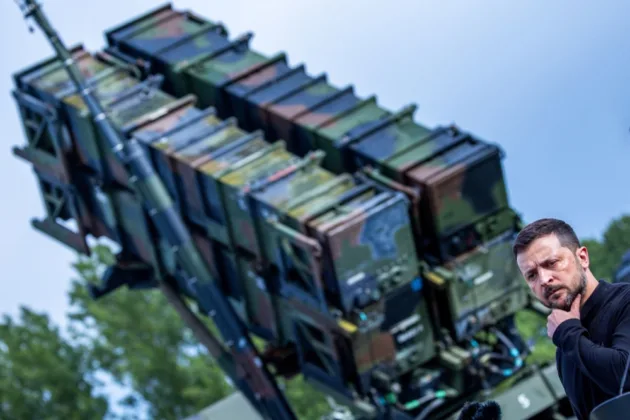
Poland’s Patriot batteries, its most capable air defence system, are based near Sochaczew, west of Warsaw, roughly 350 kilometres from where the missile came down and their purpose is to protect the capital.
The most capable battery covering the country’s most important airbase in the east, at Rzeszów, belongs to the Netherlands and is deployed there under a separate arrangement.
Poland’s own Patriot interceptor holdings are limited enough that a transfer of Patriot missiles to Ukraine in March, confirmed by the defence ministry only in July, caused a political row in Warsaw.
Ordering more interceptors from the United States is not simple matter. Waiting times are long and there is huge demand with European buyers having already ordered over 1000 missiles since 2022.
In any case, Poland is still at the stage of developing, along its eastern border, short-range systems which are effective against low-fast-flying missiles.The system specifically intended to close this gap, known as Narew, is still being built, with an eventual target of twenty-three batteries.
Had last week’s stray Russian missile struck a residential area, Poland could now be counting casualties on a large scale.
“Once again, the procedures failed. The Government Security Centre (RCB) alert system remained silent. This situation requires a radical change,” Col. Marek Utracki, former deputy head of Poland’s Military Counterintelligence Service (SKW), told portal Niezalezna.pl.
“It is an indisputable fact that our airspace has once again been violated by military means. It is also a fact that Poland is once again reacting rather than acting. We have failed to demonstrate our ability to neutralize threats of this kind,” he added.
“If we are unable to demonstrate credible response capabilities and continue to approach the issue purely reactively, we will always remain the victim. NATO must demonstrate its operational capabilities by shooting down such a missile in the future. Otherwise, Russia will continue to view us as easy prey and will only increase the scale and intensity of its aggression,” he concluded.
PM Tusk has on several occasions warned that Poland could be attacked by Russia within months rather than years. But experts and commentators feel that the country is not prepared for such an eventuality.
They point to the lack of bomb shelters, poor air defences, against both rockets, and drones as well as the lack of awareness and resilience building within the civilian population.
The consensus in the country is that the Baltic states, Finland and other Scandinavian countries are significantly more advanced in their readiness for any eventual conflict than is the case with Poland.