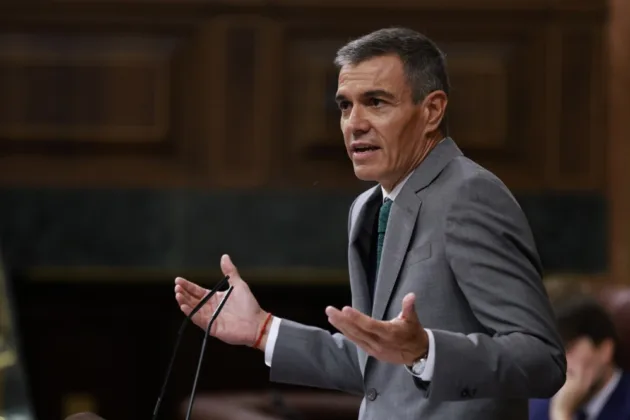



Spanish Prime Minister Pedro Sánchez has condemned the mass entry of migrants into Ceuta as an assault on Spanish territory, blaming human trafficking networks rather than Morocco.
Sánchez spoke in the autonomous city on July 31, a day after thousands of people swam and walked around the El Tarajal breakwater into Spanish territory. He travelled there with Interior Minister Fernando Grande-Marlaska.
He said the State would use every resource available to guarantee security in the city and condemned what had happened on Spanish soil.
The Prime Minister attributed the surge to smuggling networks that had made a self-serving reading of a Supreme Court ruling of July 8. That judgment barred the summary return of migrants intercepted at sea, on the grounds that open water offers no physical border.
According to Sánchez, the ruling had spread rapidly through trafficking networks and produced the scale of arrivals seen on July 30. He described the episode as unprecedented and said it broke a consistent downward trend in irregular flows.
Guardia Civil and National Police numbers in the enclave had risen by 400 in recent years, he said, and were now reinforced by the Armed Forces. The Spanish Government has also requested the deployment of buoys along the breakwater to create a containment barrier allowing returns at the border to resume.
The asylum commission met to speed up case files and repatriations. Sánchez described Morocco as a neighbour and ally and thanked the Moroccan authorities for their willingness to cooperate on swift returns.
He made no criticism of Rabat, whose auxiliary forces withdrew as the crowds advanced on July 30.
At least 18 people died attempting the crossing, according to Spanish authorities. State broadcaster TVE put the number who entered at between 2,000 and 3,000.
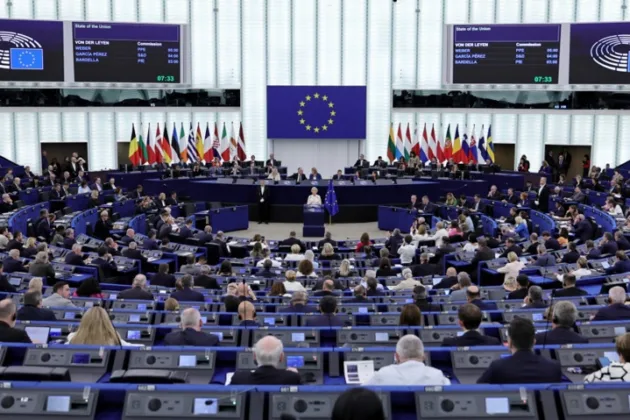
European Commission President Ursula von der Leyen said the images from Ceuta were “unacceptable” and called for dangerous crossings to stop, smuggling networks to be dismantled and returns to be swift. She assigned Magnus Brunner and Dubravka Šuica to support Madrid and Rabat, with further operational help through Frontex.
The crossings have opened a rift inside the EU. Italian Prime Minister Giorgia Meloni said Rome was ready to suspend the Schengen agreement with Spain, prompting Madrid to summon the Italian ambassador in protest.
Ceuta President Juan Jesús Vivas, of the centre-right Popular Party, had asked Madrid to declare a national emergency, a request the Interior Ministry rejected. He attended the security meeting chaired by Sánchez, alongside the heads of the National Police, the Guardia Civil, the migrant reception centre and the local Red Cross.