





Spain has deployed the army to its North African enclave of Ceuta after the Interior Ministry estimated that 49,000 people crossed illegally from Morocco in 24 hours, in what Civil Guard associations have called an orchestrated operation rather than a migratory surge.
Ceuta President Juan Jesús Vivas put the figure higher still, at 60,000, after meeting Prime Minister Pedro Sánchez in the city on July 31. That is close to three quarters of the enclave’s 84,000 residents.
Vivas had estimated 20,000 a day earlier, citing Civil Guard figures, and Moroccan state television reported 30,000. Almost 3,000 people entered Ceuta illegally in the whole of this year up to July 15, on the ministry’s own numbers.
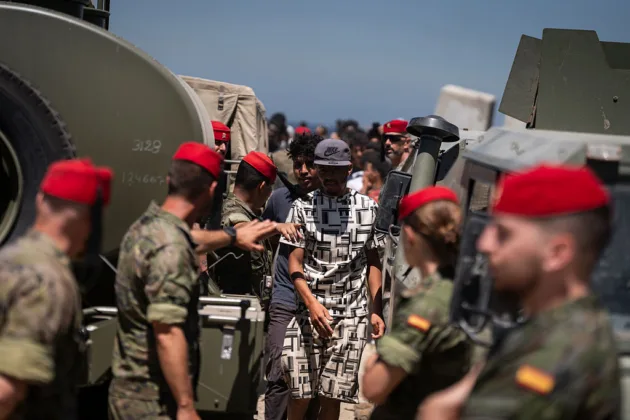
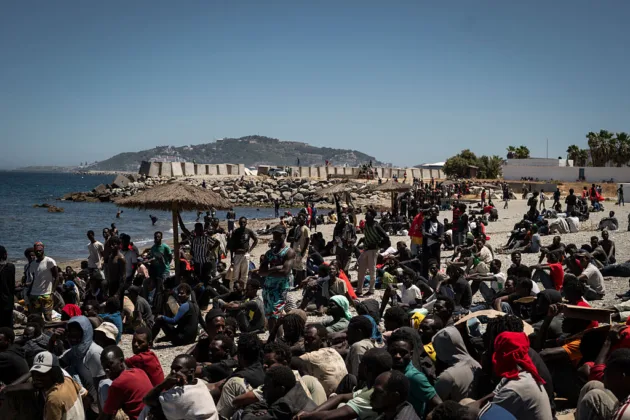
Crowds walked around the Tarajal breakwater and swam past the fence throughout July 30, spilling onto local roads. Most were young Moroccan men, though families with women and children also crossed. Moroccan auxiliary forces withdrew as the crowds advanced.
At least 34 people drowned, on figures given by the Spanish authorities. Vivas said more than 25,000 had since returned to Morocco and that the situation was impossible for the city to absorb.
Spain’s security forces read the day as something other than a migratory accident. Jucil, the largest Civil Guard professional association, called it “an orchestrated invasion” and demanded the interior minister’s resignation, saying the enclave’s establishment of 550 officers had been overwhelmed.
The police union Jupol said Rabat had exploited a window of opportunity, “using migratory pressure on Ceuta as an instrument of political blackmail”.
Sánchez did not. Visiting the enclave with interior minister Fernando Grande-Marlaska, he blamed trafficking mafias for what he called an attack on Spain and cleared Morocco of responsibility. He was jeered by residents as he left.
Defence Minister Margarita Robles said the networks organising the crossings would not go unpunished and promised returns. Rabat said cooperation with Madrid remained intact and blamed the same networks.
Morocco has opened the border before. About 8,000 people crossed over two days in May 2021, after Spain admitted the Polisario Front leader for hospital treatment.
The charge of blackmail is not confined to the Right. Esquerra Republicana spokesman Gabriel Rufián said Morocco was blackmailing Spain once again and called for a cross-party state pact.
Madrid moved more slowly than Rabat. Vivas declared a humanitarian and social emergency and asked the Government to take control, while the Ceuta assembly’s group leaders, the local Socialists included, unanimously sought a national security declaration and deployment of the armed forces.
The Interior Ministry rejected a national emergency, saying civil protection rules do not treat migratory flows as a risk covered by the national system.
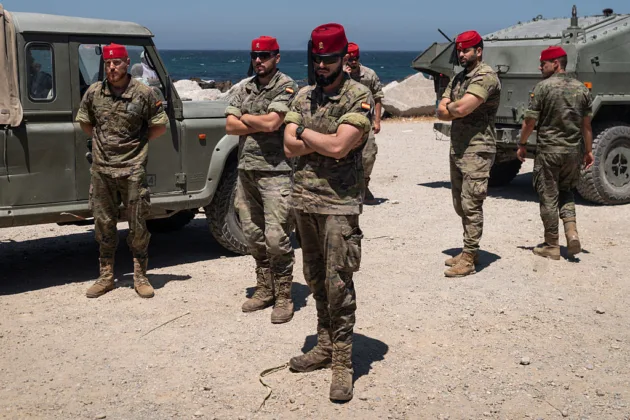
Troops were ordered in only on the evening of July 30, once the crossings had run for most of the day. Defence and Interior sources said they would operate under the Operations Command and support the Civil Guard on security tasks inside the city, not seal the frontier.
Armoured vehicles were positioned at the exit from the breakwater to stop arrivals dispersing and channel them towards an industrial estate at Tarajal. The Temporary Stay Centre for Immigrants, built for 512 people, was holding more than 1,000, with a further thousand waiting outside.
Sánchez said buoys would be laid at the breakwater to form a physical barrier and allow repatriations to be carried out at the border. The ministry said it had agreed with Rabat to return all those who entered illegally as soon as possible.
Madrid regional President Isabel Díaz Ayuso wrote on X that “Sánchez permits the invasion of Spain through Ceuta” to bury his legal troubles. Vox spokeswoman Pepa Millán described “an invasion of thousands of Moroccans breaching our borders”.
Spain’s Supreme Court ruled on July 8 that migrants intercepted at sea off Ceuta and Melilla cannot be summarily handed back, because open water does not provide the containment a border fence does. Ceuta authorities and Civil Guard associations have linked the surge directly to that judgment.
Popular Party secretary general Miguel Tellado blamed the Government’s regularisation of illegal migrants, which drew almost 1.3 million applications. Government sources told Europa Press that none of those who crossed could join the scheme, which requires residence in Spain before January 1, 2026.
The crossings did not stay a Spanish problem for long. Italy threatened to suspend the Schengen agreement with Spain, and Madrid summoned the Italian ambassador in protest. It did not summon the Moroccan one.
France went further than words. Interior Minister Laurent Nuñez said he had ordered controls on the Spanish border tightened overnight and had activated the country’s rapid intervention border force.
Alternative for Germany (AfD) leader Alice Weidel called for borders to be protected, returns applied rigorously and Schengen suspended if necessary.
Home affairs commissioner Magnus Brunner offered financial, technical and operational support, including a Frontex deployment, and said the Commission was pressing Rabat to halt departures.
The EU migration and asylum pact, in force since June, contains a Crisis Regulation allowing member states to set aside normal standards where a hostile state is judged to be weaponising migration. Madrid has not invoked it.