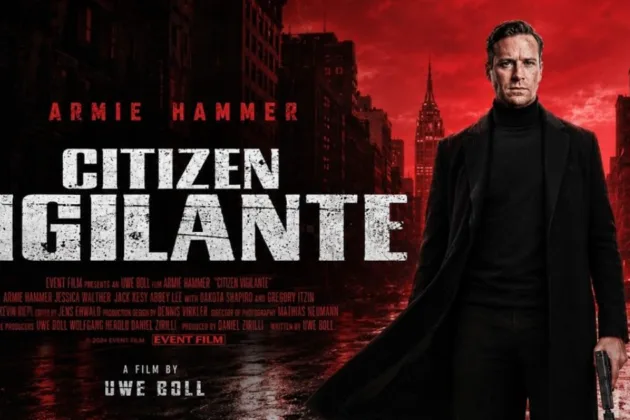






The hysterical reaction of the European establishment to Uwe Boll’s film Citizen Vigilante is a masterclass in elite panic. In Germany, the film was effectively banned via the denial of an age rating, under the pretext that it “incites violence” against specific demographic groups. Mainstream critics denounce it as a morally unacceptable depiction, a dangerous piece of art that threatens the fabric of society.
This sounds very EUSSR indeed. To paraphrase the old Soviet quote: If art does not agree with the party, so much the worse for art. It is also deeply, shockingly Orwellian. “Whatever the Party holds to be the truth, is truth. It is impossible to see reality except by looking through the eyes of the Party,” says inquisitor O’Brien to Winston Smith during his torture. This takes place at the Ministry of Love. It is out of love, we are told now too, that the film has been excluded from all mainstream platforms and, God forbid, cinemas. To keep us safe from harm.
Of course, when it was distributed directly to the public via social media, the film instantly defied the gatekeepers to become a streaming sensation. The reason for this is simple: It touches an ultra-sensitive nerve that the ruling progressive class is desperate to anaesthetise. It reflects a real-world disillusionment that no bureaucratic decree can cancel.
The outrage surrounding Citizen Vigilante exposes a staggering hypocrisy within our cultural institutions. We are told that a fictional thriller about a man targeting criminal networks is an existential threat to public order. Yet, for decades, the Western cultural industry has produced and celebrated works that explicitly romanticise or incite violence against unfavoured groups, not to mention that more policemen than immigrants are killed in the film.
Nobody in Berlin or Brussels ever suggested banning Quentin Tarantino’s Inglourious Basterds, where graphic, targeted violence against a specific nationality is served up as high-art entertainment, or Taken, where Liam Neeson wipes out half of the Paris Albanian mafia together with its Muslim leader. Nobody panics when Hollywood blockbusters depict the systematic obliteration of traditionalist, rural communities or conservative archetypical figures as a progressive, Oscar-winning triumph.
In truth, the criteria for what constitutes incitement are entirely subjective and arbitrary, weaponised exclusively to protect the establishment’s multicultural dogmas while demonising the anxieties of ordinary citizens. This cultural and institutional double standard brings us directly to the core structural question that the ruling elites are terrified to answer.
Are citizens entitled to take matters into their own hands when the state systematically fails to deliver on its most elementary obligations? The social contract is reciprocal. The citizen surrenders the right to unilateral force in exchange for a state monopoly on violence, which must be exercised to guarantee basic security, order and justice. When the state defaults on that contract, when it actively chooses to tolerate lawlessness, protect criminals to preserve political correctness and abandon its own vulnerable populations, then that contract stands no more.
Needless to say, vigilantism is never the best-case scenario. It is the symptom of an institutional vacuum. It is the predictable, chaotic consequence of administrative surrender. When citizens realise that the state mechanism has transformed from a protector into a bureaucratic shield for predators, the primal human instinct for self-preservation and community defence inevitably kicks in.
By banning the cinematic expression of this frustration, the progressive upper caste is not protecting the public. It is protecting itself from the mirror. They fear an independent film far more than they fear the real-world collapse of law and order on their own streets, because the film screams out that their moral authority is gone.
Ultimately, the success of Citizen Vigilante is not a sign of a bloodthirsty public eager for chaos, but of a profound desire for accountability. Nobody should be surprised when the public turns to narratives that imagine a world where justice is delivered. Authorities can continue to ban art and suppress speech, but they cannot erase the underlying reality: Societies with a functioning conscience will not indefinitely tolerate a state that chooses political correctness over their safety.