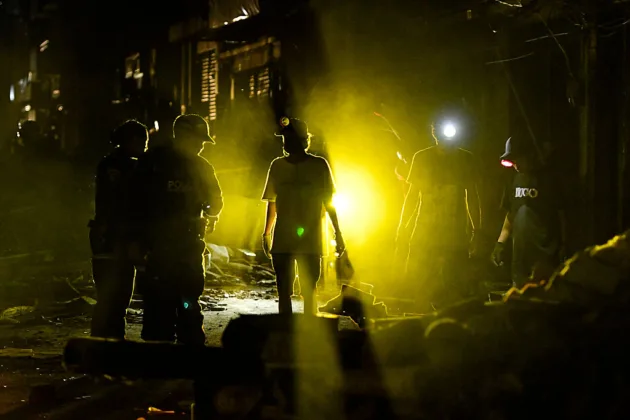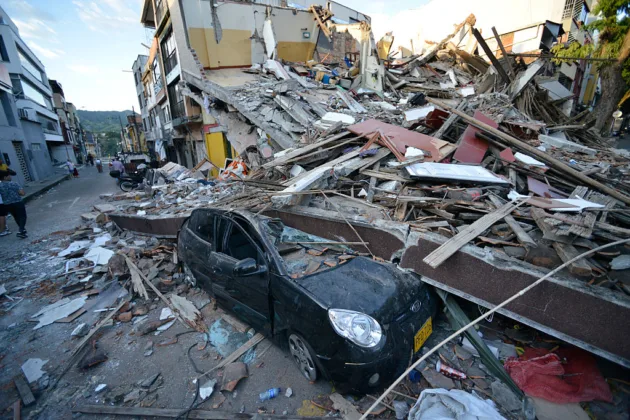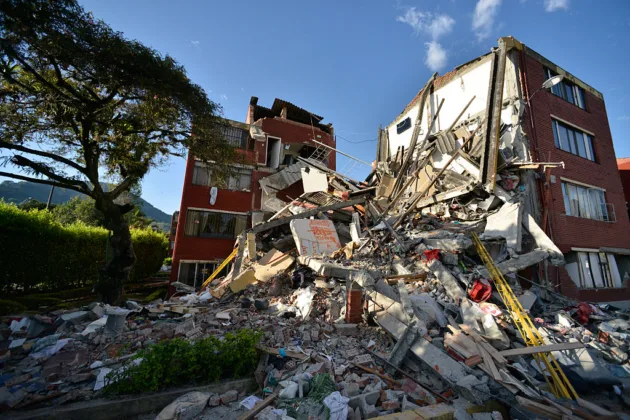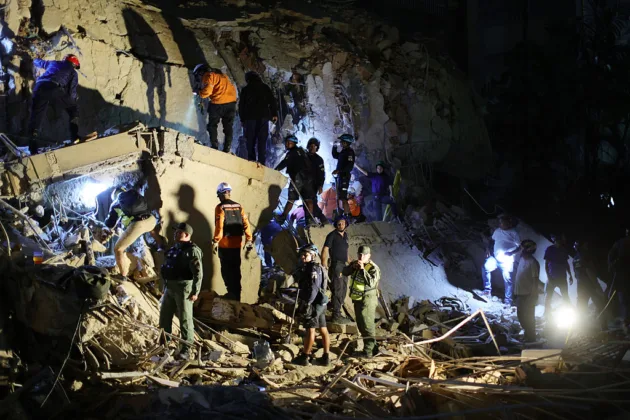


The Colombian Government has raised the death toll from the earthquake that hit the west of the country on August 10 to 281, with 3,971 people injured and 379 still unaccounted for.
President Abelardo de la Espriella gave the updated figures on August 13, four days after the magnitude 7.4 tremor struck near San José del Palmar in the department of Chocó. The National Unit for Disaster Risk Management (UNGRD) said 348 people had been pulled out alive.
UNGRD director David Tamayo said rescue teams were still searching for people trapped under rubble, though the period in which survivors could realistically be found was running out. He told a press conference in Bogotá that crews would keep working until everyone reported missing was accounted for, alive or dead.
Colombia’s National Institute of Legal Medicine and Forensic Sciences had received 260 bodies by August 13 and identified 246 of them, 17 of whom were children.
Tamayo said more than 12,000 homes had been destroyed and more than 74,000 damaged, with over 170 buildings brought down. Roads, bridges, airports, aqueducts, health centres and schools were also hit across several departments.
The European Commission has since made €2.1 million available in emergency humanitarian assistance, its first substantial commitment since Colombia activated the EU Civil Protection Mechanism.
“As search and rescue operations continue, the EU is supporting Colombia wherever possible,” European Commission President Ursula von der Leyen said.
The money is to pay for health care, water, sanitation, shelter, food and cash assistance through humanitarian partners already in the country. The German Red Cross has redirected €100,000 from an EU-funded project to cover the immediate needs of 2,500 families in Chocó and Valle del Cauca.
Crisis management Commissioner Hadja Lahbib said “Colombia can count on the EU’s continued support”. The Commission has also activated its Copernicus satellite mapping service and is coordinating member state offers through its Emergency Response Coordination Centre.
The Spanish Government said earlier in the week it had been unable to trace 164 of its nationals in Colombia, which is among Latin America’s largest recipients of EU humanitarian aid.
Colombian housing minister Jaime Andrés Beltrán said no reconstruction cost had yet been calculated, though the Government had already drawn up a plan to be delivered alongside regional authorities, mayors and business. He said a body of specialists coordinated by the UNGRD would establish which houses had to be demolished and which could be repaired.