










There still seems to be a profound reluctance across Europe to accept and face the stern fact that Europe is in danger of what the official United States National Security Strategy, published in December 2025, describes as “civilisational erasure”, a word and concept that is chilling in its severity. The two policy areas that are generally highlighted when there are any serious attempts to get to grips with this subject are immigration and the consequences of the continent’s preoccupation with climate change.
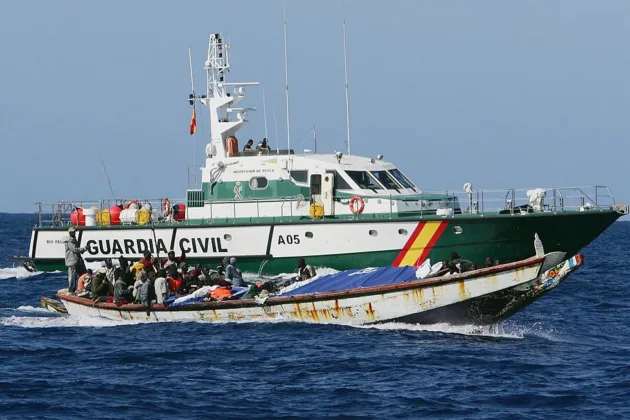
It has proved very difficult to persuade European political leaders to understand that the large numbers of destitute fugitives from the Middle East and Africa which have surged into Europe cannot be considered immigrants. Even apart from their illegal presence, they are more like swarms of desperate people with no sense of nationality, no ambition to assimilate to the places where they fetch up, and are only focused on achieving a more prosperous life and conserving their own cultures and inflicting them on their new hosts. They are more like the masses advancing westwards in the fifth and sixth centuries AD into western Europe, fleeing ahead of the more savage barbarians, and with no thought of joining the Roman empire.
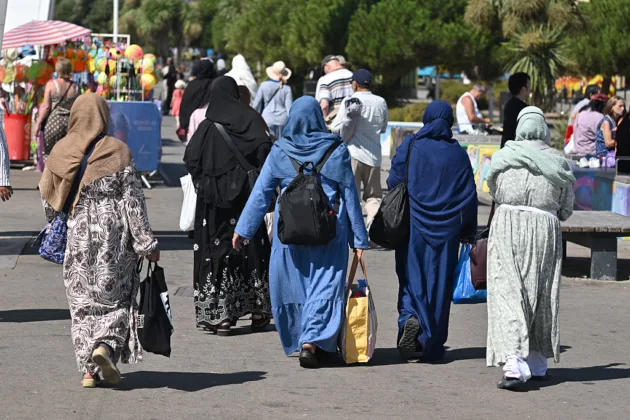
The numbers of illegal immigrants penetrating the European Union are now finally being brought under control, but the task of cultivating among them any serious sense of attachment to their new nationalities has proved extraordinarily difficult. Frontex, the European Border and Coast Guard Agency, recorded almost 178,000 irregular crossings of the EU’s external borders in 2025, a fall of 26 per cent on the previous year and the lowest annual total since 2021. At least the barbarians brought with them such primitive religions that they quickly adopted Christianity, which greatly assisted their close association with the inhabitants, gradually evolving into the great nations of Europe. The present waves of migrants are largely Muslim, fiercely sectarian, and show a much greater propensity to fester and multiply in a segregated and often antagonistic state than to assimilate to their host societies.
The consequences of Europe’s pitiful capitulation to the extreme arguments of global warming alarmists have been crippling to economic growth and have made the continent doubly vulnerable to unexpected migration and demoralised the whole continent with the heavy yoke of economic stagnation.
For over 50 years, Europe has steadily lagged the United States economically. In 1980, the nine countries of the European Economic Community had 27 per cent of the world’s gross domestic product (GDP) to 25 per cent for the United States. Today, the same nine countries plus East Germany have 15.5 per cent while the United States is at 26 per cent. The principal new element is of course China, but it too has now ceased to gain ground on the United States, which continues to surge ahead and remains 70 per cent larger economically than the expanded European Union of 27 countries and the People’s Republic of China, even after China’s 40 years of the greatest surge of economic growth of any under-developed economy in history. All the fine optimism, tainted though it was by the somewhat decadent arrogance of Europe contemplating the rest of the world, with which the great European project was launched, has given way to self-conscious introspection.
It was primarily in Europe that the defeated international Left at the end of the Cold War, in an unforeseeable act of improvisation, clambered aboard the conservation bandwagon, seized control of it, and turned it from a benign but eccentric coalition against spoliation of the environment into a battering ram against capitalism in the name of saving the planet. As a result of this madness of Quixotry, industry was stifled, gas and electricity production restricted, and the madness of renewable energy was coercively embraced. The result is that natural gas in Europe is three to five times more expensive than in the United States and electricity is two to three times higher than in the US, according to the competitiveness report drawn up in 2024 by former European Central Bank president Mario Draghi. International investment in Europe has declined and nine of the world’s top 10 high-tech companies are American and the other is Taiwanese. Government tax revenue in the EU is about 40 per cent of total GDP, compared to 25 per cent in the United States.
Although heat waves killed more than 70,000 people in Europe in 2003, air conditioning was still discouraged as too consumptive of energy; and similarly heavy heat waves this summer killed more than 30,000 Europeans, according to provisional national tallies collated by AFP. Birth rates have collapsed, the Muslims are proliferating, and at this time of the greatest challenge to European civilisation since the Second World War, those political parties and movements that defend that civilisation are despised by the elites, half asphyxiated by the lethal intoxicant of confected white guilt.
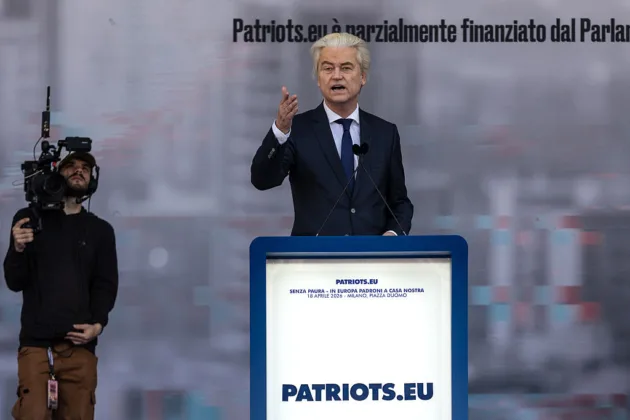
Central and western Europe are in no danger of being overrun, and it is ultimately inconceivable that they can collapse entirely from within. Miracles of renaissance have occurred from time to time throughout European history. Another one is necessary and very possible. It is an act of faith to believe in it, and only decisive leadership of the kind Europe has not seen since the time of Thatcher and Kohl will produce it. But those countries, led by Poland and Hungary where communist rule is unpleasantly retained in living memory, are comparatively purposeful. Italy seems to lead the way in elevating a former distaste for political parties originating on the Right to effective government. In Germany and France, formerly unhouse-trained parties of the right are now leading the polls and the outcasts of yesteryear may be soon called upon to save the old continent’s most influential nationalities.