





Belgium’s interior minister has described the surge of shootings in Brussels as a national emergency, as federal and regional authorities put together a package of police reinforcements for the capital.
Bernard Quintin, of the Reformist Movement (MR), used the phrase in a statement issued on August 26, after the Brussels Regional Security Council, known by its French acronym CORES, met at the initiative of Brussels Minister-President Boris Dilliès.
“We are facing a national emergency,” Quintin said, adding that the targeting of a police station showed how serious matters had become.
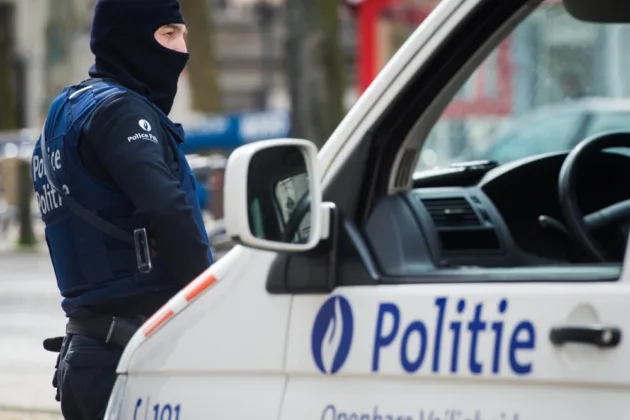
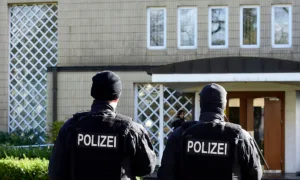
The meeting followed a run of gun incidents in the second half of August. On August 21, assailants opened fire on a police station on Rue Démosthène in Anderlecht, in south-west Brussels. Nobody was injured and two suspects reportedly fled on an e-scooter. Further shootings were recorded in Saint-Gilles and Anderlecht over the following days.
Federal police registered 57 shootings across the 19 municipalities of the Brussels-Capital Region between January and the end of July, leaving two people dead and 21 injured, according to figures reported by regional broadcaster BX1. Across the whole of 2025 the same force counted 101 shootings, eight deaths and 43 wounded.
Belgium is a principal entry point for cocaine into Europe, with the port of Antwerp the main gateway. Armed competition between criminal networks has spread from the port city to the capital over the past decade.
Quintin committed 40 additional federal officers to street patrols and investigative work. He said an extra infantry platoon would be deployed, the special police units known as DSU reinforced and the federal judicial police in Brussels strengthened structurally. FIPA operations — Full Integrated Police Action — against drug trafficking are to continue.
Dilliès announced 20 mobile cameras for the districts affected by trafficking-related violence and confirmed that a regional drugs commissioner was being recruited. Justice minister Annelies Verlinden, Brussels public prosecutor Julien Moinil, national drugs commissioner Ine Van Wymersch and representatives of the capital’s six police zones also attended, according to a statement from the minister-president’s office reported by L’Avenir.
“The fight against drug trafficking cannot be waged in silos,” Dilliès said.
Earlier the same day, the conference of the 19 Brussels mayors said the six zones would be placed under a single operational command. Unified command has been contested for years, with Dutch-speaking parties pressing for it and Brussels mayors resisting on the grounds that it would weaken local control. The federal coalition agreement of February 2025 committed the Belgian Government to a single Brussels police zone.
The interior minister set out further requests beyond the measures agreed at CORES. He asked for the military deployment to be extended past its current perimeter of railway and metro stations, for more places in closed centres to carry out returns of people staying in the country illegally, for restrictions on communications between imprisoned traffickers and the outside world and for compulsory registration of e-scooters.
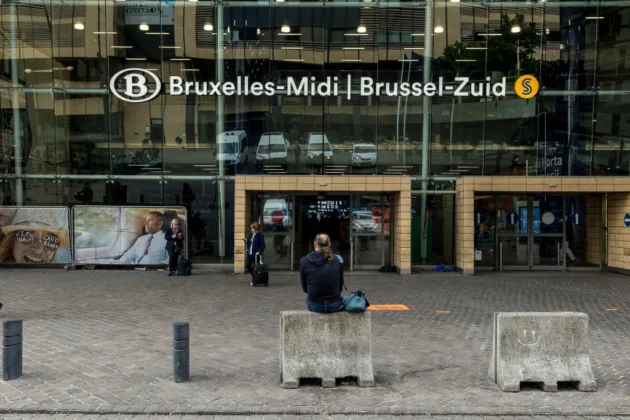
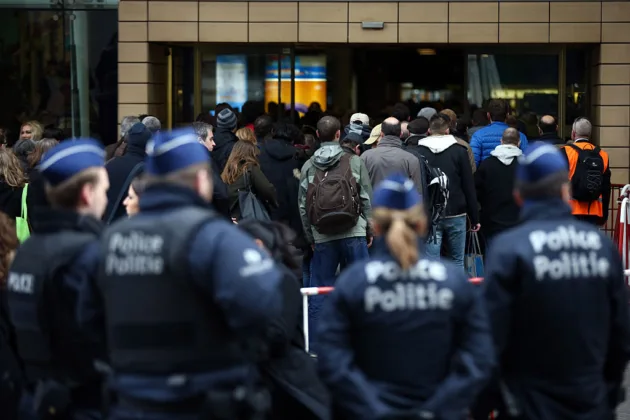
About 50 soldiers began patrolling Brussels metro and railway stations alongside police on April 3, under a legal framework agreed between Quintin and defence minister Theo Francken of the New Flemish Alliance (N-VA). Their powers remain limited and they patrol only in mixed teams with officers.
Dilliès told mayors that curfews or restricted-access zones — areas open only to residents — could be useful in the most sensitive locations. Such orders already apply at Peterbos in Anderlecht and in parts of Schaerbeek and Molenbeek-Saint-Jean.
Saint-Gilles mayor Jean Spinette, of the Socialist Party (PS), has said he does not intend to issue them, arguing that the regional hotspots policy in force since 2024 already gives police sufficient powers. He had earlier demanded 80 extra officers for his municipality, complaining that only four federal reinforcements had arrived after the shootings on his territory.
Mathias Vanden Borre, an N-VA member of the Brussels Parliament, wrote on X after the police station attack that the capital was caught in a spiral of violence and political incapacity.
Ahmed Laaouej, president of the Brussels PS federation, said the security situation could not go on and urged Quintin to act seriously against organised crime.
Moinil has been under police protection since 2025 following threats from trafficking networks. He described the attack on the Anderlecht station as an attempt to undermine State authority and had already warned in August 2025, when the capital was averaging a shooting every four days, that any resident could become a victim.
Brussels, which hosts the European Commission, the Council of the European Union and part of the European Parliament, went 613 days without a regional government after the June 2024 elections. Dilliès was sworn in on February 14, 2026, at the head of a seven-party coalition.
Neither the CORES statement nor Quintin’s announcement set out a timetable for the single operational command, a cost for the reinforcements or a date by which the 40 officers would be in place.