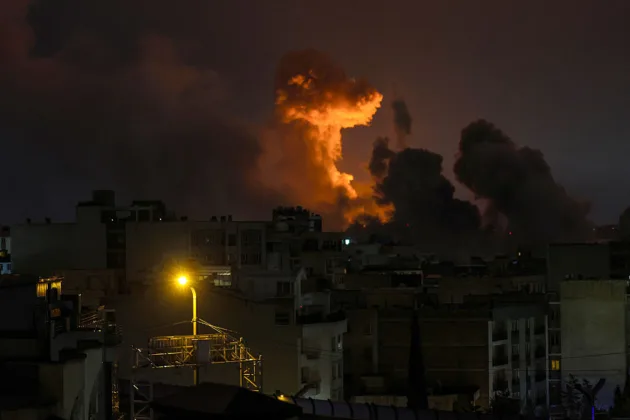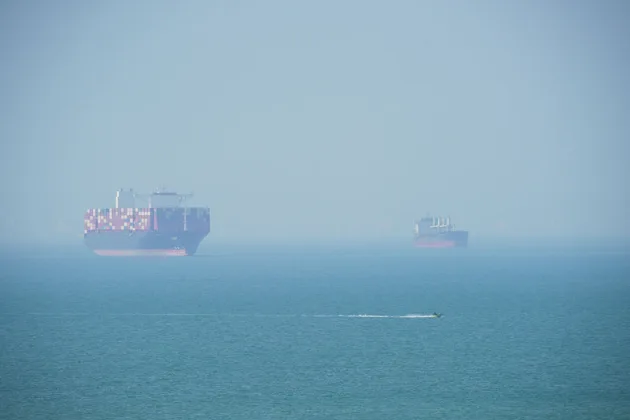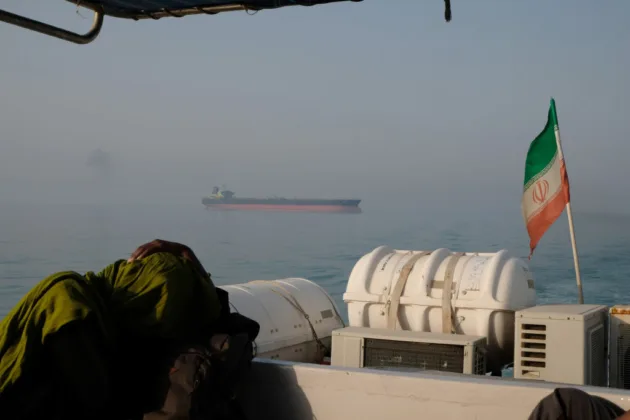



The United States has struck Iran for a sixth consecutive night, extending a run of raids that has continued nightly since July 11 and left the Strait of Hormuz all but closed to Western-linked shipping.
US Central Command (CENTCOM) said the latest wave ended late on July 16 and hit coastal surveillance and air defence sites, military logistics and maritime capabilities. It said more than 50,000 American service members were deployed across the Middle East.
Washington reimposed its naval blockade of Iranian ports on July 14, days after President Donald Trump declared the memorandum of understanding he signed with Iran in June to be finished. CENTCOM said Marines had boarded the tanker Wen Yao in the Gulf of Oman and turned back three commercial vessels since the cordon resumed.
A US aircraft fired missiles into the funnel of the Curaçao-flagged tanker Belma on July 15, disabling it as it made for Kharg Island, Iran’s main oil export terminal. CENTCOM called the blockade “America’s steel wall”.
Iran answered with drones and missiles against American bases in Kuwait, Bahrain and Jordan. The Islamic Revolutionary Guard Corps (IRGC) warned that export routes serving Washington and its allies could be closed as well, saying the region’s oil and gas would move for everyone or for nobody.
The escalation has also stalled Europe’s contribution. British and French minehunters and support ships have been positioned to start work in Omani waters since Oman endorsed the mission on July 4, though the order to begin has not come.
Lloyd’s List reported that no large vessel had used that southern channel with its transponder switched on since July 7.
Brussels has fared little better. The European Union has insisted the strait stay open and toll free.
EU High Representative for Foreign Affairs Kaja Kallas has urged member states to let Operation ASPIDES take the lead on mine clearance in Hormuz, but capitals have refused to move the mission out of the Red Sea.
Brent crude traded around $85 (€74) a barrel on July 16, close to a one-month high, after rising about 12 per cent in three sessions. European gas prices have followed the waterway since February, when Iran closed a channel carrying close to 20 per cent of the world’s oil and gas.
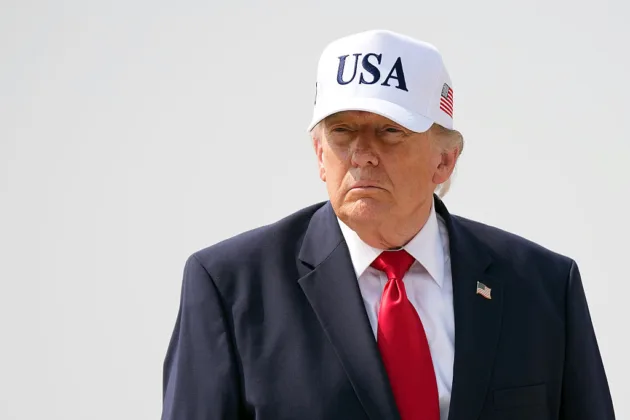
White House press secretary Karoline Leavitt said on July 16 that talks were still running and that “Iran very much continues to talk to the United States”. She said the strikes followed Iranian breaches of the June memorandum, which barred attacks on commercial vessels.
The war began on February 28, when US and Israeli air strikes killed supreme leader Ali Khamenei. Iran shut the strait in reply and has held it since.