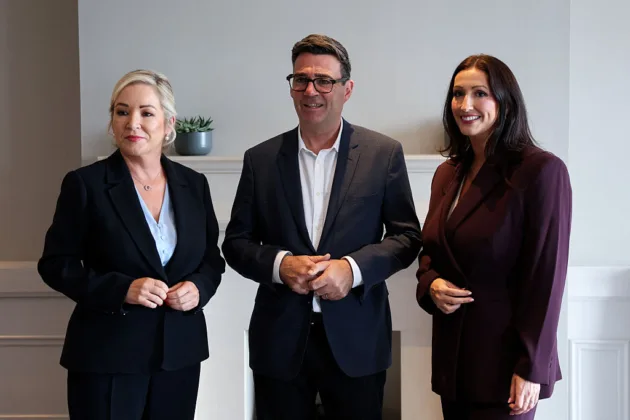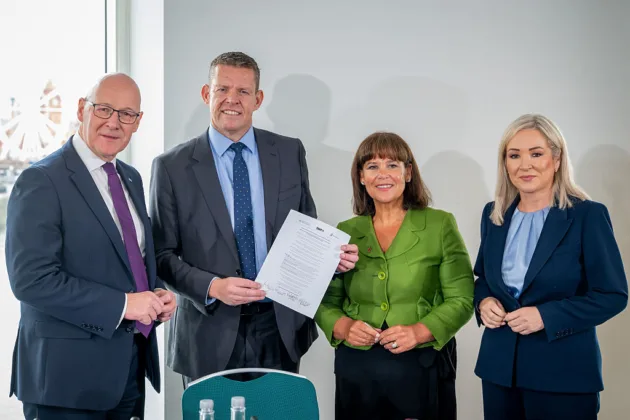

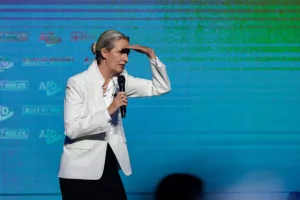

The Cardiff pact has been sealed. Sinn Féin vice-president Michelle O’Neill, Scottish National Party (SNP) leader John Swinney and Plaid Cymru leader Rhun ap Iorwerth, first ministers of Northern Ireland, Scotland and Wales, signed it on September 28.
The treaty is a memorandum of understanding (MOU), which is what is agreed when nothing else can be agreed. It binds nobody, fixes no dates and proclaims that “Westminster’s time is coming to an end”.
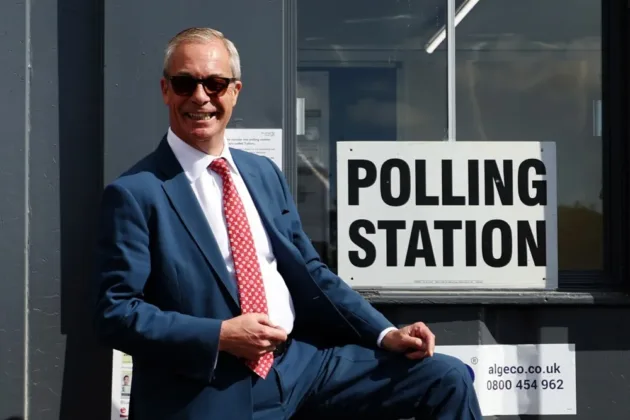
The three are nationalists for the first time since devolution in 1999. Labour, which devised the system to kill nationalism “stone dead”, as George Robertson promised in 1995, lost Scotland and Wales in May, keeping nine of 96 seats, its worst result in more than a century. Reform UK, Nigel Farage’s party, is now second in both.
In little more than 500 words, the MOU proclaims the “right to self-determination” and argues that no Westminster government can “block democracy”.
It commits them to co-operate on the economy, on renewable energy of their own and on repairing the damage of Brexit, because “Europe is our common home”. Its one concrete demand is that London “prepare, plan and facilitate constitutional change in each jurisdiction”.
The text notes that “for the first time” the three first ministers “are committed to independence from the United Kingdom” and warns that “constitutional change is coming”.
Some innocuous-looking words say more than the emphatic ones. “These islands”, never the British ones, or “the North of Ireland”, the republican formula for not naming Northern Ireland.
In a document signed to demand votes, the word “referendum” does not appear once. There are no dates and no binding commitment, only a safeguard clause under which each nation will decide “in its own way and in its own time”.
Although all three aspire to the dissolution of the United Kingdom, the formula is not shared. The SNP and Plaid Cymru want to break away from one State, Sinn Féin to join another. Ap Iorwerth has said he was never interested in “the break-up of the United Kingdom” but in developing powers, and only 26 per cent of Welsh voters back independence.
After the signing, Swinney proclaimed that Andy Burnham would be “the last prime minister of the United Kingdom” and called for a fresh vote before 2031, though the polls do not follow. YouGov gives the “no” side 56-44 in Scotland, 12 years after the 55-45 of 2014, and the Northern Ireland Life and Times survey 45-36.
Sinn Féin president and Dublin opposition leader Mary Lou McDonald held that “referendums are going to come”. Taoiseach Micheál Martin, head of the Irish Government, accuses the heirs of the Irish Republican Army (IRA) of living in the 1970s.
The Cardiff pact is the first of its kind signed also by representatives of Ireland. Sinn Féin, the political brand of the IRA and the largest party in Ulster, has a treaty marking the road, the Good Friday Agreement, and a godfather in Washington since 1998. The dispute stops being internal British business and turns Anglo-Irish and therefore European and transatlantic. Of the three causes, the only one with a State behind it and a written mechanism is the Irish one.
The agreement also exports the Irish model. On September 23, in the House of Commons, Burnham held that Scotland should be in “exactly the same position” as Northern Ireland, where the 1998 Agreement obliges London to call a border poll on Irish unity when a majority for it appears “likely”.
He corrected himself by letter, but Swinney had already noted a British prime minister accepting self-determination “for the first time since 2014”. The memorandum demands the mechanism serve “each jurisdiction”.
On September 26, in Dublin, United States President Donald Trump said he would “love to see” Ireland united and that it would happen sooner or later. In Doonbeg the following day he called the joining of the two parts of the island “one of the most natural things of all time”. To Downing Street’s objections he replied that everybody says that, and then things happen.
Asked about Scotland, the son of an emigrant from the Isle of Lewis preferred to leave it “for another day”. Conservative Party and opposition leader Kemi Badenoch has reproached him for “shooting from the hip, as usual”. Downing Street has repeated that Burnham would honour the Good Friday Agreement “100 per cent” and sees no “majority support” for a vote.
The memorandum is historic and changes the story, though it alters little in law. The British Supreme Court ruled in 2022 that Holyrood, the Scottish Parliament, cannot call a referendum without Westminster’s permission. Burnham has put in writing that he would not allow one because it would “divert the focus” from the cost of living. He is due to meet the three leaders in October at a summit he himself called, with Welsh demands for more powers on the table.
In Ireland the timetable is set by the May 2027 elections to Stormont, the Northern Ireland Assembly, and by Martin’s meeting with Burnham in the coming weeks to reform the 1998 Agreement. Martin asks for “a conversation” to unpick when the border poll would be called, the debate Burnham opened “by accident” in the Commons.
Swinney predicts Burnham will be the last Prime Minister of the United Kingdom. For now he is the seventh since Brexit. Whether the prediction comes true will depend less on what was signed in Cardiff than on how long he lasts in the job.