

European Union governments have remained divided over how far public money should be reserved for European-made products, months after the European Commission put forward the law meant to steer procurement towards domestic industry.
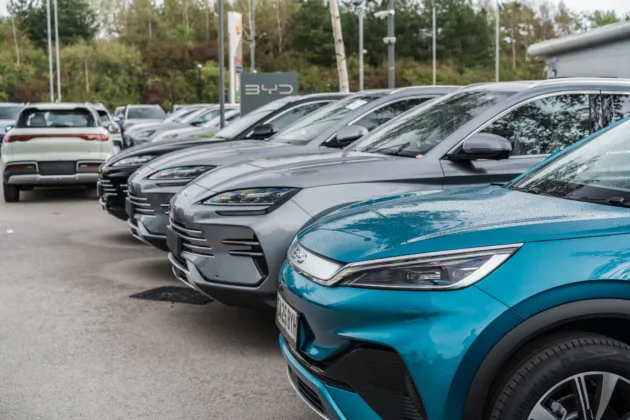
The Industrial Accelerator Act, presented on March 4, 2026, would introduce “Made in EU” and low-carbon preferences in public contracts and national support schemes. It covers steel, cement and aluminium, the car industry and net-zero technologies such as batteries, solar panels, wind turbines and heat pumps.
The Commission has said the measures would help lift manufacturing to 20 per cent of EU gross domestic product by 2035, from 14.3 per cent in 2024. Most procurement rules would only begin to bite from 2029.
The text would also create a pre-approval regime for large foreign investments in batteries, electric vehicles, solar power and critical raw materials. Deals worth more than €100 million in which a non-EU investor takes control of 30 per cent or more would face conditions covering ownership, hiring, research spending and technology transfer.
That regime would apply only where the investor’s home country holds more than 40 per cent of global manufacturing capacity in the sector concerned, a threshold that in practice points at China. Beijing has already denounced the package as discriminatory.
Industry ministers held their first policy debate on the file on May 28, with France, Greece and Spain arguing that “Made in Europe” should not be stretched to cover too many third countries.
Germany, Luxembourg and Sweden took the opposite view, welcoming the openness of the text towards trading partners. Belgium pressed for reciprocity, while several central and southeastern member states warned that low-carbon criteria could distort competition inside the single market.
Austria, Bulgaria, Estonia, Greece, Romania and Spain asked for shipbuilding, rail and charging infrastructure to be brought within the scope. The Commission has signalled it is open to adding sectors later through secondary legislation.
Others used the meeting to complain about the complexity of the text and the administrative burden it would create. Stéphane Séjourné, the Commission executive vice-president who drew up the proposal, told ministers the effect on costs and paperwork would be marginal.
The divisions are not new. Nine member states — Czechia, Estonia, Finland, Ireland, Latvia, Malta, Portugal, Slovakia and Sweden — warned in a paper circulated on December 8, 2025 that a European preference risked “consequences for effective competition, price and quality levels”, according to a document seen by Euronews. Poland and the Netherlands backed their call for an impact assessment.
Reuters, which also obtained the paper, reported that the nine wanted any preference limited to specific strategic sectors and applied for a set period only.
The European Parliament is handling the file jointly through its industry, internal market and trade committees, with Christophe Grudler, Pierre Jouvet and Anna Cavazzini leading the work. The three are understood to agree on the principle of a European preference while differing on how the instrument should be built.
MEPs from the three committees were equally split at a joint session with Séjourné on June 2. They endorsed the aim of keeping heavy industry on European soil and of shielding sectors such as solar power from Chinese competition, though some argued the response had come too late. Draft reports are due after the summer.
The Jacques Delors Centre has argued that the exemptions built into the text risk producing a “paradigm shift on paper with little economic impact in practice”. Governments could set the rules aside where compliant products raise costs by more than 20 per cent in auctions, 25 per cent in procurement or 30 per cent under subsidy schemes.
Because low-carbon steel and cement still carry premiums well above those levels, the Berlin-based think tank said, the requirements would often be optional. It calculated that barely 2 per cent of the cement market would be touched, against roughly 80 per cent of the market for electric vehicles, where company car tax breaks account for most new registrations.
Washington has already rejected the approach. Andrew Puzder, the United States ambassador to the EU, said in February that his country opposed European preferences in the bloc’s procurement rules, and has separately objected to the same principle being written into defence purchasing.
Countries holding free trade agreements or customs unions with the EU, or signed up to the World Trade Organisation’s Government Procurement Agreement, would count as equivalent to Union origin under the Commission text. More than 80 partner countries could qualify, among them the United Kingdom, Turkey, Japan and Canada.
The Commission would keep the power to strike partners off the list where they fail to open their own procurement and subsidy schemes to European firms, or where their inclusion creates supply risks. Séjourné has indicated the final list is likely to be considerably shorter.
Member states approved a tighter screening regime for foreign investment in strategic sectors in May, and the bloc has since tightened steel safeguards against Chinese imports.
Adoption of the Industrial Accelerator Act is not expected before 2027.