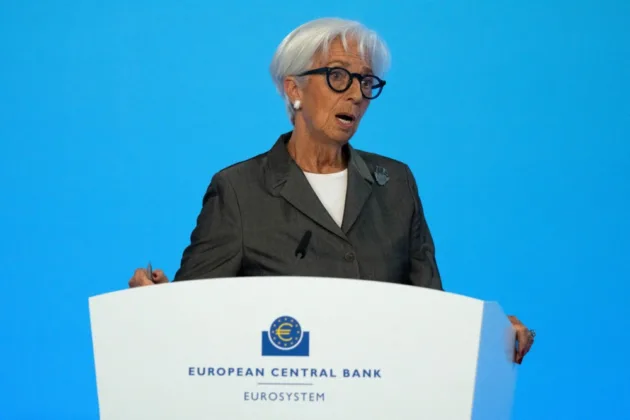


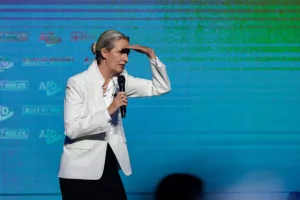

European Central Bank President Christine Lagarde has played down the importance of the so-called neutral interest rate and declined to rule out further rate rises. She spoke in Berlin on September 10 after the ECB lifted its three key rates by 25 basis points, its second rise this year.
The deposit facility rate, the bank’s main benchmark, would go up to 2.5 per cent from September 16. The main refinancing and marginal lending rates would move to 2.65 per cent and 2.9 per cent respectively.
The Governing Council said inflation was “set to remain well above target for an extended period” because of the conflict in the Middle East. Investors had widely expected the move.
The new deposit rate sits at the top of the 1.75 to 2.5 per cent range ECB staff have estimated for the neutral rate, the level at which monetary policy neither stimulates nor restrains the economy. Lagarde told reporters the concept was highly theoretical and designed for a world without shocks.
She said the Governing Council gave it little weight while the war between the United States and Iran was disrupting the economy. Pushing rates above neutral would restrain growth, a step she did not exclude.
Lagarde gave no signal on the next move, repeating that decisions would be taken meeting by meeting. “We are not pre-committing to a particular rate path,” she said.
She argued that uncertainty could change the picture almost overnight, making guidance on future rates counterproductive.
New staff projections kept average headline inflation for 2026 at 3 per cent, unchanged from June. Forecasts for 2027 and 2028 were raised to 2.5 per cent and 2.1 per cent, from 2.3 per cent and 2 per cent.
Lagarde said inflation had so far come in lower than anticipated, notably for food, but would probably prove more persistent than expected. Eurozone inflation rose to 3.3 per cent in August from 2.9 per cent in July as energy price inflation climbed to 14.3 per cent.
The bank also raised its growth forecasts, citing the unexpected resilience of the eurozone economy. Staff now expect growth of 0.9 per cent this year, up from 0.8 per cent, then 1.4 per cent in 2027 and 1.5 per cent in 2028.
According to the ECB, the Middle East conflict and developments in Russia’s war against Ukraine had pushed energy prices higher. It warned gas prices could climb further if supplies were disrupted again or winter proved unusually cold.
The ECB raised rates in June for the first time since 2023, before holding them in July as renewed fighting unsettled energy markets.
Lagarde also urged EU institutions to agree the legal framework for the digital euro as quickly as possible.