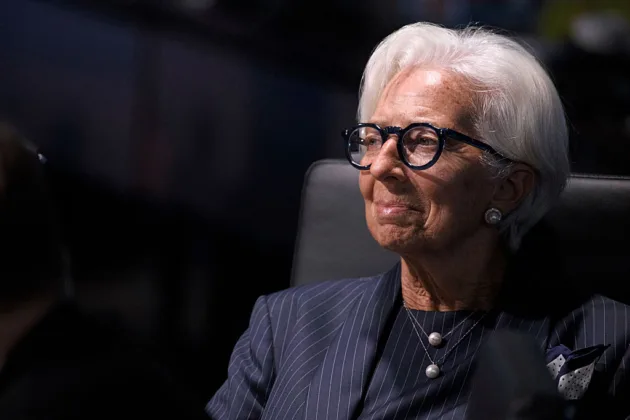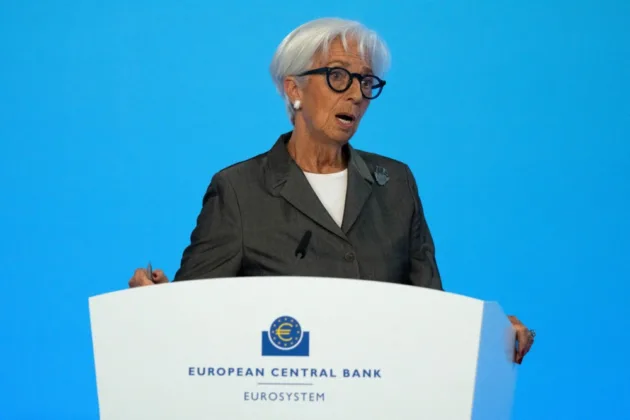







European Central Bank (ECB) board member Isabel Schnabel has said further increases in the euro area’s key interest rates will be necessary, arguing that inflation is unlikely to return to the central bank’s 2 per cent target at the current policy setting.
In an interview with Bloomberg News published on August 26, the German member of the ECB’s Executive Board said the prolonged conflict in the Middle East and a surprisingly resilient eurozone economy were creating upside risks to prices.
“At the current policy rate, inflation is unlikely to return to target over the medium term, and therefore further tightening will be necessary,” Schnabel told Bloomberg.
She said consumer price growth was likely to remain above 2 per cent for an “extended period” because of high energy costs.
Waiting until those costs fed through into wages would leave policymakers “behind the curve”, she warned.
The ECB, she added, needed to prevent second-round effects early. The natural gas situation was “particularly concerning”, while the economy appeared to be “gaining further momentum”.
The front-month Dutch Title Transfer Facility (TTF) contract, Europe’s gas benchmark, closed above €68 per megawatt-hour on August 24, its highest since January 2023 and more than double its level before the Iran war began. Prices have climbed about 120 per cent since the start of the year, with the Strait of Hormuz still effectively closed and Norway extending outages at gas fields.
The scale of any further tightening would depend on incoming data. Markets, she said, “seem to understand our reaction function very well”. She did not specify how far rates might ultimately rise.
The comments have come ahead of the Governing Council’s next policy meeting, which runs on September 9-10, with the rate decision due on the second day.
The deposit facility rate, the ECB’s main policy rate, stands at 2.25 per cent after a 25-basis-point increase in June, the first rise in almost three years.
Rates were left unchanged in July.
That June move was intended to stop a war-driven surge in energy prices from spreading more widely through the economy.
Euro area inflation, measured by the Harmonised Index of Consumer Prices (HICP), was 2.9 per cent in July, up from 2.8 per cent in June. Energy inflation accelerated to 10 per cent year on year, from 8.5 per cent in June, according to Eurostat.
Core inflation, excluding energy and food, was 2.5 per cent. Services inflation stood at 3.3 per cent.
Three sources told Reuters on August 25 that policymakers were leaning towards another 25-basis-point increase in September, which would take the deposit rate to 2.5 per cent, in order to contain the inflationary impact of the Iran war.
The same sources said there was little appetite to signal further tightening beyond that meeting.
The ECB declined to comment on those reports.
Schnabel has long been among the more hawkish voices on the Governing Council. Money markets have already been pricing in a September rise and some additional tightening thereafter, with about 40 basis points of increases priced in by the end of the year.
The Council will get one more reading before it meets. Eurostat is due to publish its flash estimate for August inflation on September 1.
The remarks do not amount to a formal decision. Interest rate changes are made by the whole Governing Council, not by one executive board member. Other members may still prefer to wait for more data, especially if energy prices ease or growth cools.
The ECB’s primary mandate is to maintain price stability, with a 2 per cent inflation target over the medium term. The deposit facility rate is currently the ECB’s main policy rate and the benchmark most closely watched by financial markets, being the interest banks earn on money parked overnight at the central bank.
When that rate goes up, banks tend to charge more for loans and pay a little more on deposits. Credit becomes more expensive and spending and investment usually slow. That is how the central bank tries to cool demand and stop prices from rising too fast.
Energy is still expensive because the Middle East conflict has dragged on and the eurozone economy has held up better than many expected. Output grew by 0.4 per cent in the second quarter, twice the rate economists had forecast, and by 1 per cent on the year.
If firms and workers start building permanently higher energy costs into prices and pay deals (so-called second-round effects), inflation can stay sticky even after the original shock fades. Acting only after wages have already jumped thus would mean the ECB was too late.
A higher policy rate would, over time, make mortgages, business loans and government borrowing more expensive. Savers could see higher returns on some deposits. Growth would be a bit weaker than it would otherwise have been.
Expectations of tighter monetary policy could push the euro higher. Households with variable-rate debt would feel it first. Governments with large refinancing needs could also face higher borrowing costs.