






The European Parliament has awarded its 2026 Sakharov Prize for Freedom of Thought to the International Criminal Court (ICC), the Hague-based tribunal sanctioned by the United States over its investigations into Israeli and American officials.
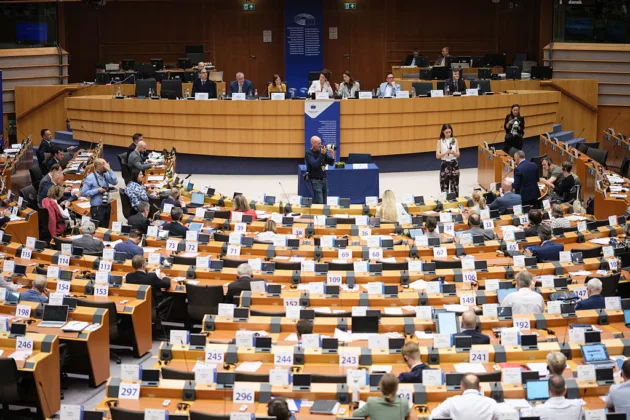
European Parliament President Roberta Metsola announced the decision on October 22 in Strasbourg. It was taken by the Conference of Presidents, which brings together Metsola and the leaders of the political groups.
The nomination came from the Socialists and Democrats (S&D) and was supported by Renew Europe, the Greens and The Left, parliamentary sources said.
That coalition was enough to see off the two other finalists, the Tanzanian opposition leader Tundu Lissu and the Iranian twin sisters Taraneh and Romina Rahimi, who have both been sentenced in Iran.
The outcome turned on a split among the right-wing groups. The European People’s Party (EPP), the European Conservatives and Reformists (ECR) and Europe of Sovereign Nations (ESN) backed Lissu.
Patriots for Europe did not follow them and stayed with its own candidates, the Rahimi sisters. The court was left with the largest number of votes.
Metsola said the prize recognised “the work of those who bring justice to victims”, adding that they had to be able to carry out that work independently. French S&D member Chloé Ridel, who initiated the nomination, called the result historic.
The court and its officials are due to collect the €50,000 award in Strasbourg on December 16, at the last plenary session of the year. The 2025 prize went to the Belarusian journalist Andrzej Poczobut and his Georgian colleague Mzia Amaglobeli.
Washington announced sanctions against the institution itself on October 9, hours after the former ICC judge Navi Pillay was given the Nobel Peace Prize. US Secretary of State Marco Rubio said transactions with the court would be banned after a grace period of six months.
The measure went further than earlier sanctions on individual judges and prosecutors, among them the court’s president, Tomoko Akane, who was listed in August.
EU institutions have condemned each round of US measures, and in July the 27 member states issued a declaration of support that avoided naming the United States. Days before the Sakharov decision, MEPs from several groups urged European Commission President Ursula von der Leyen to shield the court, including through the EU blocking statute.
The practical effect of that support remains limited. The bloc has not invoked the blocking statute, and the court has already moved banking and software arrangements in anticipation of being cut off from US suppliers.
Kaja Kallas, the EU High Representative for Foreign Affairs, is expected in The Hague on October 23 to restate the bloc’s backing for the tribunal, according to European sources.