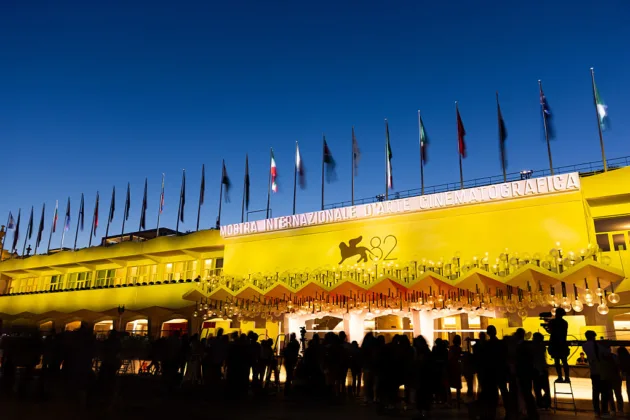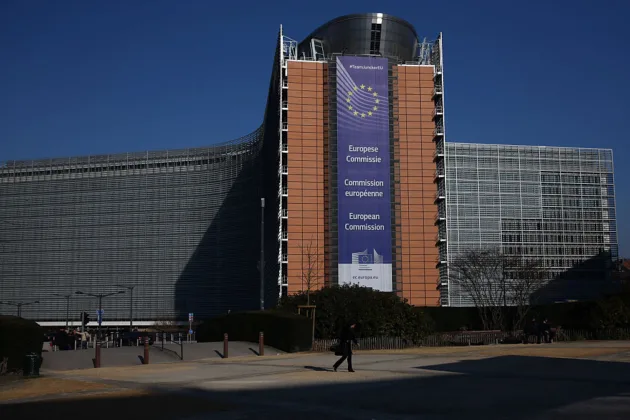

The European Union has cancelled a €2 million grant to the Venice Biennale over Russia’s participation in this year’s edition of the world’s most prominent contemporary art exhibition.
The European Education and Culture Executive Agency (EACEA) confirmed the decision on July 21, following a legal assessment and a recommendation from the European Commission.
Commission spokesman Thomas Regnier said cultural events funded by European taxpayers should safeguard democratic values, diversity and freedom of expression, “values which are not respected in today’s Russia”.
The grant, awarded under the Creative Europe programme and covering the 2025-2028 period, had been earmarked for the Fondazione La Biennale di Venezia.
European Commission Executive Vice-President Henna Virkkunen had pressed the agency to terminate the funding, having recommended the move earlier in July after the Biennale declined to bar Russia.
Brussels had warned for months that it could withdraw the money if the exhibition allowed the Russian pavilion to reopen. The Commission first raised the prospect of suspension in the spring, opening proceedings over an alleged breach of the grant’s conditions.
The Biennale has defended its position throughout, describing itself as an open institution in which any state recognised by the Italian Republic may take part. It has maintained that the event should remain a place of dialogue, openness and artistic freedom.
Biennale president Pietrangelo Buttafuoco has argued that excluding a country would turn cultural platforms into instruments of political censorship rather than spaces for exchange.
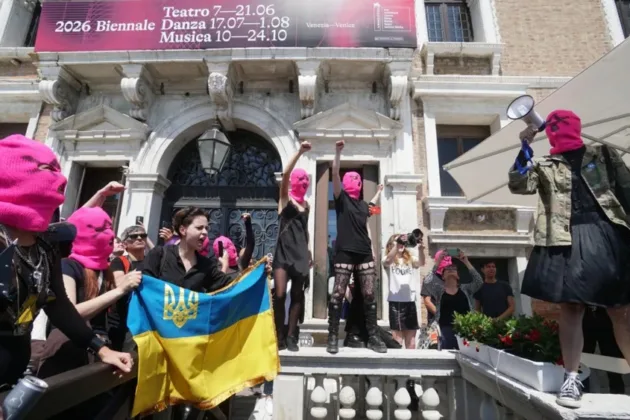
Russia returned to Venice this year for the first time since its 2022 invasion of Ukraine, having been absent from the previous two editions. The pavilion drew protests, including from the activist groups Pussy Riot and FEMEN.
The controversy has also unsettled the exhibition’s jury, which resigned on April 30 after refusing to consider prizes for countries whose leaders face International Criminal Court (ICC) charges. That position covered both Russia and Israel, whose leaders are subject to ICC warrants.
Following the resignations, the Biennale postponed its awards ceremony from May 9 to November 22 and replaced the jury prizes with two public-vote “Visitors’ Lions” awards.
The dispute has exposed friction between Brussels and Rome, where senior figures on the Italian Right have criticised what they cast as EU interference in cultural affairs.