
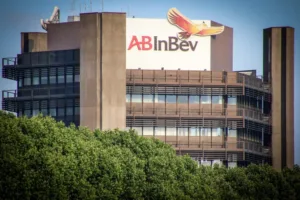

The world’s largest brewer has told the Russian-appointed administrator of its Russian brewing operations that it has no plans to sell the business and intends to retain ownership over the long term, according to a document reviewed by Brussels Signal.
This contradicts Belgium’s Anheuser-Busch InBev’s April 2022 public announcement, made two months after Russia’s full-scale invasion of Ukraine, that it would sell its 50 per cent stake in the venture, as well as its subsequent statements to investors that Russia was no longer part of its long-term commercial strategy.
“Neither ABI nor Efes [it’s Russian JV partner] are seeking to transfer its interests in the Company, and they are committed to maintaining their long-term ownership of the Company,” the document states.
The document, dated June 2026, was signed by AB InBev executives Ruben Vaessen and Henrike Maria van Griensven-Ponds, and the CEO of Efes Breweries International Deniz Chelik.
According to the document, the Russian business continues to generate substantial cash. The shareholders said they expected its cash reserves to have increased because the company was not paying dividends or royalties since 2022.
The companies also asked for management control of the business to be returned to them, saying this would secure the presence of their brands in Russia “on a long-term basis.”
AB InBev did not respond to repeated requests for comment.
European Union leaders have closed ranks behind Ukrainian President Volodymyr Zelensky at the European Council summit in Brussels, putting on paper their unease at Washington’s decision to ease sanctions on Russian diesel. https://t.co/B48nmmKztY
— Brussels Signal (@brusselssignal) October 16, 2026
On April 22, 2022, AB InBev announced plans to sell its 50 per cent stake in the AB InBev Efes joint venture, which operated more than a dozen breweries in Russia and Ukraine. The company said it was negotiating a sale to its partner Anadolu Efes.
AB InBev also announced a $1.1 billion impairment charge and said it would give up all financial benefits from the venture.
The sale never went through. Russian authorities rejected the proposed deal with Anadolu Efes in August 2024. A second agreement, under which the partners would swap their Russian and Ukrainian assets, also failed to win regulatory approval several months later.
Both proposals drew criticism because AB InBev owns 24 per cent of Anadolu Efes, the intended buyer. Critics questioned whether the deals amounted to a genuine exit or simply a reshuffling of assets that would leave AB InBev with an indirect stake in the Russian business.
In December 2024, Russian President Vladimir Putin placed the venture’s Russian operations under the temporary management of a Russian company. The decree did not remove AB InBev’s ownership rights.
AB InBev has previously said regulatory restrictions and the rejection of its proposed deals prevented it from leaving Russia.
AB InBev’s Russian business paid more than €1 billion in taxes and related payments to the Russian state budget in 2025 alone, Forbes reported in July.
This was one of the largest contributions by a Western company still operating in Russia to the country’s state budget, which is heavily geared towards sustaining the war in Ukraine. The venture’s Russian revenue rose by approximately 30 per cent in 2024, according to the same report.
Forbes also reported that the business donated more than $6.5 million in June 2026 to a state-aligned fund supporting Russian soldiers fighting in Ukraine. It is unclear whether the payment was approved by AB InBev’s headquarters.
Rival brewers Heineken of the Netherlands and Carlsberg of Denmark have completed their exits from Russia by selling assets to local companies. As was the case with AB InBev, Carlsberg’s Russian assets were temporarily seized by the state before the company’s departure.
In September 2026, Putin also signed a decree placing the Russian assets of France’s Auchan, Germany’s Metro and Switzerland’s Nestlé under the temporary management of a Russian company.
Starting from 2027, AB InBev will be an official sponsor of the Champions League at around €200 million per year , taking over from the Dutch brewer Heineken after 33 years in a push for more visibility on worldwide media and sports events.
Belgian brewing giant Anheuser-Busch InBev NV is trying to win back Conservatives by cosying-up to the Ultimate Fighting Championship (UFC) in a major multi-year sponsor deal. https://t.co/CC7KIbaiFl
— Brussels Signal (@brusselssignal) October 25, 2023