
France has signalled that fresh curfews would be imposed on the night of October 20 wherever local officials judged them necessary, after the first night without serious disorder since the rioting of October 17.
Prime Minister Sébastien Lecornu said in a post on X that targeted curfews had contributed to the overnight calm, thanking police officers, gendarmes and prefects for enforcing them. Any new restrictions would be decided locally by prefects working with mayors, he said.
The first curfews took effect on October 19 in central Paris, covering the Place de la République and the Les Halles district from 11pm to 6am, with gatherings banned in designated areas from 8pm. Comparable measures applied in Lyon and in several communes around Lille, in northern France, while restrictions in Bordeaux and Nice were set to run for several days.
Police and gendarmerie sources reported a largely quiet night across the country, with scattered incidents during demonstrations in Martinique. A police helicopter swept a searchlight across the square through the night to check compliance.
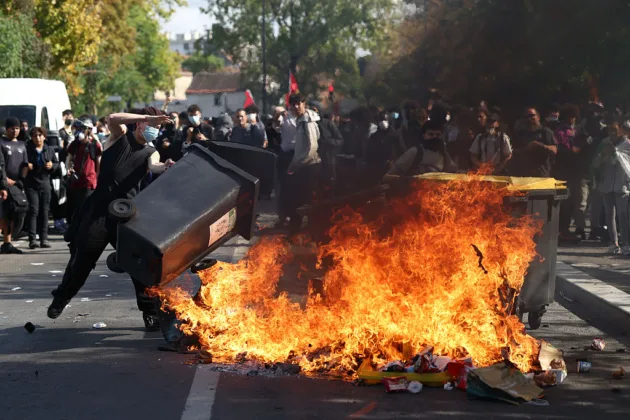
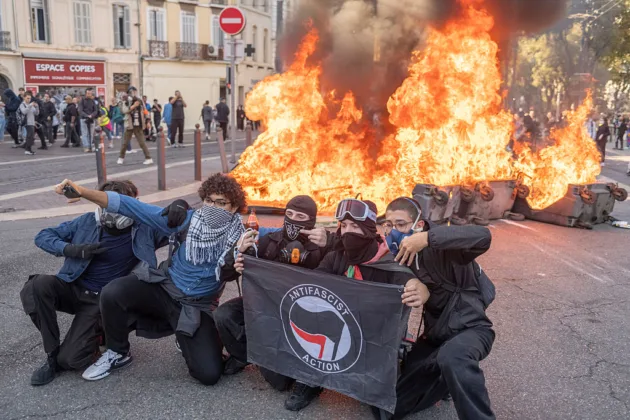
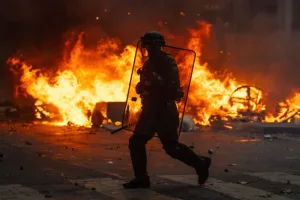
The measures followed the protests of October 17, which authorities put at 550,000 participants and the General Confederation of Labour (CGT) union at more than 800,000. Looting and arson hit Paris, Lyon, Marseille, Bordeaux, Lille, Strasbourg and Limoges, where the historic town hall was gutted by fire, and looters returned to the capital for a second night.
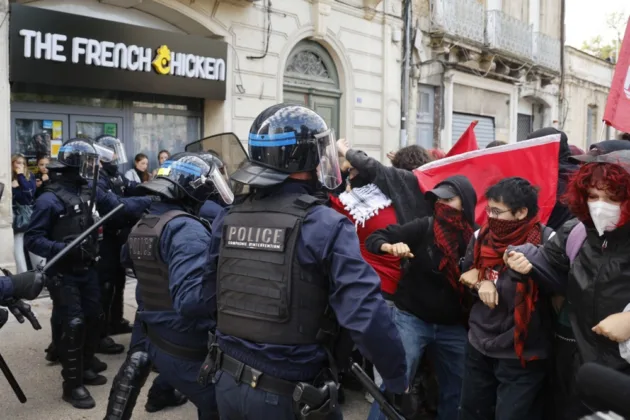
Justice minister Gérald Darmanin said 2,513 people had been taken into custody, 67 of them jailed, with dozens of judicial investigations opened. About 1,000 police officers were injured and one demonstrator lost a hand to a crowd-control grenade, according to AFP.
Interior minister Laurent Nuñez acknowledged that police had lost control of the streets and offered his resignation, which President Emmanuel Macron refused. Lecornu has blamed ultra-left groups for organising the violence in several cities.
That account was qualified on October 19 by the Paris public prosecutor, Laure Beccuau, who told TF1 she could not confirm that the rioters in the capital were politically aligned with the ultra-left.
The government has not ruled out a state of emergency, arguing that localised curfews suit the situation better. Lecornu was due to hold further crisis meetings on October 20, including talks with representatives of the main social media platforms, and to receive party leaders on October 22.
The unrest began in September as a secondary school revolt over classroom conditions and widened into a cost-of-living protest, part of a wider wave across the European Union that has also brought rioting in Milan and clashes in Brussels.
Organisers have called further demonstrations for October 24, as Lecornu’s minority government negotiates the 2027 budget in a fragmented National Assembly. France elects Macron’s successor next year.