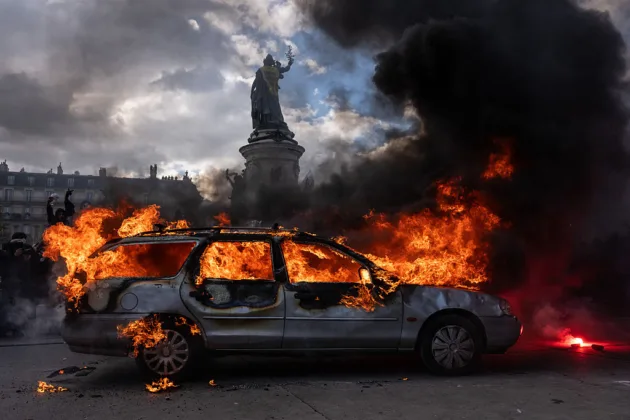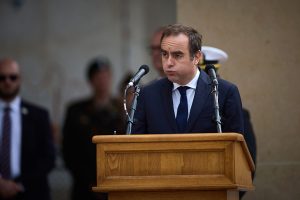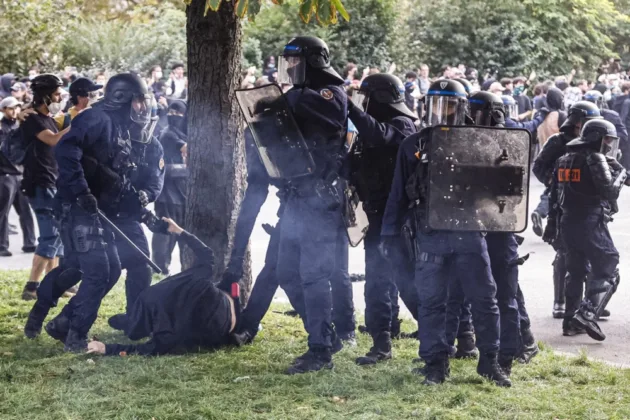
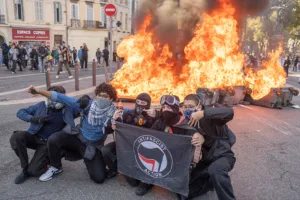


French Prime Minister Sébastien Lecornu has instructed regional prefects to institute targeted, local curfews across urban centres following a weekend of widespread civil unrest, while leaving open the possibility of declaring a nationwide state of emergency if violence escalates.
Speaking on French television following an emergency security assessment on October 19, Lecornu stated that while there was no question of placing entire metropolises like Paris under a blanket curfew, localised curfews were required to protect citizens and commercial districts. A map of the areas concerned was due to be published the same afternoon.
The prime minister confirmed that nearly 2,400 arrests have been made, about 90 per cent of them adults, and at least 3,000 businesses damaged or looted over the weekend amid demonstrations over rising living costs and student grievances, which saw rioters set fires, clash with security forces and cause the destruction of the city hall in Limoges, central-western France.
Lecornu defended the security forces and stressed that invoking the state of emergency law of April 3, 1955 remains an active option on the table if targeted curfews prove insufficient to restore order. He said groups on the radical Left were seeking to prolong the disorder until the presidential election.
“If it’s necessary, we could do it. The implementation of these curfews seems to me to be more appropriate,” Lecornu said.
Declaring a state of emergency would grant the executive branch sweeping administrative powers, allowing authorities to restrict movement nationwide, conduct searches without judicial warrants and ban public gatherings. The law was last applied across the whole country after the November 2015 Paris attacks and stayed in force for almost two years.
French officials again placed digital platforms, particularly TikTok, at the centre of the security debate, accusing algorithmic recommendation engines and social media channels of fuelling the unrest.
Authorities point to the rapid spread of viral challenge formats, video feeds of arson and real-time messaging groups on TikTok that enabled violent flash mobs to coordinate looting and evade police deployments. Territorial intelligence services, quoted by Le Parisien, had flagged the risk of looting before the October 17 march but said they could not gauge its scale, and described the platform as an unprecedented accelerator.
TikTok is already under European Commission scrutiny. The Commission issued preliminary findings on July 24 that the platform had failed to keep the accounts of minors safe under the Digital Services Act, and proceedings over its recommender system design remain open. The act also carries a crisis response mechanism under which the Commission can require very large online platforms to assess and mitigate serious threats to public security, a power not used so far.
French commerce and small business minister Serge Papin estimated that at least 3,000 businesses had been affected during weekend protests, a figure still being assessed. CCI France, which represents the chambers of commerce, has put the damage in the hundreds of millions of euros.
French interior minister Laurent Nuñez publicly acknowledged critical failures in intelligence and law enforcement planning, admitting that police temporarily lost control in central parts of several major cities to highly mobile groups of rioters. Close to 1,000 police and gendarmes were injured over the weekend, seven of them seriously, according to the authorities.
Nuñez offered his resignation to President Emmanuel Macron over the weekend’s security lapses, but the French president rejected the offer, instructing the interior minister to remain in his post and adopt a new policing doctrine against rioters.
The main student organisations promised on October 19 to remain mobilised, denouncing a government “off the mark”. The Union étudiante said it would keep up the pressure until concrete commitments were obtained.
Looted goods have already been illegally offered on resale sites, according to French media reports.
In a direct effort to curb post-riot commercial gain and track suspects, the French finance ministry, known as Bercy, convened an emergency meeting on October 19 at 7pm with major online reselling platforms, including Vinted, Leboncoin and Cdiscount, alongside e-commerce industry federations.
Chaired by Minister Delegate for Artificial Intelligence and Digital Affairs Anne Le Hénanff, the videoconference aims to establish immediate measures to block the listing of stolen goods resulting from weekend looting and to assist law enforcement agencies in identifying individuals attempting to fence stolen merchandise online.
The government has also moved to shore up the retail sector. Lecornu said staff at damaged businesses would be covered by a partial unemployment scheme paying all of their wages from October 20, and that a dedicated support fund would be released to help shops trade again quickly. Talks have opened with insurers to speed up damage assessments.
Looters have returned to central Paris for a second night, hours before the French Government met for emergency talks on some of the worst disorder the country has seen in decades. https://t.co/oly1h2B2mK
— Brussels Signal (@brusselssignal) October 19, 2026