





Illegal immigration into Spain has risen by 26 per cent in the first nine months of 2026 even as crossings into the European Union as a whole have fallen by almost a third, the EU border agency Frontex has said.
The western Mediterranean route, which covers mainland Spain, the Balearic Islands and the Spanish cities of Ceuta and Melilla, recorded around 18,300 detections between January and September. It was the only major corridor into the bloc to register an increase, as it has been all year.
The rise was concentrated on the land border, where detections more than doubled. Arrivals by sea were up by 8 per cent, with Algeria the main departure country and the Balearics and the Spanish mainland the main destinations.
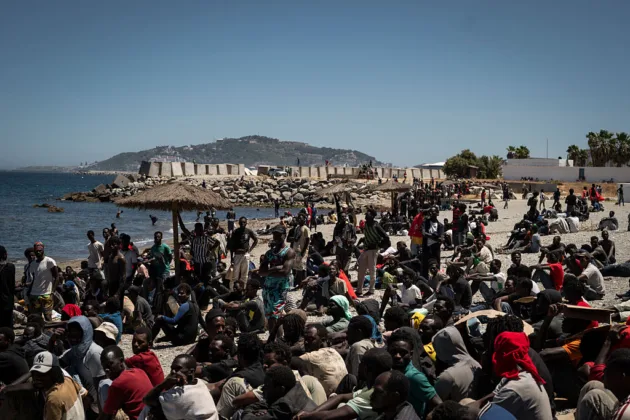
Those figures leave out the invasion of Ceuta on July 30 and 31, when tens of thousands of people crossed from Morocco into the city over a single weekend. Frontex said Spanish data for the land route on those two days were still under review and not included.
The Spanish Government put the number of entries at about 49,000, while Ceuta’s city government has used figures closer to 80,000, a gap its president took to Brussels in September.
Across the EU, just over 91,000 crossings were recorded in the nine months. The central Mediterranean fell the furthest, down by 56 per cent, while the eastern Mediterranean remained the busiest route with around 31,800 detections.
The Atlantic route to the Canary Islands registered about 7,100 detections, 45 per cent fewer than a year earlier. Frontex credited preventive measures taken by Mauritania and, more recently, Senegal and The Gambia in cooperation with Spain and the EU.
That fall looks fragile. Detections rose to around 1,900 in September, four times the August figure, with boats setting out from Morocco and The Gambia.
“Smuggling networks do not disappear when the numbers fall,” Frontex Executive Director Hans Leijtens said.
Spain’s two routes together accounted for some 25,400 detections in nine months, more than the roughly 23,000 recorded on the western Mediterranean in all of 2017, the last full year before Pedro Sánchez became Prime Minister in June 2018. Neither total includes the July crossings into Ceuta.
Sánchez has insisted the trend in Spain is downward, telling the Congress in September that irregular entries fell by 42.6 per cent in 2025. He has also pointed to Frontex figures putting cumulative entries into Italy since 2021 at 478,600, against 234,760 for Spain.
Madrid asked the European Commission for emergency funding over Ceuta on August 25. The Commission said it was treating the request as a priority and wanted the swift return of those still in the city.