











Irregular crossings at the European Union’s external borders have fallen by 35 per cent in the first eight months of 2026, EU border agency Frontex has said.
Preliminary figures put detections at about 75,000, some 40,000 fewer than in the same period of 2025.
Almost every main migration route recorded a drop.
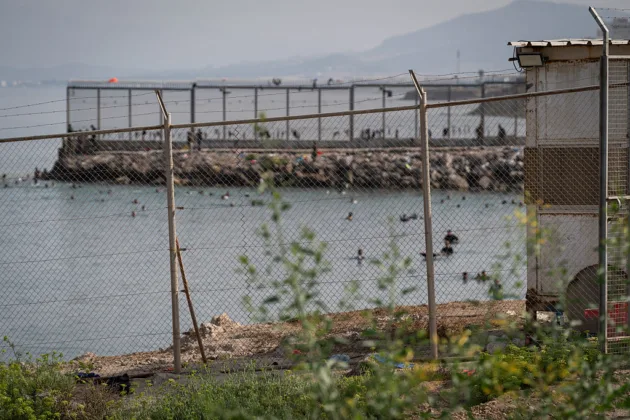
The exception was the western Mediterranean, the corridor that ends in mainland Spain, the Balearic Islands and the Spanish north African cities of Ceuta and Melilla.
Detections there rose by 34 per cent, to about 15,900, even without counting the late-July rush at Ceuta. Spain’s interior ministry estimated that some 72,000 people entered the city irregularly on July 30-31.
Frontex said a definitive total was unlikely to be established because most of those who crossed had returned to Morocco before they could be registered.
The eastern and central Mediterranean remained the busiest routes and still accounted for nearly 60 per cent of all detections.
Both were down sharply.
The central Mediterranean, mainly from Libya and Tunisia towards Italy and Malta, fell 55 per cent, to about 19,400.
Crossings also declined on the eastern Mediterranean, towards Greece, Cyprus and Bulgaria. Detections there fell by 25 per cent, to about 24,200, making it the busiest single route.
The steepest fall was on the west African Atlantic route to the Canary Islands, down 58 per cent to about 5,100.
Detections on the western Balkans route and at the EU’s eastern land border were lower too.
In August alone detections across the EU were about 10,700, 38 per cent below August 2025, even though late summer is usually the peak.
Detections on the Channel route, counted on exit towards the United Kingdom and so excluded from the EU total, fell by 43 per cent, to about 26,600.
Frontex attributed the overall decline to cooperation with departure countries and to preventive measures that stop boats leaving.
Tighter controls in Morocco and on the Canaries and central Mediterranean routes have, in the agency’s account, pushed smugglers towards Algeria. Algeria is now the main launch point for the western Mediterranean, with the Balearic Islands and mainland Spain the main destinations.
Pressure on that route peaked in July, when it reached its highest monthly level in three years before easing in August, Frontex said. Land crossings into Ceuta and Melilla had already been rising before the July incident.
Excluding July 30-31, Spain’s interior ministry has put land entries into Ceuta between January and August at 4,076, more than double the figure for 2025. Those into Melilla rose to 572, from 198.
The figures measure detections, not unique people. The same person can be counted more than once.
Frontex, citing the International Organization for Migration (IOM), said more than 1,800 people had died in the Mediterranean so far in 2026.
Frontex noted that the period was the first full summer under the EU’s new Migration and Asylum Pact, which took effect on June 12 and requires member states to apply a single, standardised screening process at the bloc’s external borders.
📉 Irregular border crossings into the EU: down 35% in Jan-Aug 2026
🔹 More than 74 000 detections
🔹 Steepest drop: Western African route (-58%)
🔹 Only increase: Western Mediterranean (+34%)
🔹 Excludes the July movement into CeutaMore details: https://t.co/Bb2m7dG6T2 pic.twitter.com/zxWlb52AV2
— Frontex (@Frontex) September 11, 2026