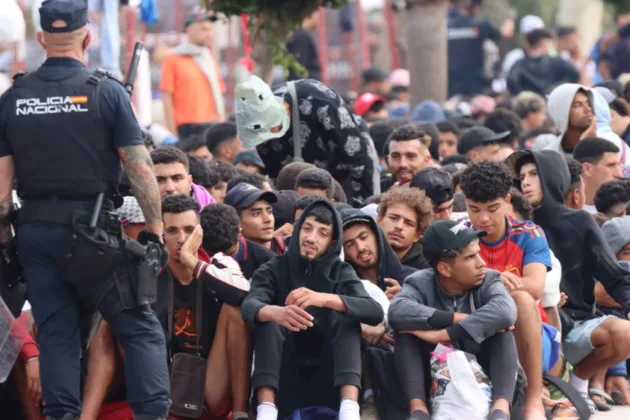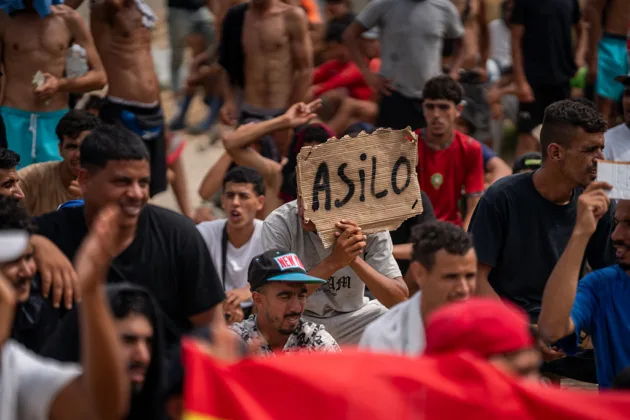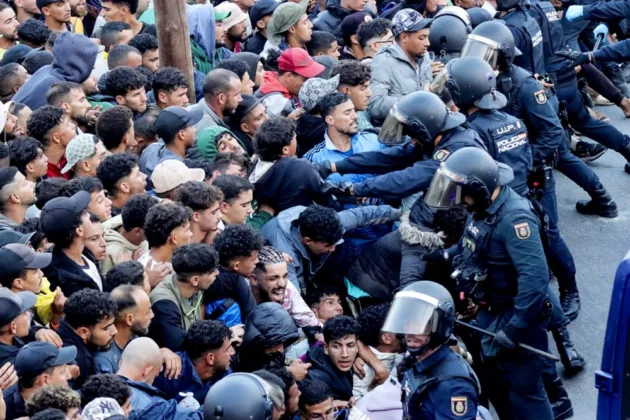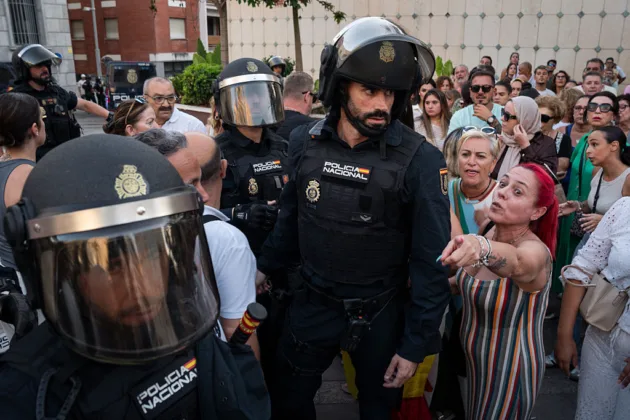



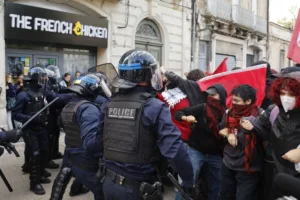




Spanish counter-terrorism officers have identified at least 10 men previously arrested, convicted and expelled from Spain over jihadist offences among the crowds that crossed into Ceuta on July 30.
Specialist units of the National Police and the Civil Guard traced the men within hours of beginning a review of footage from the mass entry. Commanders in both forces told the paper they expected the number to rise as the work continued.
Officers were examining images broadcast by Spanish media, material posted on social media and recordings from cameras along the border perimeter. The review began once the immigration service had finished its own checks.
Those identified had been deported to Morocco years earlier and could be among the arrivals still in the North African city. Ceuta President Juan Jesús Vivas said on August 3 that between 3,000 and 5,000 people remained there.
Spain initially calculated 50,000 arrivals on July 30 and estimates that about 69,500 people have since returned to Morocco. The official death toll stands at 72 on the Spanish side of the border and 11 on the Moroccan side.
The National Court has opened preliminary proceedings and asked the National Police to report on whether the crossings amounted to a concerted action directed by a criminal organisation.
El Español said the finding matched a pattern set out in Interior Ministry figures. Of 191 radical Islamists arrested in Spain between 2018 and 2022, 8 per cent were in the country illegally, and at least 15 Islamist terrorists detained in recent years had reached it through people-smuggling networks.
Spain’s national counter-terrorism strategy treats preventive migration control as one of its main lines of work. Its 2024 maritime security strategy warns that uncontrolled waves of irregular migration can serve as an instrument of hybrid pressure by state or non-state actors.
Ceuta and Melilla are the European Union’s only land borders with Africa and sit outside the Schengen free-movement area, so those who reach them face further checks before travelling to mainland Spain.
European Commission President Ursula von der Leyen credited Spanish and Moroccan police work on August 1. “Not a single person reached mainland Spain or the rest of the EU,” she said.
EU interior ministers were due to meet by emergency videoconference on August 4 at the request of 22 member states. Frontex reinforcement and the reintroduction of internal border checks were among the options on the table.