
Italian Prime Minister Giorgia Meloni has publicly challenged US President Donald Trump over his agreement on Russian diesel supplies, warning that the deal could undermine Western efforts to pressure Russian President Vladimir Putin to negotiate an end to the war in Ukraine.
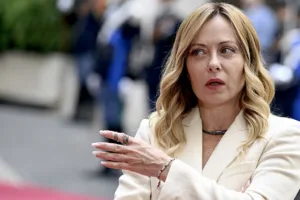
Speaking in the Senate in Rome on October 14, ahead of the European Council meeting in Brussels on October 15-16, Meloni described the agreement as “a very risky choice”, arguing that its potential benefits were uncertain while its geopolitical consequences were clear.
“The outcome of this decision is uncertain, while the risks are clear,” she said. “It provides Moscow with legitimacy as its bombs continue to fall on Ukrainian cities, generates new revenue to finance the war, and implicitly weakens the effectiveness of sanctions.”
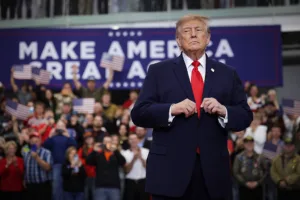
The agreement, announced by Trump on October 9, provides for Russia to initially supply more than 300,000 tonnes of diesel to US and global markets, according to Reuters. Deliveries are projected to rise to 500,000 tonnes in November and 1 million tonnes in December, with US sanctions on Russian oil products suspended until April 2027.
Trump has defended the move as a way to bring down energy prices in the United States, where fuel costs have become a political concern ahead of November’s midterm elections. US diesel traded at about $6.19 a gallon in early October, against $3.81 at the end of February.
Meloni, though, questioned whether the deal would address the underlying causes of rising fuel prices. While acknowledging the need to contain energy costs for households and businesses, she argued that the recent surge was driven primarily by the war in Iran rather than Russia’s invasion of Ukraine.
“The surge in fuel prices is due primarily to the war in Iran, not the conflict in Ukraine,” she said.
That conflict has closed the Strait of Hormuz, through which about a fifth of the world’s traded oil passes, and attacks on energy installations in Iran and several Gulf states have disrupted supplies throughout this year.
The Italian leader’s criticism places renewed emphasis on the tension between Washington’s efforts to reduce energy costs and the Western strategy of using economic pressure to constrain Moscow. Meloni argued that resuming or expanding Russian diesel supplies risks sending the wrong political signal while Russian attacks on Ukrainian cities continue.
Moscow dismissed the criticism. Maria Zakharova, spokeswoman for the Russian foreign ministry, told the Italian news agency ANSA that the matter was none of Meloni’s business.
Her remarks also underline Rome’s intention to maintain support for Kyiv despite the disagreements with Washington. “The government’s position has not changed,” Meloni said, reiterating that support for Ukraine, pressure on Moscow and transatlantic unity remain the pillars of Italy’s policy.
She also told senators: “Surrender is not peace, it is conquest.”
The Prime Minister also called for a stronger European role in diplomatic efforts to end the war. She urged the EU’s 27 member states to appoint an authoritative representative with a mandate to speak on behalf of the bloc in negotiations concerning Russia and Ukraine.
Meloni said Italy would consider a role for the so-called E3 group, comprising Germany, France and the United Kingdom, if it acted under an official mandate from all EU countries.
“If France, Germany, and Great Britain believe they can do better on their own than we could all do together, and so far that is the choice they have made, then at least let them do so on behalf of everyone and with an official mandate,” she said.
Energy prices are on the agenda of the two-day summit, where leaders are expected to ask the European Commission for new short-term measures. Meloni has asked Brussels to factor the energy shock into EU spending rules and to let member states use part of the additional VAT revenue generated by higher prices for targeted support.
European Commission President Ursula von der Leyen has said funding for Ukraine would be front and centre at the meeting.
Ukrainian President Volodymyr Zelensky has said the agreement weakens Kyiv’s strategy of striking Russian refineries. Trump announced an energy ceasefire in Ukraine on October 11, after which Kyiv suspended those attacks, though Russian strikes have continued against the Ukrainian power grid.