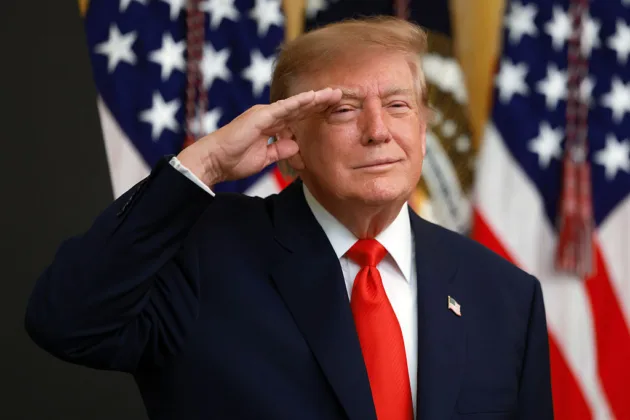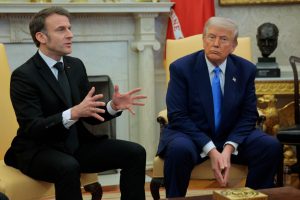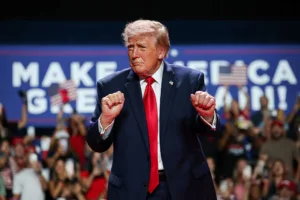



A bipartisan group of 12 US senators has written to President Donald Trump demanding he rescind an October 9 agreement with Russian President Vladimir Putin that temporarily allows Russian-origin diesel to enter global markets.
The letter, sent on October 13 and led by Democratic senator Richard Blumenthal and signed by six Republicans and six Democrats, describes the arrangement as a gift to Moscow that damages American security interests.
“Granting Moscow the ability to sell Russian diesel freely in global markets damages American security interests and is a betrayal of the people of Ukraine, who continue to defend themselves from Putin’s murderous, illegal war,” the senators wrote.
“This deal is a gift to our adversary and a betrayal of our Allies; it should be rescinded.”
They urged Trump to withdraw from the agreement, revoke Treasury Department General License No. 135, and instead implement the sanctions authorities granted under the Lindsey O. Graham Sanctioning Russia and Iran Act of 2026, which he signed into law on September 18.
On the Republican side, the signatories are Thom Tillis, Susan Collins, Alan Armstrong, Lisa Murkowski, Mitch McConnell – the former Senate majority leader – and John Cornyn.
The Democrats are Blumenthal, Jeanne Shaheen, Dick Durbin, Sheldon Whitehouse, Jack Reed and Chris Coons.
The letter acknowledges the “urgent need” to lower energy costs for American families amid disruptions linked to the war with Iran, but argues that Russian diesel supplies would have a “negligible impact” on prices while providing the Kremlin with revenue to finance its war in Ukraine and deepen cooperation with China, Iran and North Korea.
US diesel reached a record average of $6.51 (€5.82) a gallon on September 21, according to motoring group AAA, around three quarters higher than a year earlier.
Trump announced the deal on October 9 after a telephone conversation with Putin, stating that Russia would immediately supply more than 300,000 tonnes of diesel to US and global markets, followed by 500,000 tonnes in November and 1 million tonnes thereafter, with further volumes possible depending on the condition of Russian refineries.
The US Treasury subsequently issued General License No. 135, authorising certain transactions involving Russian diesel until April 7, 2027.
Vladyslav Vlasiuk, sanctions commissioner to Ukrainian President Volodymyr Zelensky, said the opening tranche covered about 15 hours of American diesel demand, which he put at 3.5 million tonnes a week against domestic output of 4.9 million tonnes.
European allies and Ukrainian officials have already reacted strongly against the move.
Zelensky called the agreement “a weak decision by strong partners” on October 9, saying it would hand Moscow more money to prosecute the war.
European Union foreign policy chief Kaja Kallas said suspending sanctions on Russian diesel would give Moscow more revenue and that Europe would not ease its own pressure. EU foreign ministers approved the bloc’s 22nd sanctions package on October 12, adding about 1,600 individuals and entities in what Kallas described as the largest single expansion of the listings since the full-scale invasion began.
The senators stressed that while Congress and the American public support ending the Russia-Ukraine war, which they noted has cost hundreds of thousands of lives since Russia’s 2022 invasion, any settlement “must be on just terms” and must uphold Ukraine’s sovereignty, security and democratic values.
They closed by calling Putin “a tyrant” and urging Trump to “maintain our legacy – and the duty America holds – as leader of the free world.”
The letter adds to growing congressional opposition to the diesel arrangement, including from additional Republicans such as Senate Armed Services Committee chairman Roger Wicker, who has questioned whether the deal will take effect. Wicker and Shaheen had already written to the administration urging it to enforce the new sanctions law without delay.
It arrives days before October 18, when the Graham Act’s tariff criteria begin to apply to new purchases of Russian crude oil and natural gas, and amid elevated US diesel prices ahead of the November 3 midterm elections.
Europe’s diesel crisis is already here.
Europe isn’t facing a future or potential diesel crisis – the crisis has already started.
Diesel and gasoline prices have been rising across Europe, but the bigger problem may not be the price itself. As @Raphfel in his Hammer Time… pic.twitter.com/dj54tMo2Ti
— Brussels Signal (@brusselssignal) October 2, 2026