



A war may be brewing in the Eastern Mediterranean. For the first time in quite a while, it is not Turkish, but Greek analysts and politicians who argue that engaging militarily with the age-old enemy in the near future is not merely conceivable, but advisable. Their rationale is: If Israel strikes Turkey on Cyprus and Turkish forces advance anew, Greece should go all in and reset the status quo.
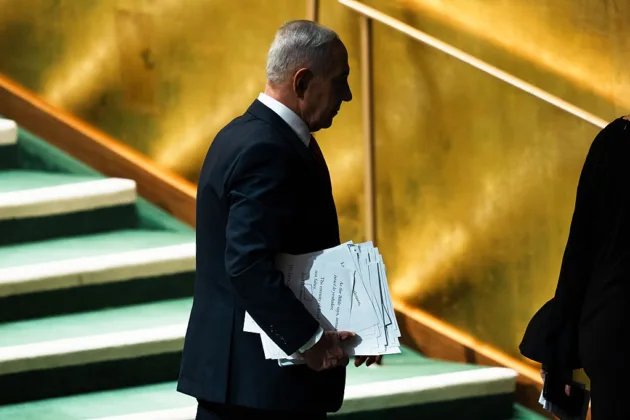
The scenario is not unlikely to materialise. At the United Nations General Assembly in New York, the open hostility between Israeli Prime Minister Benjamin Netanyahu and Turkish President Recep Tayyip Erdoğan reached unprecedented heights.
On September 24, Netanyahu described Erdoğan as a “tyrant” who harbours terrorists, illegally occupies Northern Cyprus, an integral part of the European Union, and routinely violates Greek sovereignty. Erdoğan, who on August 7 established the pan-Islamic Makkah Defence Pact alongside Saudi Arabia and Pakistan, had addressed the same hall two days earlier, accusing Israel of a “genocidal mindset” and levelling charges of state terror and regional expansionism.
Heated exchanges have since become a daily occurrence. This is no longer mere rhetorical theatre. It is the framing for a collision that could directly involve Europe’s southern flank.
Across strategic circles in Athens and Nicosia, analysts are evaluating a scenario that was once unthinkable: A direct, high-intensity conflict between Israel and Turkey during Donald Trump’s presidential term, fought in the battlefields of northern Syria and occupied Cyprus.
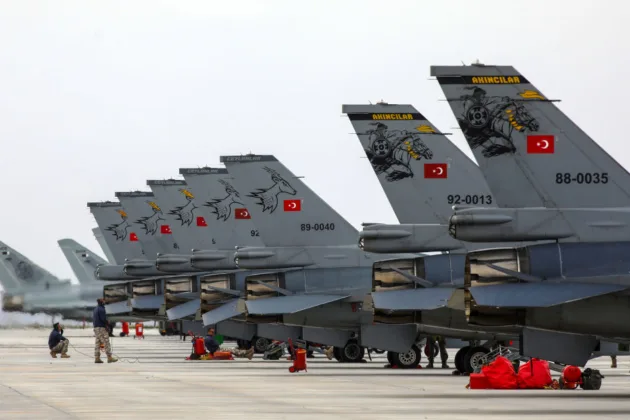
The rationale is clear. Having gone after Iranian proxies in its immediate vicinity, Israel increasingly views Ankara’s military presence in northern Syria and its estimated 40,000-strong occupation army and military installations in Northern Cyprus as threats to Israeli security. With Ankara also harbouring radical elements and flexing its maritime muscles in the Eastern Mediterranean, Jerusalem may conclude that a pre-emptive strike in Syria or occupied Cyprus is a strategic necessity.
For Greece and the Republic of Cyprus, such a clash would present a historic, high-stakes turning point.
Some strategists and politicians in Athens now argue that should Israel strike Turkish installations in northern Syria or the occupied territories, Greece must abandon its traditional caution, align unreservedly with Jerusalem and seize the moment to definitively redraw the state of affairs on Cyprus.
Ambassador ad honorem Georgios Ayfantis, a champion of former centre-right prime minister Antonis Samaras’ return to politics with a new party, has led the charge with his analysis. Other public figures have followed. But Elliniki Lysi (Greek Solution) head Kyriakos Velopoulos was the first political leader to say it plainly, telling Real FM on September 29: “If Israel and Turkey clash in Cyprus, then we should automatically strike Turkey.”
Truth be told, decades of UN-sponsored “dialogue” have achieved nothing except institutionalising Turkish occupation and tolerating Ankara’s illegal “Blue Homeland” doctrine. A direct confrontation between Israel and Turkey could break a stalemate running since 1974, forcing a permanent resolution to the division of an EU member state.
So some Greeks may be thinking about it. And others, Greek or not, may have started to regard a Jerusalem-Ankara conflict as inevitable. Yet, as two major military powers prepare for a showdown on Europe’s doorstep, the first question that should be asked is: How ready is the European Union for a new war on European soil? The answer is as brief as it is terrifying: Brussels is completely unprepared.
Under Ursula von der Leyen and High Representative Kaja Kallas, the European Union has reduced its foreign policy to soft-power platitudes and economic appeasement. While EU leaders wring their hands over Red Sea shipping lanes, they completely ignore the fact that an EU member state, Cyprus, lies directly in the crosshairs of a far from impossible regional war. And that under international law, by virtue of the 1960 Treaty of Guarantee, Greece is one of its guarantor powers.
If hostilities break out between Israel and Turkey over Syria and Cyprus, the EU will face an existential crisis. Turkey is a NATO member, Cyprus is an EU member state, and Israel is Europe’s primary technological and intelligence partner in the region. Should Greek and Cypriot forces find themselves fighting alongside Israel to defend sovereign European territory, Brussels will have no diplomatic excuses left to hide behind.
The EU cannot continue to act as a passive bystander while foreign powers shape the security architecture of the Mediterranean. If Brussels genuinely wishes to prevent a devastating conflict on its southern border, it must project hard power and back its member states unconditionally. Or else, it will not just watch another war unfold. It will watch the complete collapse of European security.