





The European Commission has launched a €525 million ($590 million) programme to build a new generation of European chip design companies, three years after its flagship Chips Act failed to lift the bloc’s share of world semiconductor production.
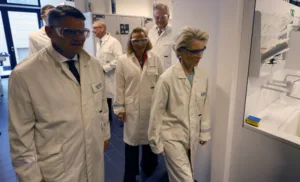
Henna Virkkunen, Executive Vice-President for Tech Sovereignty, Security and Democracy, presented the European Chip Design Platform in Brussels on November 4. The scheme offers start-ups and small firms grants, design software and access to manufacturing capacity, resources the Commission described as the most expensive and hardest to obtain for young companies.
Of the total, €440 million would go on grants and €85 million on the platform’s digital infrastructure, support services and open-source design tools, according to the Commission’s press release. Some €285 million comes from the EU budget and €240 million from member states taking part in the Chips Joint Undertaking, the public-private partnership that channels EU semiconductor funding.
Early-stage start-ups could apply for up to €100,000 to build prototypes. More advanced firms could seek grants of up to €16 million to cover design costs and bring a product to market.
Virkkunen said the platform showed Europe was ready to act on its technological sovereignty goals “not only through policy and promises, but also by investing in our future”.
The announcement is the latest attempt by Brussels to shore up a sector in which Europe has struggled to compete. European chip design companies account for less than 1 per cent of global revenue in the segment, according to Commission figures.
The original Chips Act, agreed in 2023, mobilised more than €52 billion in public and private investment but missed its goal of lifting the EU’s share of global chip production to 20 per cent by 2030. In June the Commission tabled a Chips Act 2.0 as part of a wider package intended to cut dependence on US and Chinese technology.
The Commission said new factories in Europe would only pay their way if there was enough demand to fill them, and that much of that demand had to come from European designers. Design, it added, was the stage of the chain where most of the industry’s innovation took place.
The platform is run by a consortium led by the Belgian research centre Imec, with the backing of the Chips Joint Undertaking, and uses tools from international software and intellectual property suppliers. Around 20 start-ups are already enrolled in training programmes designed to prepare their projects for the market, the Commission said.
The sum is modest beside the sums deployed by rivals. The US CHIPS and Science Act of 2022 set aside $52 billion (€44.3 billion) in subsidies alone, while the first EU Chips Act’s €52 billion headline figure relied largely on money Brussels did not directly control.