

European Union member states have remained divided over what weapons to buy and from whom, as Brussels presses national militaries to source more of their equipment from European manufacturers.
The dispute comes as capitals try to close talks on the 2028-2034 EU budget by the end of the year, for which the European Commission proposed €130 billion for defence and space.
The Commission set nine common defence priority areas meant to allow the EU to deter a Russian attack by 2030. Yet 68 per cent of defence spending remained at national level in 2025, according to a confidential European Defence Agency (EDA) report.
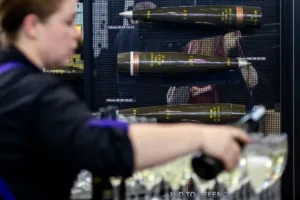
Despite rising budgets, the EDA warned of shortfalls across all key capability areas, including heavily funded ones such as ammunition and missiles.
France has pushed for strict European preference rules in the European Competitiveness Fund (ECF), a central plank of the next budget. In a non-paper circulated in September, 12 countries pushed back: Germany, Austria, Denmark, Estonia, Finland, Italy, Latvia, the Netherlands, Portugal, Romania, Sweden and Slovenia.
The row runs alongside a wider split among capitals over the Commission’s ‘Buy European’ rules for public contracts.
Those 12 countries sourced 66.3 per cent of their major arms imports from US suppliers over the past five years, against 10 per cent from EU suppliers, according to Stockholm International Peace Research Institute (SIPRI) figures.
Penny Naas, vice-president of the German Marshall Fund (GMF), said some western nations saw defence spending as a way to strengthen domestic industry and bring jobs home. Countries bordering Russia wanted equipment quickly regardless of origin, she said, adding: “They know they have to be armed, and they have to be armed fast.”
Naas warned that favouring European suppliers could slow procurement and leave armies with outdated equipment. With major US manufacturers facing backlogs of two to four years, some governments were looking to South Korea and beyond.
Linus Terhorst, a research fellow at the Royal United Services Institute (RUSI), said the problem was demand. Companies could promise to reproduce almost any capability with financing, he said, but he asked who would guarantee them “the necessary demand for that investment to make sense”.
Defence procurement remained a national responsibility. Brussels attached conditions to EU money but had little authority over what governments bought.
Terhorst said member states sometimes bid against one another for new factories, with defence companies touring capitals to compare subsidy offers.
The EU has also struggled to measure how much its members buy together. Only 12 of 27 member states reported collaborative procurement data in the Commission’s 2024-2025 analysis.
Among the 19 that reported to the EDA for 2025, joint European purchases made up 11 per cent of equipment spending.