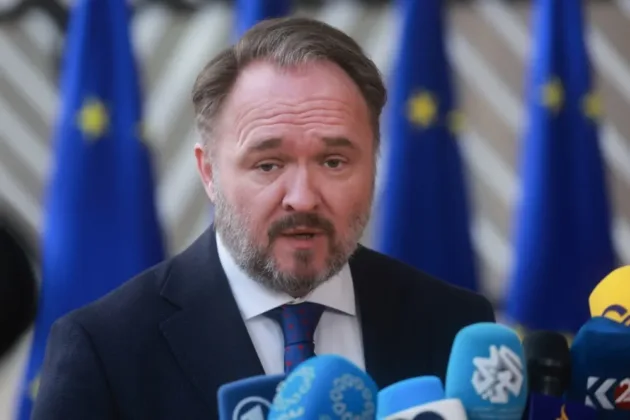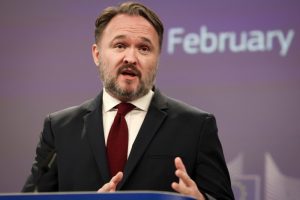
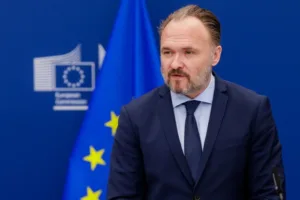

The European Union has ruled out any return to Russian energy imports, regardless of the outcome of US-led peace talks with Moscow. EU Energy Commissioner Dan Jørgensen said the bloc would press ahead with its phase-out even if the Ukraine War came to an end.
“We will never again, if it’s up to me, import as much as one molecule from Russia,” Jørgensen told Euronews’ On the Record programme in an interview broadcast yesterday. He described Russia as an enemy of Europe and said the EU would not trust Moscow even in peacetime.
The Commissioner argued that no agreement between Washington and Moscow could override EU legislation. He said the law was a stronger tool than sanctions, which must be renewed every six months and could fall away once the fighting stopped.
The regulation, formally adopted by member states on January 26, bans Russian liquefied natural gas (LNG) under long-term contracts from January 1, 2027, with pipeline gas to follow in the autumn of that year. Hungary and Slovakia, which still rely heavily on Russian pipeline supplies, had said they would challenge it before the Court of Justice of the European Union (CJEU).
In April, Claudio Descalzi, chief executive of Italian energy company Eni, urged Brussels to suspend the LNG ban, warning that the Middle East crisis risked leaving Europe short of supply. According to Jørgensen, the EU had already cut its reliance on Russian gas from 45 per cent to around 10 per cent.
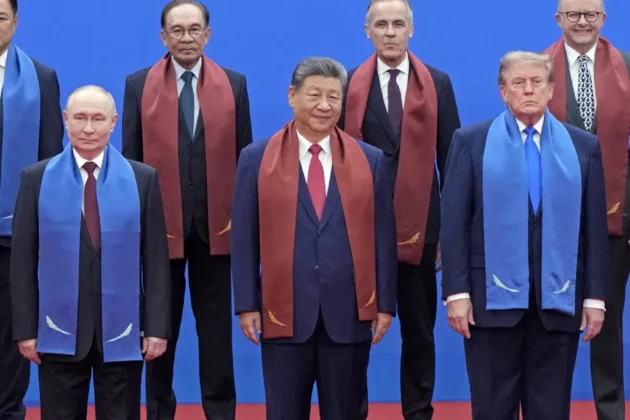
His comments put Brussels at odds with the administration of US President Donald Trump. On October 9, the US Treasury issued a licence authorising transactions in Russian diesel until April 7, 2027, following a call between Trump and Russian President Vladimir Putin ahead of the US midterm elections.
The Wall Street Journal reported on November 2 that Washington was pushing to restore Russian gas flows to Europe through Ukraine as part of a wider settlement. When trilateral talks resumed in Abu Dhabi on November 10, European officials were confined to separate consultations on the sidelines.
Closer to home, Jørgensen warned consumers to brace for higher petrol, diesel and gas prices this winter despite a recent fall in oil prices. Colder weather could push household bills higher still, he said.
He also rejected calls from Austria, Germany, Italy, Poland, Portugal and Spain for a bloc-wide windfall tax on energy companies’ excess profits, saying the decision should be left to national governments. The Commission instead wanted member states to cut electricity taxes, which account for around 29 per cent of the average household bill.
Asked about a prolonged closure of the Strait of Hormuz, Jørgensen said Europe should prepare for the worst.