




The Kremlin has dismissed as “absurd” suggestions that Russian hackers were behind the cyberattacks that sent temperatures soaring in supermarket fridges and freezers across Europe and in cold storage rooms used by the French national blood service.
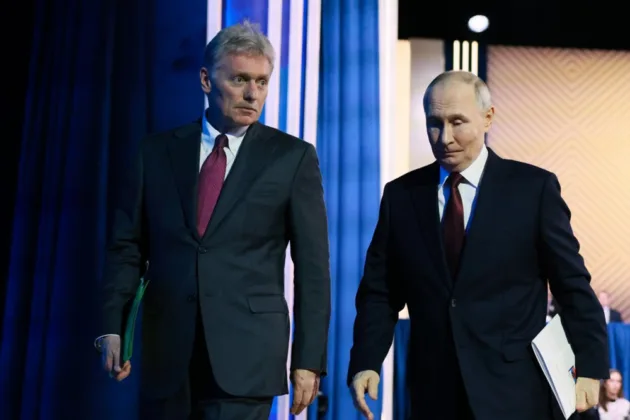
Kremlin spokesman Dmitry Peskov told reporters on November 5 that the claims were absurd and, as always, unsupported by any argument or evidence, according to the Russian news agency Interfax. He said unfounded accusations against Russia had become a persistent trend in European countries.
No European government or EU institution has publicly attributed the attacks to Russia. Speculation about the involvement of Russian hacking groups has so far come from European media outlets rather than from investigators.
Peskov spoke three days after an overnight attack on November 1 to 2 forced dozens of supermarkets in Belgium, Luxembourg and Sweden to throw away food after their refrigeration units were remotely switched into defrost mode. Some freezers were set to 50 degrees Celsius.
Delhaize said around 40 of its stores in Belgium and Luxembourg were hit, while Carrefour reported 15 affected stores in Belgium and the Swedish chains ICA and Coop also confirmed incidents. Stores in Ireland, Estonia, the Netherlands, Finland, Portugal, Italy, Germany and Romania later reported similar problems.
The incidents mirrored an attack on the night of October 11 to 12 in which hackers took control of refrigeration controllers in hundreds of French supermarkets, causing fires and losses estimated at tens of millions of euros. In both cases attackers appear to have accessed internet-connected controllers, several of them made by the Danish firm Danfoss.
The Établissement français du sang confirmed on November 4 that the same overnight attack had reached a refrigeration supplier managing cold rooms at three of its sites, with temperature and defrosting thresholds pushed to very high levels. The service said alarms caught the anomaly before any blood products were lost.
The European Commission said on November 3 that the attacks were “not isolated incidents” and convened two coordination meetings with EU cybersecurity agencies and national authorities. Commission spokesman Thomas Regnier said it was not for Brussels to attribute the incidents, which remained under national investigation.
Agriculture Commissioner Christophe Hansen earlier described the attacks as “a deliberate attempt to disrupt our food supply chain”.
Belgian federal prosecutors and the Paris prosecutor’s office have opened criminal investigations. Dan Cimpean, head of Romania’s National Cyber Security Directorate, told AFP the attacks seemed “semi-amateurish” and that he did not suspect a state actor.
The denial comes as European governments have increasingly blamed Moscow for a campaign of hybrid attacks on critical infrastructure, including drone incursions, sabotage and cyberattacks, since Russia’s 2022 invasion of Ukraine. Russia has consistently denied any involvement.