





Latvia’s parliament has approved a new coalition government formed by the conservative United List and the national-conservative National Alliance, after the October 3 general election.
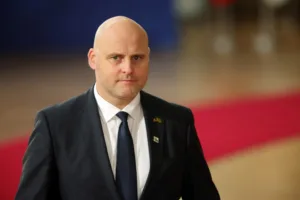
The Saeima backed the cabinet by 57 votes to 34 at an extraordinary sitting on November 17, according to a statement from the chamber. The vote confirmed Andris Kulbergs as Prime Minister at the head of his second government.
Kulbergs has led the country since May 28, when he replaced Evika Siliņa after her coalition collapsed in a row over drone incidents in Latvian airspace. He stayed on as caretaker after the October vote.
United List won 41 of the 100 seats in that election, as Brussels Signal reported, the best result for any party since Latvia regained independence in 1991. The National Alliance, which like United List sits with the European Conservatives and Reformists (ECR) group in the European Parliament, took 10.
Together the two parties hold a bare majority of 51 seats. Kulbergs announced the deal late on November 15, citing their long cooperation and similar positions, and the coalition agreement was signed shortly before the vote.
The arrangement left out New Unity, the European People’s Party affiliate led by Siliņa, which sat in the outgoing cabinet but fell to seven seats in October.
Raivis Melnis, a former soldier with no party affiliation, stayed on as defence minister, while career diplomat Ģirts Jaunzems took over foreign affairs. Edgars Štelmahers of United List became economics minister and independent financial adviser Kārlis Purgailis took the finance portfolio.
The National Alliance’s Jānis Dombrava kept the interior ministry and Viesturs Vitovskis of United List took justice. Kulbergs also took on the climate and energy brief himself.
Kulbergs named national security, sound public finances and economic growth as his priorities. He warned that the budget situation inherited by the new cabinet was critical and could put defence funding at risk by 2030 unless action was taken immediately.
Latvia, which borders Russia and Belarus, has written into law an obligation to spend 5 per cent of GDP on defence every year from 2027. In August, Kulbergs asked the European Union for €7 billion to cover defence costs and the cost of cutting trade ties with Moscow.
He told Politico at the time that Latvia was “paying for the defence of the whole of Europe”. His government has pledged to keep up support for Ukraine.
The opposition accused Kulbergs of rushing the vote, noting the line-up was made public only on the morning of the ballot. New Unity’s Inese Lībiņa-Egnere said MPs had been given a few hours to assess the ministerial candidates.
Kulbergs had aimed to have his cabinet in place before Latvia’s independence day celebrations, which fall today.