







La France Insoumise (LFI) has published the fifth edition of its programme, L’Avenir en commun (A Future in Common), which went on sale on November 6 and was presented the following day at a rally at Le Bourget, in Seine-Saint-Denis north of Paris.
Some 20,000 people attended, according to the organisers. The document lists 1,069 measures, 238 of them new, and contains some controversial proposals.
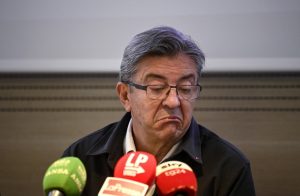
“I have only one reasonable thing to propose to you: Everything must change. It is time to change everything,” LFI leader and presidential candidate Jean-Luc Mélenchon said.
He rejected calls to soften his positions, saying the programme had to be applied rather than watered down.
Mélenchon, who is running for president for the fourth time, came third in 2022 with 21.95 per cent of the vote. Recent polls suggest he could reach the second round, Public Sénat has reported.
On pensions, the programme calls for the immediate abrogation of the reform that raised the retirement age to 64. It then proposes a return to 62, followed by the restoration of the right to retire at 60 at full rate after 40 years of contributions.
On taxation and public finances, LFI plans a substantial increase in revenue.
Its counter-budget for 2027, presented on October 14, projected €106.4 billion in additional annual receipts via a string of tax hikes.
The main instruments include a 2 per cent levy on wealth above €100 million (the “Zucman tax”, named after French economist Gabriel Zucman), the reintroduction of a wealth tax with a climate component, the abolition of the flat tax on capital income and an expansion of the income-tax scale from five to 14 brackets.
According to LFI, the climate wealth tax would raise €10 billion and the end of the flat tax €9 billion.
Salary ratios inside companies would be capped at 1 to 20, and a new inheritance ceiling of €12 million would apply across all assets.
Married couples would lose their joint tax assessment.
The party states that roughly €81.7 billion of the new revenue would fund higher public spending, with the remainder, about €25 billion, directed towards reducing the public debt.
Economists interviewed by AFP described the plan as “not very detailed” and “optimistic”.
On policing, the programme sets out several restrictions.
It calls for a ban on tasers, rubber-bullet launchers and certain crowd-control grenades for everyday policing and demonstrations.
It proposes the dismantling of two specialised units, the anti-crime brigades (BAC) and the motorised violent-action repression brigades (BRAV-M), with their officers reassigned to a restored neighbourhood police force.
Municipal police forces are to be integrated into this model and equipped without lethal weapons.
The programme also seeks the repeal of the 2017 law on failure to obey police orders, which LFI calls a “licence to kill”, a ban on certain restraint techniques and the replacement of the current police and gendarmerie internal inspection bodies (IGPN and IGGN) by an independent authority.
On the environment it calls for the redrawing of France’s administrative map into “eco-regions” organised around watersheds, mountain ranges and coastlines rather than existing departments and regions.
It proposes a nine-month compulsory ecological civic service for young people and the creation of a climate crime in the criminal code.
The target for cutting greenhouse-gas emissions is set at 65 per cent by 2033 (2030 in the 2022 programme), while a complete exit from nuclear power and fossil fuels, with 100 per cent renewable energy, is scheduled for 2060 at the latest (2050 in 2022).
On institutions, the programme advocates the immediate convocation, via a referendum, of a constituent assembly to replace the Fifth Republic with a Sixth.
It seeks the break-up of large media groups judged to hold excessive power, the extension of public ownership over “common goods” and limits on private property rights when they conflict with ecological or social goals.
Jean Luc Mélenchon, leader of radical left La France Insoumise, has announced that if LFI wins the 2027 presidential election, the first law he wants to pass will be aimed at “breaking media monopolies”. https://t.co/whH5YjGxf0
— Brussels Signal (@brusselssignal) February 24, 2026
In foreign policy the document reaffirms non-alignment. It calls for France to leave NATO’s integrated command and then, in stages, the alliance itself, while reducing the country’s net contribution to the European Union budget by roughly €9 billion.
On the Middle East it demands the application of the International Criminal Court arrest warrant against Israeli Prime Minister Benjamin Netanyahu and the suspension of the EU-Israel association agreement.
A dedicated €1 billion plan is allocated to fighting Islamophobia, anti-Semitism and other forms of racism, including strengthened police protection for places of worship when requested.
Additional social measures include raising the net monthly minimum wage to €1,700, the immediate introduction of price freezes and margin caps on basic goods, the creation of a legal status for single-parent families that would grant them the same benefits currently reserved for large families and the full reimbursement of psychological care for people under 26.
The programme also proposes the legalisation of cannabis under state control, the recognition of the October 17, 1961 Paris massacre of Algerian demonstrators as a state crime and the progressive integration of private security functions into the public sector.
It calls for the full restoration of unconditional birthright citizenship for every child born on French soil, the extension of local voting rights to non-citizens and a general easing of entry conditions so that long-term visas and 10-year residence permits become the standard rather than the exception.
It also proposes the regularisation of specific groups of undocumented migrants, notably workers, students and parents of school-age children.
These immigration measures are presented as the concrete expression of the “Nouvelle France” the party says already exists: a population shaped by successive waves of migration whose identity is no longer defined by the traditional national narrative.
The full official costing of the 1,069 measures is scheduled for early 2027. The presidential election’s first round is set for April 18, 2027, with the second round on May 2.
La France Insoumise party has refused to sever ties or condemn the dissolved anti-fascist group La Jeune Garde following the death of 23-year-old Quentin Deranque, portraying it as a defensive force against far-right threats. https://t.co/PxAmyB1JEE
— Brussels Signal (@brusselssignal) February 18, 2026