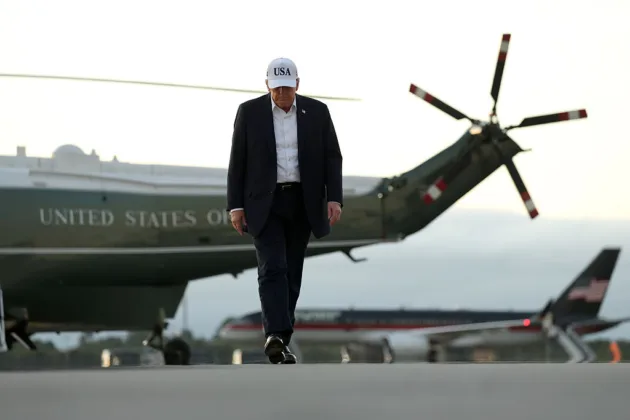






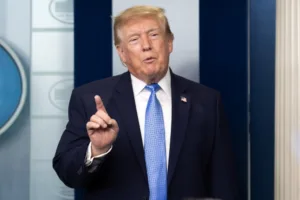

US President Donald Trump has said he sees progress towards ending the war with Iran, though he has insisted the American naval blockade of Iranian ports should remain in force.
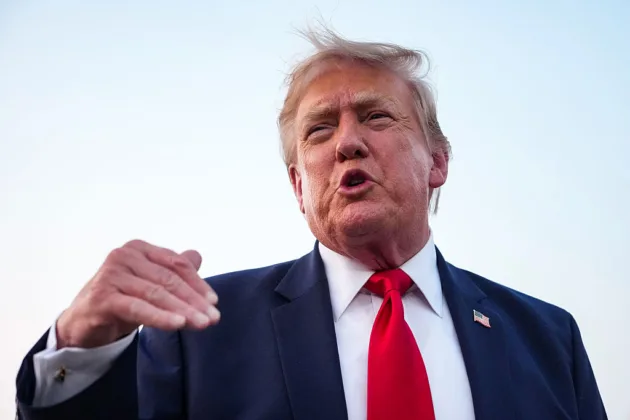
Speaking at the White House on November 9, Trump said the conflict was “going to be ending fairly soon”. He described a resumption of air strikes as unlikely but warned that US forces were ready to act should the situation change.
His remarks followed talks in the Oval Office with Qatari Prime Minister Sheikh Mohammed bin Abdulrahman Al Thani, a key mediator between Washington and Tehran.
The President said another aircraft carrier had been sent to the region as a precaution. He added that Iran could not be allowed to obtain a nuclear weapon and that the point was not negotiable.
In a social media post the same day, Trump said Qatar, Saudi Arabia, the United Arab Emirates, Bahrain and Kuwait preferred to keep the status quo. By that he meant the continuation of the naval blockade and of Iron Gate, a new US effort targeting Iranian trade over land and across the Caspian Sea.
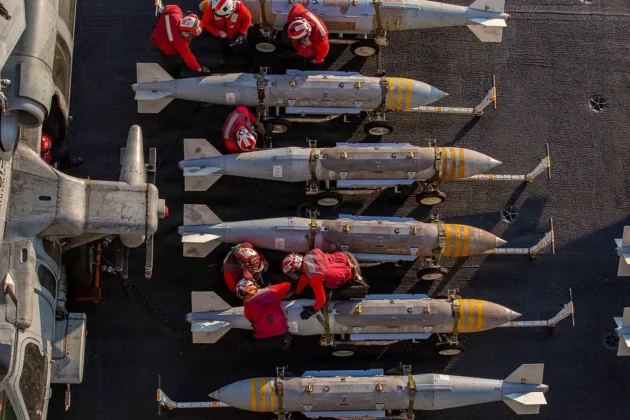
US Central Command (CENTCOM) set up the Iron Gate task force on November 7, saying the blockade had already cost Iran billions in lost crude exports.
Tehran rejected Trump’s account within hours. Mohsen Rezaei, secretary of Iran’s Supreme National Security Council and a former commander of the Islamic Revolutionary Guard Corps (IRGC), accused Washington of inventing reports of negotiations.
Writing on X, Rezaei told the US to “stop manufacturing fake news about imaginary talks”. He said the war had already wrecked the US administration and that it was time for Washington to surrender to the seven conditions Iran had repeatedly set out.
According to reports, Tehran’s demands include an end to the blockade, the lifting of sanctions, the release of frozen assets and compensation for war damage. Iran has also called for an end to hostilities across the region, including Israeli operations in Lebanon.
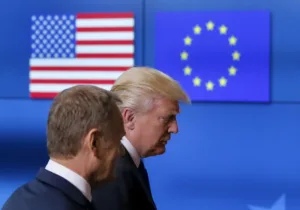
The war, which began on February 28, has choked shipping through the Strait of Hormuz. In May, the European Union widened its sanctions regime against Iran to target those responsible for disrupting shipping through the waterway.
The White House press conference also featured Ultimate Fighting Championship (UFC) chief executive Dana White, whom Trump had offered the post of press secretary on November 7. White used the occasion to turn the job down, saying he had no political aspirations.
Trump said he had floated White’s name while having a day of very bad press and had been partly joking. The post has been vacant since mid-October, when Katie Zacharia left after five days in the role, according to CNN.