

The United States and Iran have signed a memorandum of understanding intended to end their war and reopen the Strait of Hormuz, raising hopes across Europe of falling energy prices.
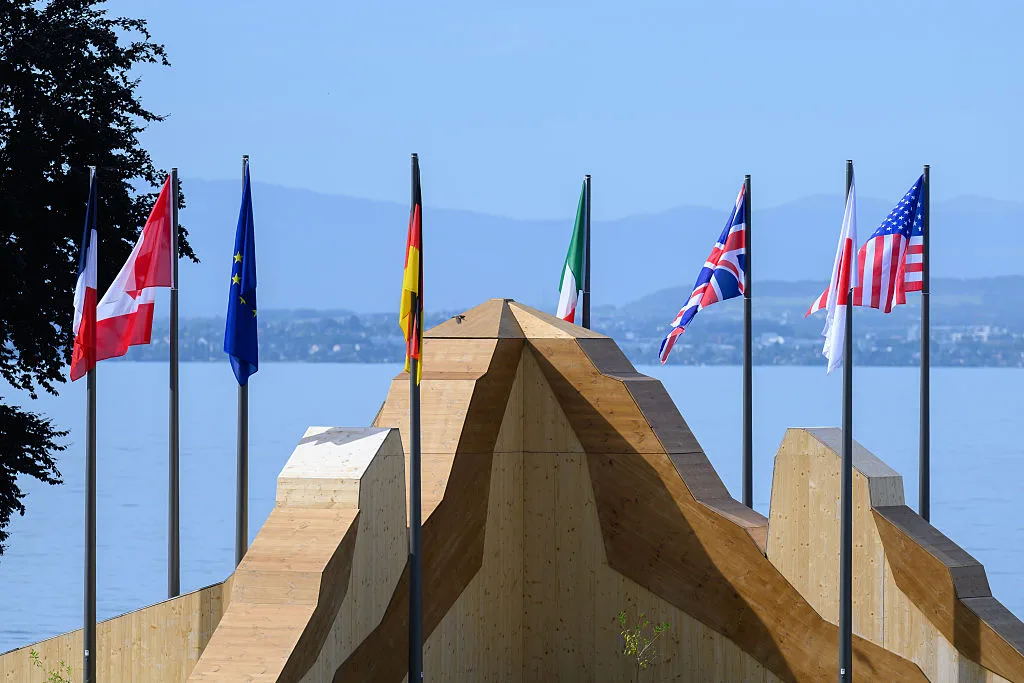
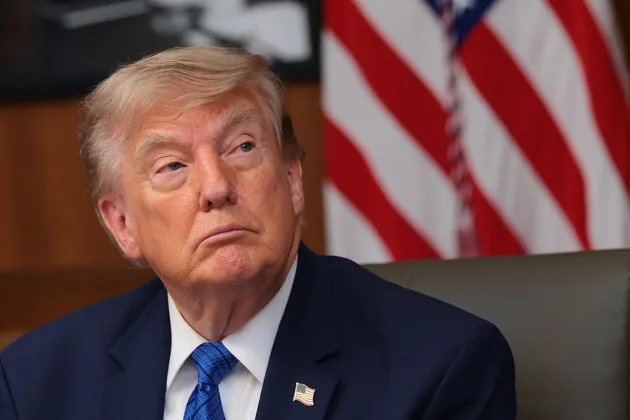
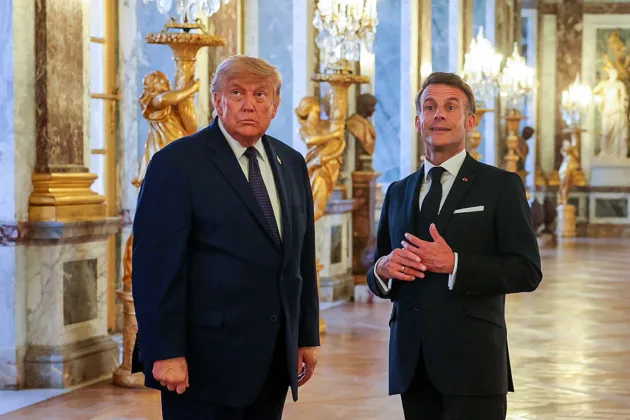
US President Donald Trump signed the document on June 17 at the Palace of Versailles, during a dinner with French President Emmanuel Macron held after the Group of Seven (G7) summit in Évian-les-Bains, eastern France. Iran said its President Masoud Pezeshkian signed the text separately, with state media publishing images of his signature on a Farsi-language copy.
Asked about the agreement as he left Versailles, Trump said: “It’s signed. Signed in Versailles. Just signed it.”
Macron, who hosted the dinner and shared a video of the signing, welcomed the outcome. He said the deal was “an important step in the right direction for our compatriots that will soon enable a decrease in energy prices”.
The memorandum opens a 60-day window in which the two sides would negotiate the terms of a final settlement. A formal ceremony was due to take place on June 19 at the Bürgenstock resort in central Switzerland, having been moved from Geneva, although Tehran later cast doubt on whether the meeting would go ahead now that both presidents had signed.
The deal was brokered by Pakistan and Qatar. Pakistani Prime Minister Shehbaz Sharif, who announced what he called the “Islamabad Memorandum of Understanding”, said it would take effect at once.
“As a first step, the Islamic Republic of Iran will instantly reopen the Strait of Hormuz, and the United States of America will immediately lift the naval blockade,” he wrote on X.
Esmaeil Baghaei, spokesman for the Iranian foreign ministry, said the text had been finalised and signed by both governments after consultations involving Oman. Under the deal, Iran would allow the safe passage of commercial vessels, with the strait’s long-term administration to be settled in later talks with Oman.
About a fifth of the world’s oil passed through the strait before the war, which began on February 28 when the US and Israel launched strikes that also killed Iran’s supreme leader, Ali Khamenei. Its closure and the subsequent US blockade of Iranian ports had driven energy prices sharply higher.
Markets have moved quickly on the prospect of peace. Brent crude, the international benchmark, has fallen below $80 (€73) a barrel for the first time since March, while Europe’s Stoxx 600 index reached a record high on June 15.
The relief is keenly felt in Brussels. The European Commission has estimated that the closure added some €13 billion to the bloc’s fossil fuel import bill, with gas prices up about 70 per cent and oil about 50 per cent at the height of the crisis.
Lower fuel costs should also ease the inflationary pressure that analysts had warned could push eurozone prices back above target and complicate the European Central Bank’s (ECB) interest rate plans.
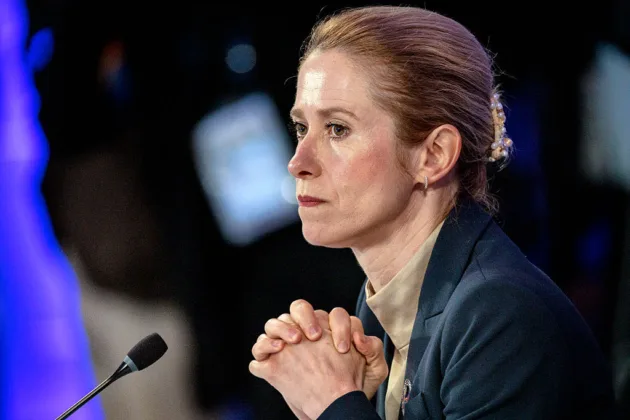
European Commission President Ursula von der Leyen, who backed the framework alongside European Council President António Costa and the bloc’s foreign policy chief, Kaja Kallas, has pressed for a toll-free reopening. She warned that energy dependency was again being turned into a weapon and said the EU would need to diversify its supply routes to bypass the Hormuz bottleneck and shore up its energy security.
A FRAGILE ROAD TO A DEAL
The agreement has followed months of false starts. Negotiators first sketched out a framework on May 28, though Trump withheld his approval and Washington insisted that Iran surrender its highly enriched uranium and abandon any pursuit of a nuclear weapon.
Fresh fighting repeatedly threatened the talks. US forces struck Iranian targets in late May, and on June 10 Trump ordered a renewed military response over what he called stalled negotiations, prompting Iran to declare the strait closed once more.
Tempers also flared over the terms. On June 12 Trump dismissed accounts circulating in Iranian state media as bearing “no relation to the truth” and branded his counterparts “very dishonorable people”. A provisional deal was reached two days later and signed electronically by US Vice-President JD Vance and Iran’s parliament speaker, Mohammad Baqer Qalibaf.
Even after putting pen to paper at Versailles, Trump kept the threat of force on the table. He said that, should he dislike the outcome, “we’ll go back to shooting at them, dropping bombs”.
DOUBTS OVER THE WATERWAY
Analysts have cautioned that traffic would not resume at once. Shipping officials said that clearing mines laid during the conflict could take 40 to 50 days, and the United Arab Emirates’ state oil company has estimated that full flows might not return until 2027.
Israel, which is not a party to the agreement, has remained sceptical. Defence Minister Israel Katz has said his forces would not withdraw from southern Lebanon, a sticking point that Iran insists is inseparable from any lasting peace.