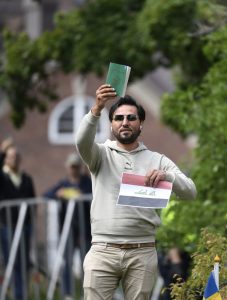
Rasmus Paludan, a Danish anti-Islam activist and politician who made world headlines by publicly burning Qurans in Scandinavia, has been jailed for hate crimes.
On November 5, a district court in Malmö, Sweden, sentenced the activist to four months in prison and to pay damages of SEK 20,000 (€1,714) for allegedly inciting ethnic hatred at two protests in 2022.
During those events, Paludan burned holy Islamic texts and also made insulting statements about Muslims, Arabs and Africans.
In a reaction, Paludan said: “Here is my first comment to the chief judge of Malmö District Court: Hahahaha.”
He added that he would appeal the judgment.
The Malmö district judge ruled Paludan was guilty of two counts of incitement to racial hatred and one count of insult.
“It is permitted to publicly express criticism of, for example, Islam and even Muslims, but any disparagement of a group of people must not clearly exceed the bounds of a factual and well-founded discussion”, the courts’ chairman chief judge Nicklas Söderberg said on November 5 in a press release.
“In these cases, it was not a matter of such a discussion. Instead, the statements were merely intended to insult and offend Muslims.”
Paludan claimed the verdict was based on interpretations of what he said and not exact quotes.
“What they think I meant are not things I would say. Because if I thought so, I would just say so,” he said.
At the main hearing in the case, the district court looked at parts of videos from the meetings in question. The recordings had been published on a Facebook page belonging to the political party Stram Kurs (Hard Line) of which Paludan is the founder and leader.
A particular question in the case has been whether he knew the gatherings were published on Facebook. Paludan claimed he was not aware of it but the district court ruled otherwise.
“The man’s actions at the gatherings would be downright illogical if he did not know about the publication on Facebook. There are also a number of circumstances that show that the publication was done with his will. For example, it appears in the videos that he asks the person filming how many viewers they have,” Söderberg said.
The two cases of incitement to racial hatred were reported following Paludan’s actions in Malmö in April and September 2022.
According to the indictment, in the first case, Paludan “wrapped bacon in and around a Quran and then set fire, stepped and spat on the Quran”.
He was quoted saying: “Muslims create discord and disharmony.”
In the latter case, he reportedly called a man of foreign origin a number of derogatory words, saying he should “go home to Africa” and “Africans do not belong in Sweden”.
In his defence in court, Paludan said: “If it is hate speech to say that ‘Islam is violent’, then it will be difficult to pursue our policies. You can choose to disagree. But it is a legitimate point of view.”
The Quran burnings caused outrage in some Islamic countries and also where they occurred in Sweden.
Swedish police tried to ban some burnings but judges stopped them from doing so, invoking freedom of speech.
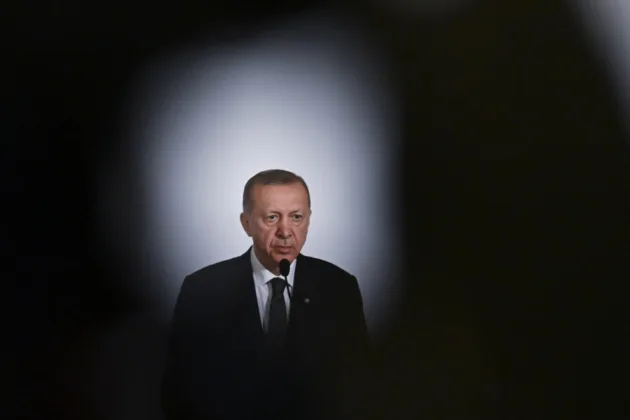
That stance was met with widespread incomprehension by Muslims and caused diplomatic problems for Sweden. In July last year, Turkey used it as a reason to block the Nordic country’s ascension into NATO.
In Iraq, protesters stormed the compound of the Swedish embassy in Baghdad after a Quran was burned by an Iraqi in Stockholm.
Leaders of countries including Saudi Arabia, Iraq, Kuwait, the United Arab Emirates and Morocco summoned Swedish ambassadors there to express outrage at the burnings.